
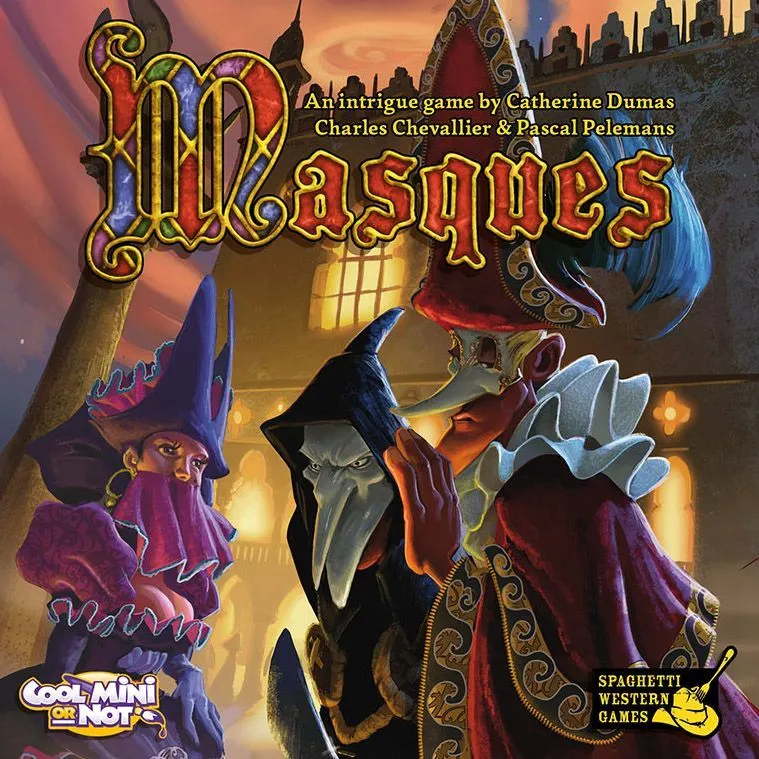
- Pozycja w BGG
- BGG #4368
- Ocena BGG
- 6,5
Masques
- 2–4 graczy
- 45 min
- Złożoność 2,0/5
- 2010

2012
Pomoc w zasadach gry Gentlemen Thieves
Zrozumiałe wyjaśnienia tur, efektów kart i spornych sytuacji z odnośnikami do oficjalnych źródeł i zapisaną historią pytań.
Dla 2 graczy
Co chcesz wiedzieć?
Odpowiedzi pochodzą z oficjalnej instrukcji, ze stroną do sprawdzenia.
Gentlemen Thieves to gra planszowa wydana w 2012 roku dla 2–5 graczy, z rozgrywką trwającą 45 minut i dla osób od 10 lat. Projekt gry: Charles Chevallier, Catherine Dumas i Pascal Pelemans. Główne mechaniki: Set Collection i Open Drafting.








Po angielsku
Gentlemen Thieves is a board game with secret identities, bluffing and theft featuring Arsène Lupin and other characters inspired by author Maurice Leblanc. Whoever ends up with the biggest stack of loot at the end of the game wins! At the start of the game, each player secretly takes one of the five burglar tiles, which come in five different colors; each player also receives 2-4 helping hand tokens. Five locations are set out, each with two randomly chosen equipment tokens next to them; equipment tokens come in five types, with each type appearing in the five colors of the burglars. Special tokens are placed out as well: two loot tokens next to the bank, one lock on the museum, and one tunnel next to the manor; six additional loot tokens, along with a car token and the second tunnel, are placed to the side. Three randomly drawn equipment tokens are placed face up. At the start of each round, the matchmaker determines the alliances for that round, placing two alliance markers – each showing a burglar in the appropriate color – in one area and the other three in the other area. Thus, the burglars form provisional teams for the round and are trying to work together to rob a location – any location! – but they don't necessarily know who's who. On a turn a player either: Chooses one of the face-up equipment tokens, places it next to a location (with no more than three tokens of the same type being allowed at a location), then reveals a new equipment token. Draws the top equipment token from the stack, then places it at a location. Plays a helping hand token to move a special token or add a new special token to a location. As soon as all five types of equipment are at a location, a burglary takes place there. Who steals the goods? The alliance that has the larger presence there based on the colors of tokens. These tokens are then flipped face down (becoming loot), added to any loot tokens present there, then split among the burglars in the alliance and placed on the scoreboard. The matchmaker token passes to a new player, who must move at least two alliance tokens, then a new round begins. The special tokens naturally change the rules: The location with the lock cannot be robbed, although someone can choose to move the lock so that a burglary does take place. The car allows someone to move an equipment token to a new location. When the second tunnel is placed next to a location, the two locations with tunnels are now linked and the types of equipment present are considered to be together when determining whether a burglary takes place – although if the lock is on one of those locations, then nothing can be stolen! A brigadier token is shuffled into the final six equipment tokens, and when it's drawn, the game ends immediately. Players then reveal their identities, and the player with the most loot wins!
Według katalogu Gentlemen Thieves obsługuje od 2 do 5 graczy. Ten zakres odpowiada liczbie graczy podanej przez wydawcę, więc grę można przygotować dla dowolnej grupy w jego granicach. Przygotowanie, niektóre zasady i punktacja mogą jednak różnić się w zależności od liczby graczy; dokładną konfigurację sprawdź w instrukcji swojego wydania.
Podany czas rozgrywki w Gentlemen Thieves wynosi 45 minut. To szacunek wydawcy dla pełnej partii. Rzeczywisty czas zależy od grupy, liczby graczy i znajomości zasad: pierwsze partie zwykle trwają dłużej, a doświadczone grupy kończą szybciej. Przygotowanie gry i tłumaczenie zasad nie są wliczone w ten szacunek.
Katalog podaje dla Gentlemen Thieves wiek od 10 lat. To zalecenie wydawcy, które uwzględnia wymagania dotyczące czytania, złożoność zasad i drobne elementy, a nie tylko tematykę. Młodsi gracze często mogą dołączyć z pomocą dorosłego; sprawdź zalecenie wiekowe swojego wydania i weź pod uwagę doświadczenie grupy z grami planszowymi.
Gentlemen Thieves ma ocenę złożoności 1,8 na 5 według graczy BoardGameGeek, co czyni ją grą lekką. Ocena pokazuje, ile znajomości zasad, planowania i podejmowania decyzji wymaga typowa rozgrywka. Cięższe gry wymagają dłuższego pierwszego tłumaczenia, dlatego przed wieczorem z grami warto skorzystać z przewodnika przygotowania.
Gentlemen Thieves należy do tych kategorii: Card Game. Główne mechaniki to Set Collection i Open Drafting. Kategorie opisują temat i świat gry, a mechaniki to, co gracze faktycznie robią w swojej turze. Każda mechanika prowadzi do strony katalogu z podobnymi grami, co pomaga znaleźć coś porównywalnego na kolejny wieczór.
Autorzy wymienieni przy Gentlemen Thieves to: Charles Chevallier, Catherine Dumas i Pascal Pelemans. Te informacje pochodzą z opublikowanych danych gry i wskazują osoby odpowiedzialne za jej projekt, a nie ilustratorów czy wydawców. Strony autorów w MeepleRules zbierają inne tytuły tych samych twórców, co pomaga, gdy gra ci się podoba i szukasz podobnych.
W katalogu Gentlemen Thieves figuruje jako gra podstawowa. Można w nią grać samodzielnie, korzystając z elementów z pudełka, bez żadnego innego tytułu. Dodatki, jeśli istnieją, dokładają nową zawartość lub zasady i są wymienione w katalogu osobno, z odnośnikiem do tej gry podstawowej.