

- Pozycja w BGG
- BGG #9028
- Ocena BGG
- 7,2
Great War at Sea: Jutland
- 2 graczy
- 30–120 min
- Złożoność 3,1/5
- 2006
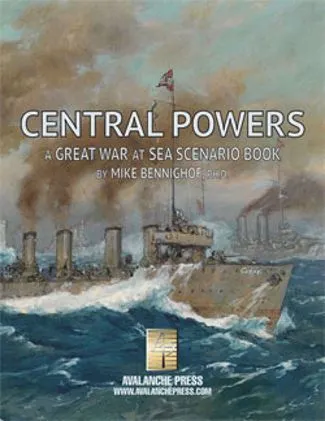
Pomoc w zasadach gry Great War at Sea: Central Powers
Zrozumiałe wyjaśnienia tur, efektów kart i spornych sytuacji z odnośnikami do oficjalnych źródeł i zapisaną historią pytań.
Co chcesz wiedzieć?
Odpowiedzi pochodzą z oficjalnej instrukcji, ze stroną do sprawdzenia.
Great War at Sea: Central Powers to dodatek do gry Great War at Sea: Dreadnoughts wydany w 2015 roku dla 1–2 graczy, z rozgrywką trwającą 30–180 minut i dla osób od 12 lat. Projekt gry: Michael Bennighof. Główne mechaniki: Dice Rolling, Secret Unit Deployment i Hexagon Grid.








Po angielsku
From the publisher's website: In Great War at Sea: Triple Alliance, we explored the notion of Italy remaining true to her alliance partners, Germany and Austria-Hungary, during the outbreak of the First World War in 1914. Staff officers from all three fleets prepared detailed operational plans, yet when war came in August 1914 Italy refused to join her Alliance partners and those plans would never be used. The joint staffs foresaw an aggressive Triple Alliance, one attemtping to seize control of the Mediterranean from the British and French. Our book Triple Alliance looked at the first year of such a naval war in a set of 43 new scenarios for our Great War at Sea: Mediterranean boxed game. Central Powers picks up that story in September 1915, with Italy, Austria-Hungary and Germany still struggling against Britain and France as new warships join the fleets of both sides. The fleets are almost evenly matched, with a slight Allied superiority in numbers matched by the Central Powers' central position. In this war, the fighting on the Mediterranean Sea has been just as bloody and destructive as that on the land fronts. Central Powers is a book supplement for the Great War at Sea series based on this naval war that never happened, but was probably more likely to have occurred than the actual events. It is not a complete game; ownership of our Mediterranean and Jutland boxed games and Triple Alliance, Dreadnoughts and Zeppelins supplements is required to enjoy all of the scenarios. The book includes 90 new playing pieces. The French receive their powerful Normandie- and Lyons-class super-dreadnoughts, and a pair of battle cruisers as well. And there's a quartet of French light cruisers proposed before the war but never built, that would have been very useful in fleet actions. With the Royal Navy unwilling to detach too much strength from the Grand Fleet facing the Germans across the North Sea, it falls on the other Allies to bolster this very active naval front. The Americans enter the Mediterranean naval war with their oldest dreadnoughts and newest pre-dreadnoughts, plus a large squadron of the armored cruisers. The Japanese are present as well with a squadron of battleships and one of cruisers. Plus there are four re-armed Austrian light cruisers (there have to be Austrians) and an Italian seaplane carrier (with seaplanes). The forty-two (42) scenarios continue the Triple Alliance story line through to the end of the Great War; since the book shares the special rules of Triple Alliance, we have more room for the story! It's a unique project, telling the alternative history of the entire Triple Alliance Mediterranean naval war in a series of game scenarios.
Według katalogu Great War at Sea: Central Powers obsługuje od 1 do 2 graczy. Ten zakres odpowiada liczbie graczy podanej przez wydawcę, więc grę można przygotować dla dowolnej grupy w jego granicach. Przygotowanie, niektóre zasady i punktacja mogą jednak różnić się w zależności od liczby graczy; dokładną konfigurację sprawdź w instrukcji swojego wydania.
Podany czas rozgrywki w Great War at Sea: Central Powers wynosi 30–180 minut. To szacunek wydawcy dla pełnej partii. Rzeczywisty czas zależy od grupy, liczby graczy i znajomości zasad: pierwsze partie zwykle trwają dłużej, a doświadczone grupy kończą szybciej. Przygotowanie gry i tłumaczenie zasad nie są wliczone w ten szacunek.
Katalog podaje dla Great War at Sea: Central Powers wiek od 12 lat. To zalecenie wydawcy, które uwzględnia wymagania dotyczące czytania, złożoność zasad i drobne elementy, a nie tylko tematykę. Młodsi gracze często mogą dołączyć z pomocą dorosłego; sprawdź zalecenie wiekowe swojego wydania i weź pod uwagę doświadczenie grupy z grami planszowymi.
Great War at Sea: Central Powers ma ocenę złożoności 3,0 na 5 według graczy BoardGameGeek, co czyni ją grą średnio złożoną. Ocena pokazuje, ile znajomości zasad, planowania i podejmowania decyzji wymaga typowa rozgrywka. Cięższe gry wymagają dłuższego pierwszego tłumaczenia, dlatego przed wieczorem z grami warto skorzystać z przewodnika przygotowania.
Great War at Sea: Central Powers należy do tych kategorii: Wargame, Nautical i Expansion for Base-game. Główne mechaniki to Dice Rolling, Secret Unit Deployment i Hexagon Grid. Kategorie opisują temat i świat gry, a mechaniki to, co gracze faktycznie robią w swojej turze. Każda mechanika prowadzi do strony katalogu z podobnymi grami, co pomaga znaleźć coś porównywalnego na kolejny wieczór.
Autorzy wymienieni przy Great War at Sea: Central Powers to: Michael Bennighof. Te informacje pochodzą z opublikowanych danych gry i wskazują osoby odpowiedzialne za jej projekt, a nie ilustratorów czy wydawców. Strony autorów w MeepleRules zbierają inne tytuły tych samych twórców, co pomaga, gdy gra ci się podoba i szukasz podobnych.
W katalogu Great War at Sea: Central Powers figuruje jako dodatek do Great War at Sea: Dreadnoughts. Dodatki dokładają nową zawartość, zasady lub scenariusze do gry podstawowej i zwykle nie nadają się do samodzielnej gry, więc do korzystania z niego potrzebujesz gry Great War at Sea: Dreadnoughts. Sprawdź, czy twoje wydanie gry Great War at Sea: Dreadnoughts jest zgodne, bo niektóre dodatki zmieniano między wydaniami.