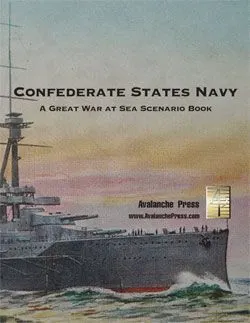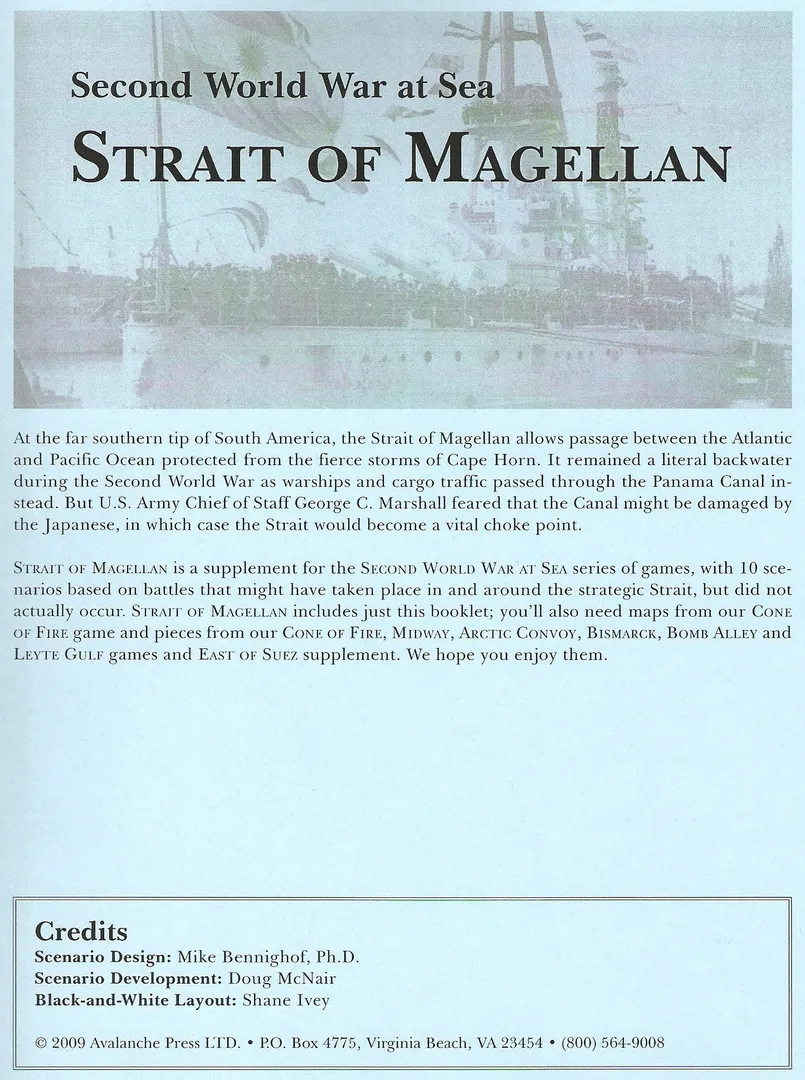
- Ocena BGG
- 6,4
Second World War at Sea: Strait of Magellan
- 2 graczy
- 60 min
- Złożoność 3,0/5
- 2009
2008
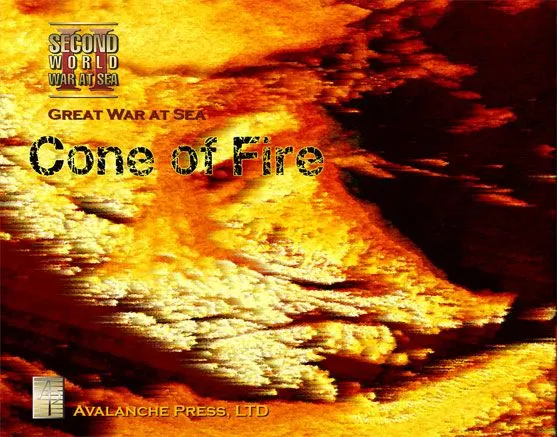
Pomoc w zasadach gry Great War at Sea / Second World War at Sea: Cone of Fire
Zrozumiałe wyjaśnienia tur, efektów kart i spornych sytuacji z odnośnikami do oficjalnych źródeł i zapisaną historią pytań.
Dla 2 graczy
Co chcesz wiedzieć?
Odpowiedzi pochodzą z oficjalnej instrukcji, ze stroną do sprawdzenia.
Great War at Sea / Second World War at Sea: Cone of Fire to gra planszowa wydana w 2008 roku dla 2–4 graczy i dla osób od 12 lat. Projekt gry: Michael Bennighof i Doug McNair. Główne mechaniki: Dice Rolling, Secret Unit Deployment i Hexagon Grid.




Po angielsku
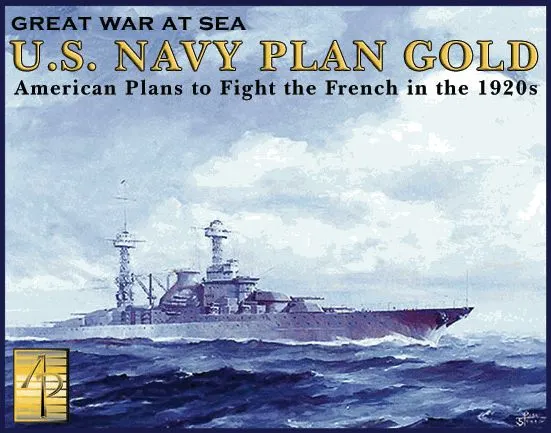
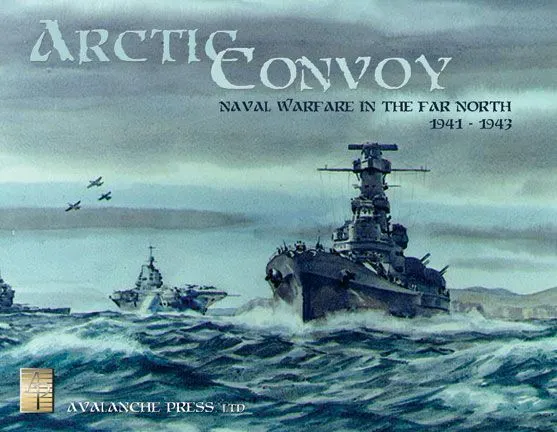
From the Avalanche Press website: At the turn of the last century, South America seemed poised to make the same economic leap as the northern half of the hemisphere. Fueled by booming exports of grain, cattle, coffee and rubber, Brazil and Argentina saw their economies grow rapidly and at one time both stood among the world's ten wealthiest nations. All that cash led their leaders to seek the prestige symbols of the day: dreadnought battleships. Argentina, Brazil and Chile all built dreadnoughts just like the Great Powers, but none of them ever fired a shot at a foreign enemy. Cone of Fire is a boxed game for both the Second World War at Sea and Great War at Sea series. The fleets of Argentina, Brazil and Chile plus those of Peru and Uruguay are added to both series, along with ships from Germany, France and Britain. Most of the scenarios, or game situations, are based on hypothetical situations arising from the actual war scares between the South American nations and sometimes European interlopers, and the war plans with which they addressed them. There are also scenarios based on the actual conflicts which took place in South American waters: the hunt for Admiral Maximilian Graf von Spee's German cruiser squadron in 1914, and the hunt for the cruiser that bore his name 25 years later. Alongside the ships actually operated by the South American naval powers, there are also ships they ordered and did not receive, or contemplated but did not order. The Brazilians have several projected classes of battleships that they never completed, as well as the modern warships they sought from the U.S. Navy during World War II. Argentina and Chile have their projected battleships, carriers and cruisers as well. And there are the actual jet aircraft flown by Argentina and Brazil. There are six maps, three at Second World War at Sea scale, and three at Great War at Sea scale. These cover the region from south of Tierra del Fuego, the southernmost tip of the Americas, to well north of Rio de Janeiro. There are huge stretches of ocean as well as the narrow, winding channels of the Chilean coast.
Według katalogu Great War at Sea / Second World War at Sea: Cone of Fire obsługuje od 2 do 4 graczy. Ten zakres odpowiada liczbie graczy podanej przez wydawcę, więc grę można przygotować dla dowolnej grupy w jego granicach. Przygotowanie, niektóre zasady i punktacja mogą jednak różnić się w zależności od liczby graczy; dokładną konfigurację sprawdź w instrukcji swojego wydania.
Katalog podaje dla Great War at Sea / Second World War at Sea: Cone of Fire wiek od 12 lat. To zalecenie wydawcy, które uwzględnia wymagania dotyczące czytania, złożoność zasad i drobne elementy, a nie tylko tematykę. Młodsi gracze często mogą dołączyć z pomocą dorosłego; sprawdź zalecenie wiekowe swojego wydania i weź pod uwagę doświadczenie grupy z grami planszowymi.
Great War at Sea / Second World War at Sea: Cone of Fire ma ocenę złożoności 2,9 na 5 według graczy BoardGameGeek, co czyni ją grą raczej lekką. Ocena pokazuje, ile znajomości zasad, planowania i podejmowania decyzji wymaga typowa rozgrywka. Cięższe gry wymagają dłuższego pierwszego tłumaczenia, dlatego przed wieczorem z grami warto skorzystać z przewodnika przygotowania.
Great War at Sea / Second World War at Sea: Cone of Fire należy do tych kategorii: Wargame, Nautical i World War II. Główne mechaniki to Dice Rolling, Secret Unit Deployment i Hexagon Grid. Kategorie opisują temat i świat gry, a mechaniki to, co gracze faktycznie robią w swojej turze. Każda mechanika prowadzi do strony katalogu z podobnymi grami, co pomaga znaleźć coś porównywalnego na kolejny wieczór.
Autorzy wymienieni przy Great War at Sea / Second World War at Sea: Cone of Fire to: Michael Bennighof i Doug McNair. Te informacje pochodzą z opublikowanych danych gry i wskazują osoby odpowiedzialne za jej projekt, a nie ilustratorów czy wydawców. Strony autorów w MeepleRules zbierają inne tytuły tych samych twórców, co pomaga, gdy gra ci się podoba i szukasz podobnych.
W katalogu Great War at Sea / Second World War at Sea: Cone of Fire figuruje jako gra podstawowa. Można w nią grać samodzielnie, korzystając z elementów z pudełka, bez żadnego innego tytułu. Dodatki, jeśli istnieją, dokładają nową zawartość lub zasady i są wymienione w katalogu osobno, z odnośnikiem do tej gry podstawowej.