
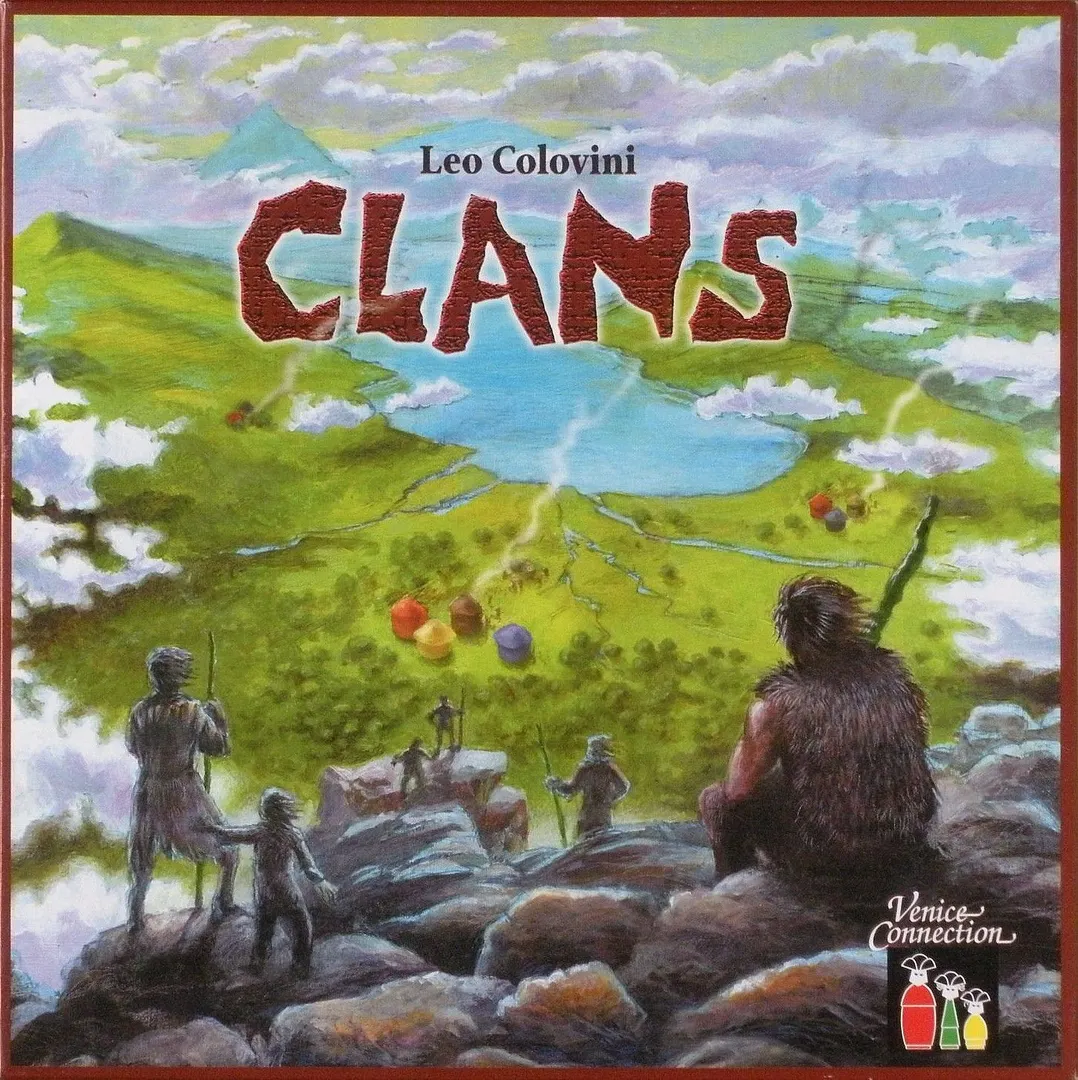
- Pozycja w BGG
- BGG #2070
- Ocena BGG
- 6,6
Clans
- 2–4 graczy
- 30 min
- Złożoność 2,0/5
- 2002
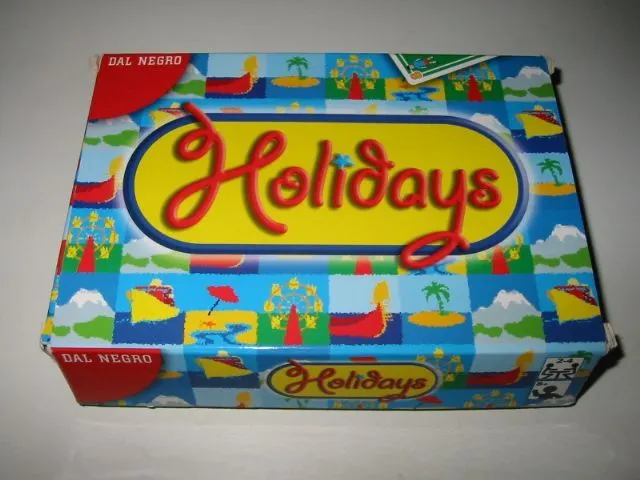
2005
Pomoc w zasadach gry Holidays
Zrozumiałe wyjaśnienia tur, efektów kart i spornych sytuacji z odnośnikami do oficjalnych źródeł i zapisaną historią pytań.
Dla 2 graczy
Co chcesz wiedzieć?
Odpowiedzi pochodzą z oficjalnej instrukcji, ze stroną do sprawdzenia.
Holidays to gra planszowa wydana w 2005 roku dla 2–4 graczy i dla osób od 8 lat. Projekt gry: Leo Colovini. Główne mechaniki: Trick-taking.

Po angielsku
In this card game, players propose holiday destinations/types of holidays and then try to win the most points by sending the highest scoring group of people on those holidays. The basic mechanism is trick-taking with an element of bluffing. There are two kinds of cards in the game. Each player has five holiday destination cards. They are also dealt 6 traveler cards, which may be men, women or children with a value of from 3 to 8 points. There are five kinds of holidays that may be proposed: A romantic trip to Venice for a couple (one man, one woman) Night-life holidays in Mykonos with any number of men and women Trips to an amusement park for any number of children accompanied by one adult (man or woman) A restful family holiday at Berghotel (one man, one woman and one child exactly) Fantastic cruises (any number of men or women, but only men or only women) The starting player proposes a holiday by placing the card in the center. Three traveler cards are dealt to the centre of the table, one of which is face up - this is the value of the holiday. The other players, in turn, may agree to this destination, or change it by paying one traveler card (and augmenting the value of the holiday). This goes round, players changing destinations as long as they want to and can afford to, until everyone finally agrees on the destination. Players then play cards that match the criteria for that destination and the player who plays travelers with the highest score wins the holiday. This is scored as the value from the initial 3 cards plus any extra cards played to change the destination, divided by ten. Points that don't make up to ten exactly don't contribute to the score. The player to first score 10 points wins. The game has a nice element of bluffing as a player could propose holiday destinations they have no interest in so that after other players change the destination, they can change it to the real place they'd prefer to go.
Według katalogu Holidays obsługuje od 2 do 4 graczy. Ten zakres odpowiada liczbie graczy podanej przez wydawcę, więc grę można przygotować dla dowolnej grupy w jego granicach. Przygotowanie, niektóre zasady i punktacja mogą jednak różnić się w zależności od liczby graczy; dokładną konfigurację sprawdź w instrukcji swojego wydania.
Katalog podaje dla Holidays wiek od 8 lat. To zalecenie wydawcy, które uwzględnia wymagania dotyczące czytania, złożoność zasad i drobne elementy, a nie tylko tematykę. Młodsi gracze często mogą dołączyć z pomocą dorosłego; sprawdź zalecenie wiekowe swojego wydania i weź pod uwagę doświadczenie grupy z grami planszowymi.
Holidays ma ocenę złożoności 1,0 na 5 według graczy BoardGameGeek, co czyni ją grą lekką. Ocena pokazuje, ile znajomości zasad, planowania i podejmowania decyzji wymaga typowa rozgrywka. Cięższe gry wymagają dłuższego pierwszego tłumaczenia, dlatego przed wieczorem z grami warto skorzystać z przewodnika przygotowania.
Holidays należy do tych kategorii: Card Game i Bluffing. Główne mechaniki to Trick-taking. Kategorie opisują temat i świat gry, a mechaniki to, co gracze faktycznie robią w swojej turze. Każda mechanika prowadzi do strony katalogu z podobnymi grami, co pomaga znaleźć coś porównywalnego na kolejny wieczór.
Autorzy wymienieni przy Holidays to: Leo Colovini. Te informacje pochodzą z opublikowanych danych gry i wskazują osoby odpowiedzialne za jej projekt, a nie ilustratorów czy wydawców. Strony autorów w MeepleRules zbierają inne tytuły tych samych twórców, co pomaga, gdy gra ci się podoba i szukasz podobnych.
W katalogu Holidays figuruje jako gra podstawowa. Można w nią grać samodzielnie, korzystając z elementów z pudełka, bez żadnego innego tytułu. Dodatki, jeśli istnieją, dokładają nową zawartość lub zasady i są wymienione w katalogu osobno, z odnośnikiem do tej gry podstawowej.