
- Pozycja w BGG
- BGG #15 226
- Ocena BGG
- 7,2
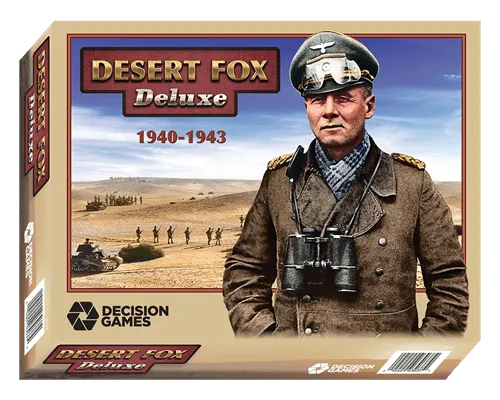
Desert Fox Deluxe
- 2 graczy
- 180–2880 min
- Złożoność 3,1/5
- 2016
2013
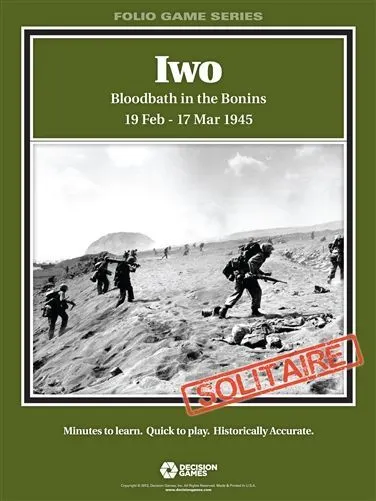
Pomoc w zasadach gry Iwo: Bloodbath in the Bonins 19 Feb – 17 Mar 1945
Zrozumiałe wyjaśnienia tur, efektów kart i spornych sytuacji z odnośnikami do oficjalnych źródeł i zapisaną historią pytań.
Dla 1 gracza
Co chcesz wiedzieć?
Odpowiedzi pochodzą z oficjalnej instrukcji, ze stroną do sprawdzenia.
Iwo: Bloodbath in the Bonins 19 Feb – 17 Mar 1945 to gra planszowa wydana w 2013 roku dla 1–2 graczy, z rozgrywką trwającą 60–120 minut i dla osób od 12 lat. Projekt gry: Chris Perello. Główne mechaniki: Dice Rolling, Hexagon Grid i Simulation.




Po angielsku
Iwo, Bloodbath in the Bonins 19 Feb – 17 Mar 1945, is a solitaire board-wargame using a modification of the Series: Fire & Movement combat system (Decision Games). Developed to portray the mechanized battlefields of a later generation, F&M stresses the use of fire support to generate breakthroughs, followed by a rapid penetration by mobile reserves. Iwo Jima was a critical point on the flight path of US bombers from their Saipan bases to their Japanese targets. The island would be a refuge for malfunctioning or damaged bombers coming or going. An obvious target for a US amphibious assault, the Japanese had reinforced the garrison and dug miles of tunnels the length and breadth of the island. Their goal was to inflict maximum casualties on the Americans to force them to reconsider the seemingly inevitable invasion of Japan. The resulting battle was brutal, even by the standards of the Pacific War. On Iwo, the Japanese fought from within an extensive tunnel network, neutralizing the usual fire support effects and limiting maneuver to the US approach to each fortified position. The Japanese units are hidden, their strength revealed only at the instant of combat, so the US player must mass against a position to play it safe, using fire support to suppress the defenders and so reduce attacker casualties (a key victory condition]. On the other hand, the US player must clear the island to win, and time is not on his side. Sooner or later he must take risks to push the battle forward. Taking some terrain, like Mount Suribachi, is critical to weakening the island's defense. The Japanese defense is handled by a short, simple set of priorities when conducting Japanese bombardments, punctuated with an occasional Banzai charge. A weak attack against a bunker may only displace the defenders to another position, where they will have to be attacked again. The rules include an option for a two-player game, with a second player handling the Japanese forces. Note: This is a SOLITAIRE game with two-player rules included. Game Scale: Game Turn: 2 days Hex: 350 yards / 300 meters Units: Company to Battalion Game Inventory: One 17 x 22" full color map One dual-side printed countersheet (100 1/2" counters) One 4-page Iwo rulebook One 8-page Fire & Movement Folio Standard rulebook Solitaire Playability: Very High Complexity Level: Low Players: 1 (Solitaire game, but 2 or more can play) Playing Time: 1-2 hours Players will need to include one 6-sided die for play.
Według katalogu Iwo: Bloodbath in the Bonins 19 Feb – 17 Mar 1945 obsługuje od 1 do 2 graczy. Ten zakres odpowiada liczbie graczy podanej przez wydawcę, więc grę można przygotować dla dowolnej grupy w jego granicach. Przygotowanie, niektóre zasady i punktacja mogą jednak różnić się w zależności od liczby graczy; dokładną konfigurację sprawdź w instrukcji swojego wydania.
Podany czas rozgrywki w Iwo: Bloodbath in the Bonins 19 Feb – 17 Mar 1945 wynosi 60–120 minut. To szacunek wydawcy dla pełnej partii. Rzeczywisty czas zależy od grupy, liczby graczy i znajomości zasad: pierwsze partie zwykle trwają dłużej, a doświadczone grupy kończą szybciej. Przygotowanie gry i tłumaczenie zasad nie są wliczone w ten szacunek.
Katalog podaje dla Iwo: Bloodbath in the Bonins 19 Feb – 17 Mar 1945 wiek od 12 lat. To zalecenie wydawcy, które uwzględnia wymagania dotyczące czytania, złożoność zasad i drobne elementy, a nie tylko tematykę. Młodsi gracze często mogą dołączyć z pomocą dorosłego; sprawdź zalecenie wiekowe swojego wydania i weź pod uwagę doświadczenie grupy z grami planszowymi.
Iwo: Bloodbath in the Bonins 19 Feb – 17 Mar 1945 ma ocenę złożoności 2,5 na 5 według graczy BoardGameGeek, co czyni ją grą raczej lekką. Ocena pokazuje, ile znajomości zasad, planowania i podejmowania decyzji wymaga typowa rozgrywka. Cięższe gry wymagają dłuższego pierwszego tłumaczenia, dlatego przed wieczorem z grami warto skorzystać z przewodnika przygotowania.
Iwo: Bloodbath in the Bonins 19 Feb – 17 Mar 1945 należy do tych kategorii: Wargame i World War II. Główne mechaniki to Dice Rolling, Hexagon Grid i Simulation. Kategorie opisują temat i świat gry, a mechaniki to, co gracze faktycznie robią w swojej turze. Każda mechanika prowadzi do strony katalogu z podobnymi grami, co pomaga znaleźć coś porównywalnego na kolejny wieczór.
Autorzy wymienieni przy Iwo: Bloodbath in the Bonins 19 Feb – 17 Mar 1945 to: Chris Perello. Te informacje pochodzą z opublikowanych danych gry i wskazują osoby odpowiedzialne za jej projekt, a nie ilustratorów czy wydawców. Strony autorów w MeepleRules zbierają inne tytuły tych samych twórców, co pomaga, gdy gra ci się podoba i szukasz podobnych.
W katalogu Iwo: Bloodbath in the Bonins 19 Feb – 17 Mar 1945 figuruje jako gra podstawowa. Można w nią grać samodzielnie, korzystając z elementów z pudełka, bez żadnego innego tytułu. Dodatki, jeśli istnieją, dokładają nową zawartość lub zasady i są wymienione w katalogu osobno, z odnośnikiem do tej gry podstawowej.