
- Pozycja w BGG
- BGG #14 917
- Ocena BGG
- 7,1
Taĉmento
- 1–2 graczy
- 5–10 min
- Złożoność 1,5/5
- 2023
2025
Pomoc w zasadach gry Iwo Jima: Hell On Earth
Zrozumiałe wyjaśnienia tur, efektów kart i spornych sytuacji z odnośnikami do oficjalnych źródeł i zapisaną historią pytań.
Dla 1 gracza
Co chcesz wiedzieć?
Odpowiedzi pochodzą z oficjalnej instrukcji, ze stroną do sprawdzenia.
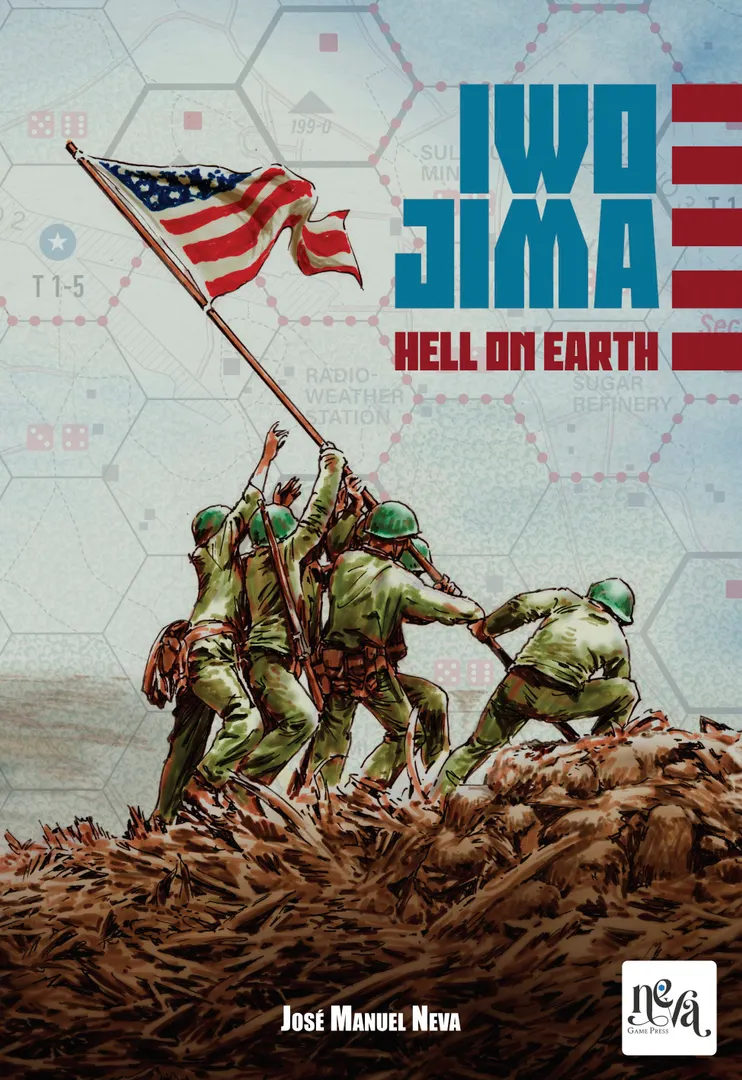
Iwo Jima: Hell On Earth to gra planszowa wydana w 2025 roku dla 1 gracza, z rozgrywką trwającą 90–120 minut i dla osób od 14 lat. Projekt gry: José Manuel Neva. Główne mechaniki: Dice Rolling, Variable Set-up i Hexagon Grid.


Po angielsku
THE HISTORICAL CONTEXT The Battle of Iwo Jima, a pivotal momentin the Pacific Theater of World War II, stands as a testament to the indomitable spirit of the human will and the immense cost of victory. This brutal conflict, fought between the United States Marine Corps and the Imperial Japanese Army, unfolded on the small volcanic island of Iwo Jima, a mere 660 miles south of Tokyo. From February 19 to March 26, 1945, American forces waged a relentless assault against a well-fortified enemy, determined to seize control of the island’s strategic airfields. Iwo Jima was crucial to the Allied war effort, serving as a vital base for fighter planes escorting long-range bombers on missions to the Japanese mainland. The battle was marked by fierce resistance from the Japanese defenders, who had meticulously constructed a network of underground tunnels and fortifications.The Marines faced relentless attacks, as they fought their way across the island’s rugged terrain. The iconic image of Marines raising the American flag atop Mount Suribachi became a symbol of American determination and sacrifice. The Battle of Iwo Jima was one of the bloodiest battles in Marine Corps history, with thousands of American and Japanese soldiers losing their lives. The island’s volcanic ash and the intense fighting conditions made it a grueling ordeal for both sides. Despite the heavy casualties, the Marines ultimately achieved their objective, securing Iwo Jima and bringing the United States one step closer to victory in the Pacific War. GAMEPLAY AT A GLANCE In “Iwo Jima: Hell on Earth,” your mission as the commander of US forces is to conquer the island of Iwo Jima to secure its three airfields and the iconic Mount Suribachi. The game simulates the 36-day battle in nine turns, with each turn representing approximately four days. Objective and how to win: Victory is determined at the end of Turn 9 by calculating your Victory Points (VPs). You earn VPs by: Eliminating Japanese units, Capturing key objectives on time, Japanese surrender. You can lose VPs if: You play too many Special Orders and/or You suffer too many US casualties. Your final VP score will give you an assessment of your performance, ranging from a “pen-pushing job” (1 or less to 5 VP) to an “incredible victory” (19-20 VP) Sequence of play: The game is played over nine turns, and each turn follows the sequence below: 1. Weather Phase: A die is rolled to determine the weather conditions for the turn, which can affect bombardment points and unit movement. Turn 1 always has “Good Weather”. 2. Bombardment Phase: Both US and Japanese forces bombard enemy units. First, each side’s bombardment points (BP) are determined, which can be modified by weather or airfield control. Then bombardments are resolved, US first, then Japanese, by selecting targets and rolling dice to determine hits. 3. First Movement Phase: US units can attempt to recover from retreat markers (rally) and then move across the map, choosing between normal or strategic movement. 4. First Attack Phase: US units that have not performed a previous action can conduct a Reconnaissance-in-Force (Recon) or an Assault against adjacent Japanese units. They can also provide Combat Support to an assault. During assaults, hidden Japanese units will reveal their response, which may include a Banzai Attack or a Redeployment. The combat ratio is calculated, and results are applied. 5. Raid Phase (Japanese): Japanese forces react with limited attacks, carrying out raids against nearby US units. 6. Second Movement Phase: This phase is a repeat of the First Movement Phase for US units. 7. Second Attack Phase: Similar to the First Attack Phase, US units can perform Reconnaissance or Assaults. At the end of this phase, all situation markers are removed. 8. Command Phase (Skipped on Turn 9): US units attempt to rally again with a +1 modifier. Command Points (CPs) are gained by rolling a die, which can be spent on reinforcements, unit deployment, or to obtain special command markers. The Japanese side also resolves a limited command step, where their single-step units can attempt to gain a step or perform a Banzai attack. 9. Organization Phase: The turn marker is advanced. US units on the turn track can move to the Reserve Area or recover steps. Reaction markers are put into the red bag, and Command markers can be drawn if the turn space is highlighted. At the end of Turn 9, the player’s performance is assessed based on criteria such as Japanese units eliminated, capture of key objectives, special order markers played, and US casualties. Key decision/challenges: US units have a dual role, acting as both direct assault regiments and providing various combat support types (Flamethrowers, Tank, Artillery). This requires careful planning to combine their direct combat strength with support for optimal attacks. Assaults against hidden Japanese units are resolved using a chit-pull system: Intelligence markers are drawn to determine Japanese defense, support, and unpredictable “Banzai” attacks or “Redeployments” via tunnels. This random element ensures high replayability, making each game fresh. The game is designed to be very difficult to achieve a significant victory, reflecting the brutal historical battle. WHAT’S IN THE BOX? 1 Mounted Map 120 Counters 2 6-sided dice 4 Player Aid Sheets 2 Cloth bags 1 Rulebook —description from the publisher
Według katalogu Iwo Jima: Hell On Earth obsługuje 1 gracza. To liczba graczy podana przez wydawcę, więc gra jest zaprojektowana dokładnie dla takiej liczby uczestników. Warianty dla grup innej wielkości, jeśli w ogóle istnieją, opisano w instrukcji twojego wydania; sprawdź ją uważnie, zanim przygotujesz inną konfigurację stołu.
Podany czas rozgrywki w Iwo Jima: Hell On Earth wynosi 90–120 minut. To szacunek wydawcy dla pełnej partii. Rzeczywisty czas zależy od grupy, liczby graczy i znajomości zasad: pierwsze partie zwykle trwają dłużej, a doświadczone grupy kończą szybciej. Przygotowanie gry i tłumaczenie zasad nie są wliczone w ten szacunek.
Katalog podaje dla Iwo Jima: Hell On Earth wiek od 14 lat. To zalecenie wydawcy, które uwzględnia wymagania dotyczące czytania, złożoność zasad i drobne elementy, a nie tylko tematykę. Młodsi gracze często mogą dołączyć z pomocą dorosłego; sprawdź zalecenie wiekowe swojego wydania i weź pod uwagę doświadczenie grupy z grami planszowymi.
Iwo Jima: Hell On Earth ma ocenę złożoności 2,3 na 5 według graczy BoardGameGeek, co czyni ją grą raczej lekką. Ocena pokazuje, ile znajomości zasad, planowania i podejmowania decyzji wymaga typowa rozgrywka. Cięższe gry wymagają dłuższego pierwszego tłumaczenia, dlatego przed wieczorem z grami warto skorzystać z przewodnika przygotowania.
Iwo Jima: Hell On Earth należy do tych kategorii: Wargame i World War II. Główne mechaniki to Dice Rolling, Variable Set-up i Hexagon Grid. Kategorie opisują temat i świat gry, a mechaniki to, co gracze faktycznie robią w swojej turze. Każda mechanika prowadzi do strony katalogu z podobnymi grami, co pomaga znaleźć coś porównywalnego na kolejny wieczór.
Autorzy wymienieni przy Iwo Jima: Hell On Earth to: José Manuel Neva. Te informacje pochodzą z opublikowanych danych gry i wskazują osoby odpowiedzialne za jej projekt, a nie ilustratorów czy wydawców. Strony autorów w MeepleRules zbierają inne tytuły tych samych twórców, co pomaga, gdy gra ci się podoba i szukasz podobnych.
W katalogu Iwo Jima: Hell On Earth figuruje jako gra podstawowa. Można w nią grać samodzielnie, korzystając z elementów z pudełka, bez żadnego innego tytułu. Dodatki, jeśli istnieją, dokładają nową zawartość lub zasady i są wymienione w katalogu osobno, z odnośnikiem do tej gry podstawowej.