
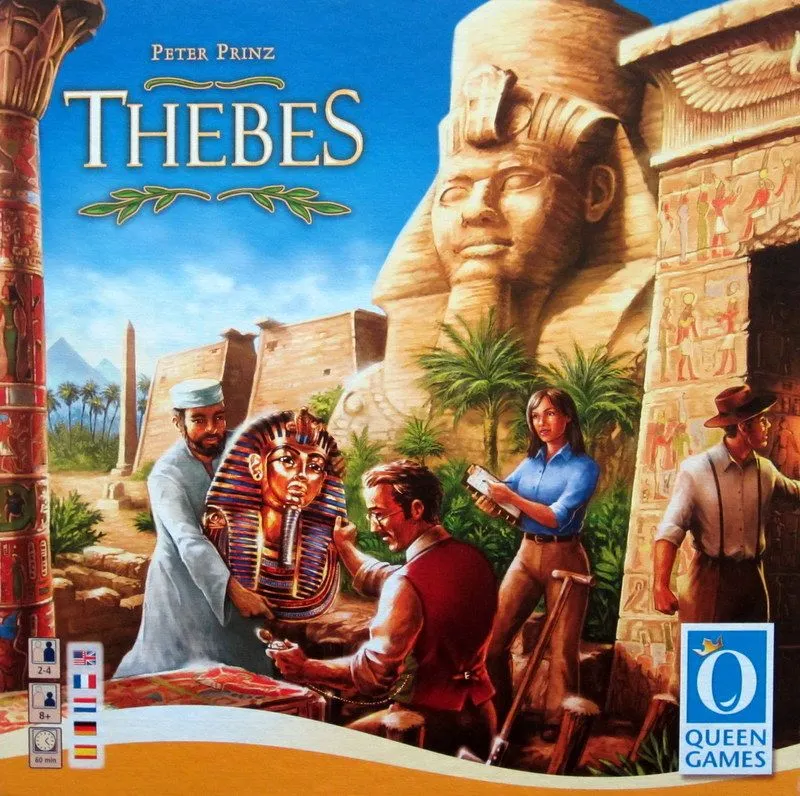
- Pozycja w BGG
- BGG #773
- Ocena BGG
- 7,1
Thebes
- 2–4 graczy
- 60 min
- Złożoność 2,2/5
- 2007
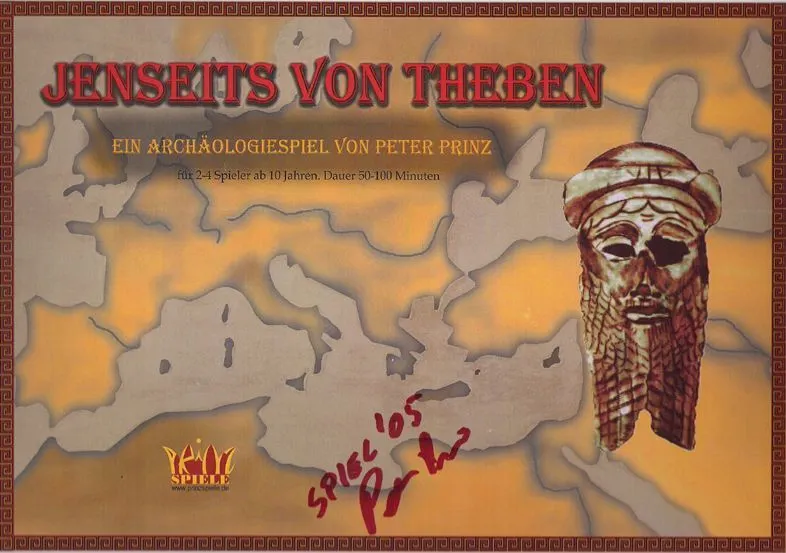
2004
Pomoc w zasadach gry Jenseits von Theben
Zrozumiałe wyjaśnienia tur, efektów kart i spornych sytuacji z odnośnikami do oficjalnych źródeł i zapisaną historią pytań.
Dla 2 graczy
Co chcesz wiedzieć?
Odpowiedzi pochodzą z oficjalnej instrukcji, ze stroną do sprawdzenia.
Jenseits von Theben to gra planszowa wydana w 2004 roku dla 2–4 graczy, z rozgrywką trwającą 75 minut i dla osób od 10 lat. Projekt gry: Peter Prinz. Główne mechaniki: Turn Order: Time Track.






Po angielsku
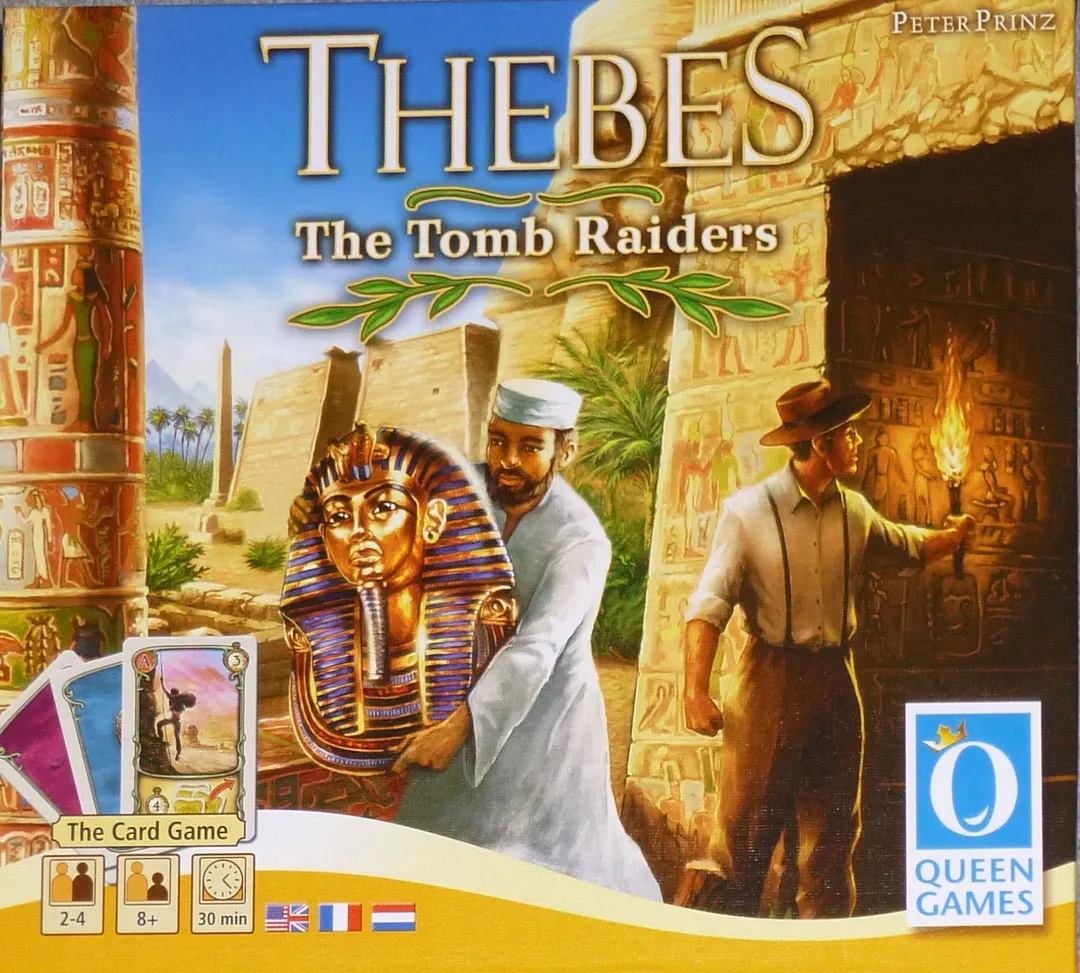
This entry is for the original Jenseits von Theben; for the new printing by Queen, go to Thebes. Jenseits von Theben is a game of competitive archeology. Players are archaeologists who must travel around Europe to acquire knowledge about five ancient civilizations -- the Greeks, the Cretans, the Egyptians, the Palestinians, and the Macedonians -- and then must use this knowledge to excavate historical sites in the areas of these civilizations. Periodically, there are expositions at major European cities, and the archaeologist who shows up on time with the best collection of artifacts (plus a minor die roll) wins the purse. The archaeologist who learns the most about the civilizations, claims the greatest-valued artifacts, and presents the biggest collection to the European exhibitions will win out over his or her colleagues. The key element to the game is that it is played out over a period of two (or three) years, and each action a player performs takes a certain amount of time -- traveling is a week between cities, gathering knowledge takes time for the level of the knowledge, and actually digging at a cultural site takes time to yield a certain number of artifact cards. The game uses a novel mechanic to keep track of this -- there is a track of 52 spaces around the outside of the board, and each time a player moves and takes an action, he or she moves their player token forward in time. Players take turns based on being the one who is furthest back in "time". So, a player can go to an excavation site and spend 10 weeks digging for artifacts, but that will also mean that the other players will likely be taking several actions in the interim while that player waits for the "time" to catch up. In addition, the artifact cards in each civilization are a hidden number. The deck for each civilization contains twelve treasures of varying point values and two knowledge cards, with another sixteen cards of dirt. At the beginning of the game, seven cards are removed from each deck without the players seeing them. Through the course of the game, when a player excavates at a site, he or she keeps the artifacts that are revealed from a site, but the dirt is shuffled back into the remaining cards. Both the imperfect information element as well as the recycled dirt make for a random chance element that is overcome somewhat by digging at a site where a player has much knowledge -- more knowledge means that more cards will be revealed in a shorter period of time, and a greater chance of revealing treasures that may yet remain after another player has already recovered some treasures from that site. The original run of Jenseits von Theben was hand-produced by Prinz Spiele in a first edition of 100, and a second edition of 300. Re-implemented by: Thebes
Według katalogu Jenseits von Theben obsługuje od 2 do 4 graczy. Ten zakres odpowiada liczbie graczy podanej przez wydawcę, więc grę można przygotować dla dowolnej grupy w jego granicach. Przygotowanie, niektóre zasady i punktacja mogą jednak różnić się w zależności od liczby graczy; dokładną konfigurację sprawdź w instrukcji swojego wydania.
Podany czas rozgrywki w Jenseits von Theben wynosi 75 minut. To szacunek wydawcy dla pełnej partii. Rzeczywisty czas zależy od grupy, liczby graczy i znajomości zasad: pierwsze partie zwykle trwają dłużej, a doświadczone grupy kończą szybciej. Przygotowanie gry i tłumaczenie zasad nie są wliczone w ten szacunek.
Katalog podaje dla Jenseits von Theben wiek od 10 lat. To zalecenie wydawcy, które uwzględnia wymagania dotyczące czytania, złożoność zasad i drobne elementy, a nie tylko tematykę. Młodsi gracze często mogą dołączyć z pomocą dorosłego; sprawdź zalecenie wiekowe swojego wydania i weź pod uwagę doświadczenie grupy z grami planszowymi.
Jenseits von Theben ma ocenę złożoności 2,4 na 5 według graczy BoardGameGeek, co czyni ją grą raczej lekką. Ocena pokazuje, ile znajomości zasad, planowania i podejmowania decyzji wymaga typowa rozgrywka. Cięższe gry wymagają dłuższego pierwszego tłumaczenia, dlatego przed wieczorem z grami warto skorzystać z przewodnika przygotowania.
Jenseits von Theben należy do tych kategorii: Travel i Exploration. Główne mechaniki to Turn Order: Time Track. Kategorie opisują temat i świat gry, a mechaniki to, co gracze faktycznie robią w swojej turze. Każda mechanika prowadzi do strony katalogu z podobnymi grami, co pomaga znaleźć coś porównywalnego na kolejny wieczór.
Autorzy wymienieni przy Jenseits von Theben to: Peter Prinz. Te informacje pochodzą z opublikowanych danych gry i wskazują osoby odpowiedzialne za jej projekt, a nie ilustratorów czy wydawców. Strony autorów w MeepleRules zbierają inne tytuły tych samych twórców, co pomaga, gdy gra ci się podoba i szukasz podobnych.
W katalogu Jenseits von Theben figuruje jako gra podstawowa. Można w nią grać samodzielnie, korzystając z elementów z pudełka, bez żadnego innego tytułu. Dodatki, jeśli istnieją, dokładają nową zawartość lub zasady i są wymienione w katalogu osobno, z odnośnikiem do tej gry podstawowej.