
- Pozycja w BGG
- BGG #8918
- Ocena BGG
- 8,0
Global War: World War II Worldwide 1939-1945
- 1 gracz
- 45–180 min
- Złożoność 3,5/5
- 2023
2022
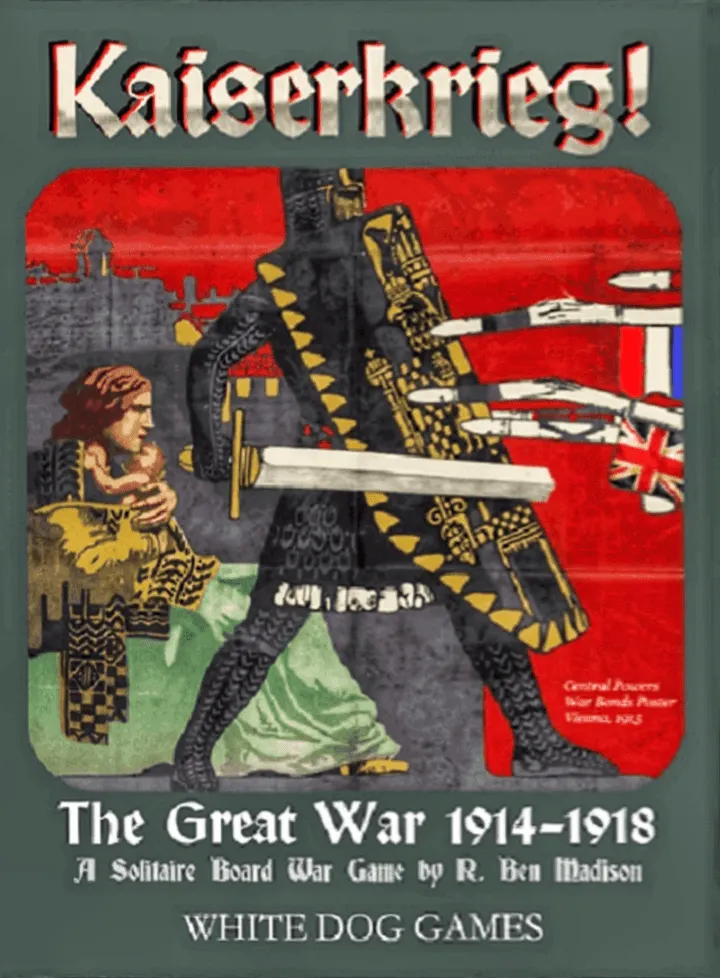
Pomoc w zasadach gry Kaiserkrieg! The Great War 1914-1918
Zrozumiałe wyjaśnienia tur, efektów kart i spornych sytuacji z odnośnikami do oficjalnych źródeł i zapisaną historią pytań.
Dla 1 gracza
Co chcesz wiedzieć?
Odpowiedzi pochodzą z oficjalnej instrukcji, ze stroną do sprawdzenia.
Kaiserkrieg! The Great War 1914-1918 to gra planszowa wydana w 2022 roku dla 1 gracza, z rozgrywką trwającą 60–120 minut i dla osób od 14 lat. Projekt gry: Ben Madison. Główne mechaniki: Events, Solo / Solitaire Game i Action Points.
Po angielsku
Kaiserkrieg! (‘Emperor’s War’) is a Strategic level Solitaire wargame of the First World War of 1914-1918. As the player, you control the Central Powers (“CP”; Germany, AustriaHungary, Turkey and Bulgaria). The game’s automatic systems direct the efforts of the Entente Powers (“EP”; France, Britain, Russia, Italy, Serbia, the United States, and their minor allies) who are trying to defeat you. As in many of my games, you play the “bad guys.” For simplicity’s sake, Imperial Germany and its main ally, the Austro-Hungarian Empire, are usually treated as one political entity in the game. The flags on the “City” Tiles are for decoration. In contrast to my other games, space precludes the addition of many historical notes in this rulebook. If you run across a name or historical reference that is new to you, Google is your friend! The heart of the game is its depiction of the ground war, which saw the battlefield deaths of some ten million soldiers. Kaiserkrieg’s treatment can be traced back to Darin Leviloff’s inspired Israeli Independence (2008) and the “States of Siege” system it started. The evolutionary leap in Kaiserkrieg! is the shift from the old ‘horizontal’ States of Siege model – where enemy forces converge on your central position along clearly defined lines of advance – to a new ‘vertical’ model where enemy forces mass in separate regions around you, to eventually achieve an advantage in size that threatens your overall position. This adaptation allows Leviloff’s original concept to more closely simulate the trench warfare realities of World War I on the continental level. The game also depicts the epic naval struggle of proGerman blockade runners trying to evade fleets of British cruisers. Many historians identify the failure to outwit the British naval blockade as the main reason for Germany’s defeat in the war. The ‘sideshow’ war in the Near East, where Germany’s Ottoman Turkish ally was assailed by Russia and the British Empire – including a massive army of Indian troops – is played with a simplified version of the game system (12.0). This theater also includes East Africa, where a German-led Black African army (the Askari) held out against Indian and British Empire forces even after the Germans in Europe had surrendered! The game is an extremely strategic view of the conflict. Points are dramatically simplified to make it playable and to emphasize the “cool stuff” of World War I, like Zeppelins, trenches, and U-boats. Kaiserkrieg! is not a detailed historical simulation, but a fun and challenging game covering the salient themes of the actual conflict while whetting the player’s appetite for more detailed treatments of this fascinating war. —description from the publisher
Według katalogu Kaiserkrieg! The Great War 1914-1918 obsługuje 1 gracza. To liczba graczy podana przez wydawcę, więc gra jest zaprojektowana dokładnie dla takiej liczby uczestników. Warianty dla grup innej wielkości, jeśli w ogóle istnieją, opisano w instrukcji twojego wydania; sprawdź ją uważnie, zanim przygotujesz inną konfigurację stołu.
Podany czas rozgrywki w Kaiserkrieg! The Great War 1914-1918 wynosi 60–120 minut. To szacunek wydawcy dla pełnej partii. Rzeczywisty czas zależy od grupy, liczby graczy i znajomości zasad: pierwsze partie zwykle trwają dłużej, a doświadczone grupy kończą szybciej. Przygotowanie gry i tłumaczenie zasad nie są wliczone w ten szacunek.
Katalog podaje dla Kaiserkrieg! The Great War 1914-1918 wiek od 14 lat. To zalecenie wydawcy, które uwzględnia wymagania dotyczące czytania, złożoność zasad i drobne elementy, a nie tylko tematykę. Młodsi gracze często mogą dołączyć z pomocą dorosłego; sprawdź zalecenie wiekowe swojego wydania i weź pod uwagę doświadczenie grupy z grami planszowymi.
Kaiserkrieg! The Great War 1914-1918 ma ocenę złożoności 3,2 na 5 według graczy BoardGameGeek, co czyni ją grą średnio złożoną. Ocena pokazuje, ile znajomości zasad, planowania i podejmowania decyzji wymaga typowa rozgrywka. Cięższe gry wymagają dłuższego pierwszego tłumaczenia, dlatego przed wieczorem z grami warto skorzystać z przewodnika przygotowania.
Kaiserkrieg! The Great War 1914-1918 należy do tych kategorii: Wargame, Print & Play i World War I. Główne mechaniki to Events, Solo / Solitaire Game i Action Points. Kategorie opisują temat i świat gry, a mechaniki to, co gracze faktycznie robią w swojej turze. Każda mechanika prowadzi do strony katalogu z podobnymi grami, co pomaga znaleźć coś porównywalnego na kolejny wieczór.
Autorzy wymienieni przy Kaiserkrieg! The Great War 1914-1918 to: Ben Madison. Te informacje pochodzą z opublikowanych danych gry i wskazują osoby odpowiedzialne za jej projekt, a nie ilustratorów czy wydawców. Strony autorów w MeepleRules zbierają inne tytuły tych samych twórców, co pomaga, gdy gra ci się podoba i szukasz podobnych.
W katalogu Kaiserkrieg! The Great War 1914-1918 figuruje jako gra podstawowa. Można w nią grać samodzielnie, korzystając z elementów z pudełka, bez żadnego innego tytułu. Dodatki, jeśli istnieją, dokładają nową zawartość lub zasady i są wymienione w katalogu osobno, z odnośnikiem do tej gry podstawowej.