
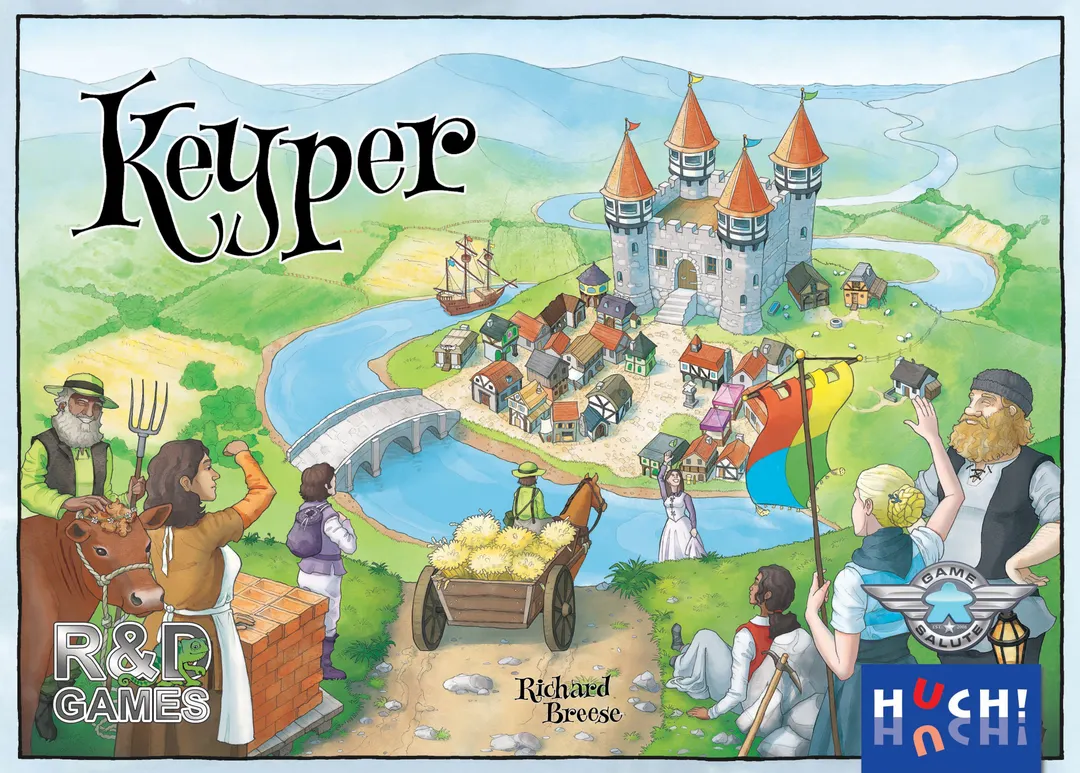
- Pozycja w BGG
- BGG #1797
- Ocena BGG
- 7,2
Keyper
- 2–4 graczy
- 90–120 min
- Złożoność 3,6/5
- 2017
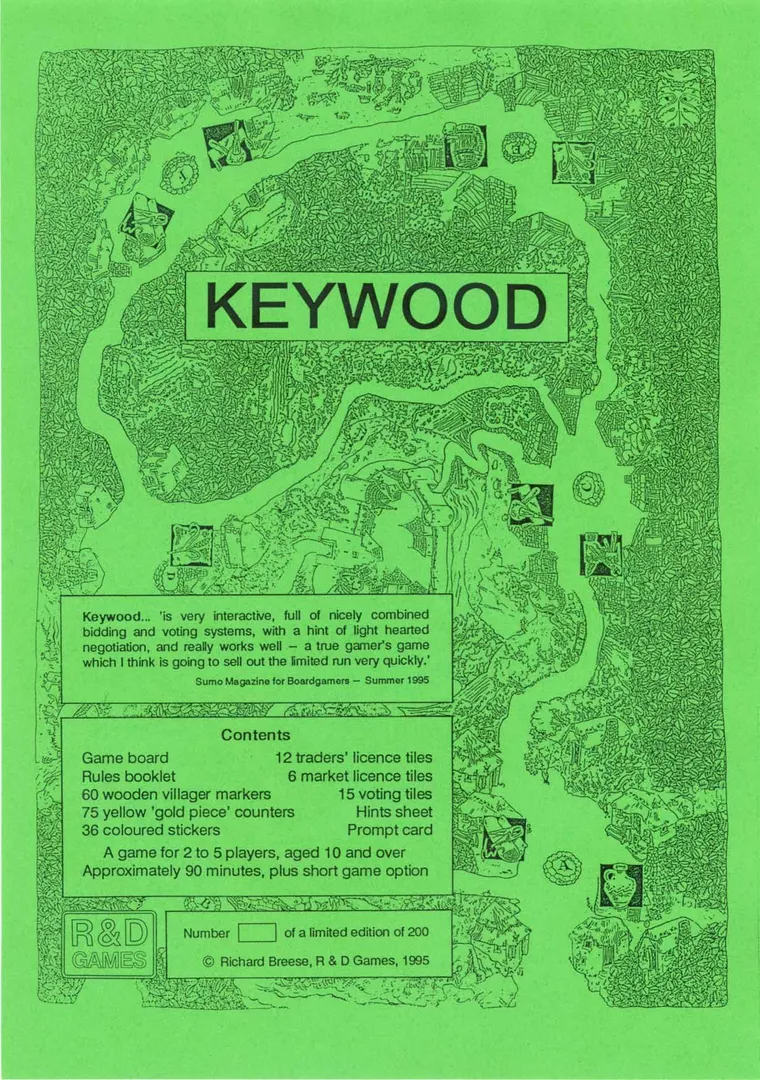
1995
Pomoc w zasadach gry Keywood
Zrozumiałe wyjaśnienia tur, efektów kart i spornych sytuacji z odnośnikami do oficjalnych źródeł i zapisaną historią pytań.
Dla 2 graczy
Co chcesz wiedzieć?
Odpowiedzi pochodzą z oficjalnej instrukcji, ze stroną do sprawdzenia.
Keywood to gra planszowa wydana w 1995 roku dla 2–5 graczy, z rozgrywką trwającą 120 minut i dla osób od 10 lat. Projekt gry: Richard Breese. Główne mechaniki: Area Majority / Influence i Voting.

Po angielsku
from Game Cabinet Review: 2 - 5 players attempt to settle and govern a new land of six villages. Each player may only introduce two new villagers per turn across five or six turns total. Villagers start as farmers earning a fixed income. Part of that income may be spent to purchase trade licenses which allow your villagers to set up as traders. Traders earn an income based on the population of their village. Each village must also elect a representative to government each turn. These councilors move to town and have no income for that turn (so much for realism - there is no provision for special interest groups or political action committees!). The government must decide whether to tax the farmers, tax the traders, or revoke one type of trade license. When this session of government breaks up councilors can either pay their own way home or pay a small fee and remain in government for another turn (well, at least that sounds realistic!). Each turn a new marketplace is opened which doubles the income of the host village. The villages bid fiercely for the right to host the new market each turn. Finally, the villagers and traders earn income and pay their taxes. The player that has the most money after the last round of play inherits control of the lands of Keywood and wins the game. Keywood is Richard Breese's first game in the key series.
Według katalogu Keywood obsługuje od 2 do 5 graczy. Ten zakres odpowiada liczbie graczy podanej przez wydawcę, więc grę można przygotować dla dowolnej grupy w jego granicach. Przygotowanie, niektóre zasady i punktacja mogą jednak różnić się w zależności od liczby graczy; dokładną konfigurację sprawdź w instrukcji swojego wydania.
Podany czas rozgrywki w Keywood wynosi 120 minut. To szacunek wydawcy dla pełnej partii. Rzeczywisty czas zależy od grupy, liczby graczy i znajomości zasad: pierwsze partie zwykle trwają dłużej, a doświadczone grupy kończą szybciej. Przygotowanie gry i tłumaczenie zasad nie są wliczone w ten szacunek.
Katalog podaje dla Keywood wiek od 10 lat. To zalecenie wydawcy, które uwzględnia wymagania dotyczące czytania, złożoność zasad i drobne elementy, a nie tylko tematykę. Młodsi gracze często mogą dołączyć z pomocą dorosłego; sprawdź zalecenie wiekowe swojego wydania i weź pod uwagę doświadczenie grupy z grami planszowymi.
Keywood ma ocenę złożoności 2,0 na 5 według graczy BoardGameGeek, co czyni ją grą raczej lekką. Ocena pokazuje, ile znajomości zasad, planowania i podejmowania decyzji wymaga typowa rozgrywka. Cięższe gry wymagają dłuższego pierwszego tłumaczenia, dlatego przed wieczorem z grami warto skorzystać z przewodnika przygotowania.
Keywood należy do tych kategorii: Medieval i Civilization. Główne mechaniki to Area Majority / Influence i Voting. Kategorie opisują temat i świat gry, a mechaniki to, co gracze faktycznie robią w swojej turze. Każda mechanika prowadzi do strony katalogu z podobnymi grami, co pomaga znaleźć coś porównywalnego na kolejny wieczór.
Autorzy wymienieni przy Keywood to: Richard Breese. Te informacje pochodzą z opublikowanych danych gry i wskazują osoby odpowiedzialne za jej projekt, a nie ilustratorów czy wydawców. Strony autorów w MeepleRules zbierają inne tytuły tych samych twórców, co pomaga, gdy gra ci się podoba i szukasz podobnych.
W katalogu Keywood figuruje jako gra podstawowa. Można w nią grać samodzielnie, korzystając z elementów z pudełka, bez żadnego innego tytułu. Dodatki, jeśli istnieją, dokładają nową zawartość lub zasady i są wymienione w katalogu osobno, z odnośnikiem do tej gry podstawowej.