
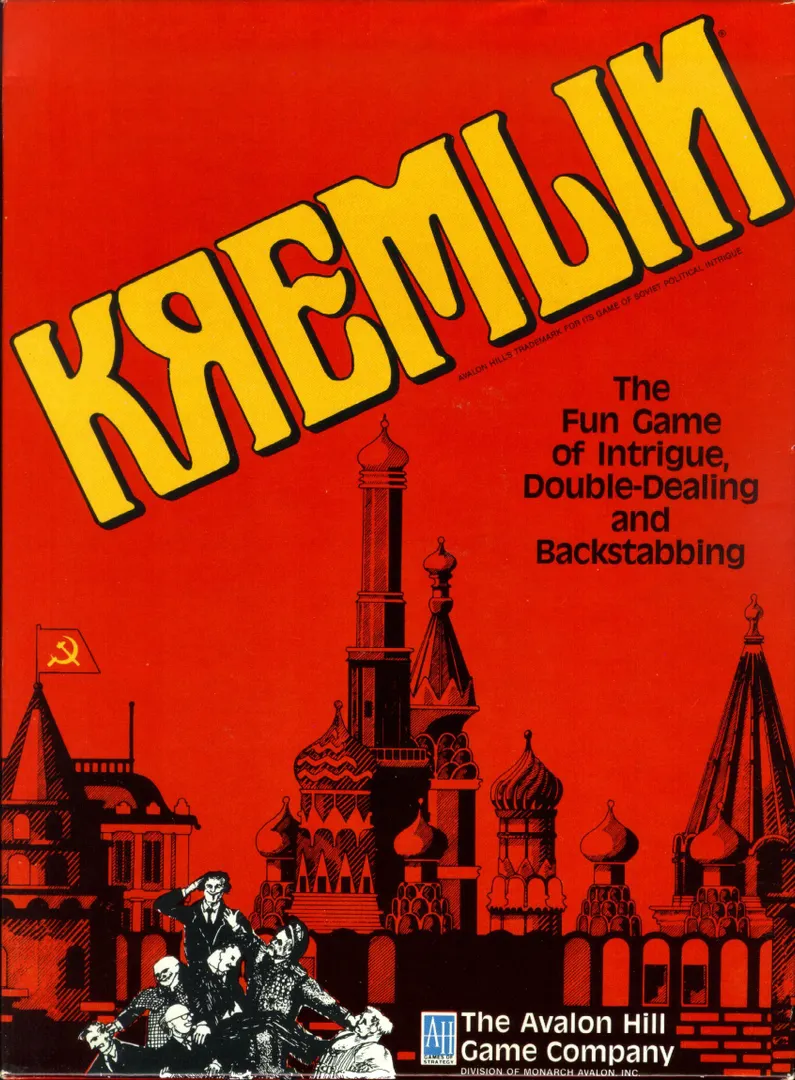
- Pozycja w BGG
- BGG #1950
- Ocena BGG
- 7,0
Kremlin
- 3–6 graczy
- 75 min
- Złożoność 2,9/5
- 1986
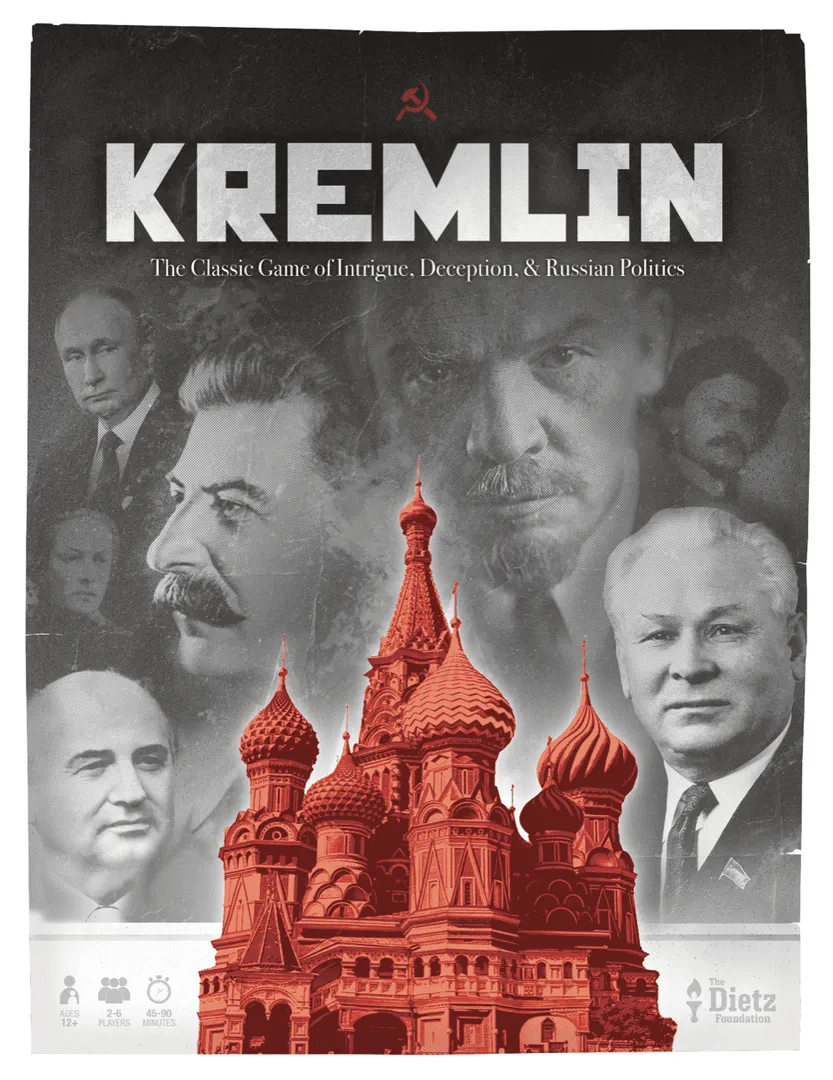
2014
Pomoc w zasadach gry Kremlin (Fourth Edition)
Zrozumiałe wyjaśnienia tur, efektów kart i spornych sytuacji z odnośnikami do oficjalnych źródeł i zapisaną historią pytań.
Dla 2 graczy
Co chcesz wiedzieć?
Odpowiedzi pochodzą z oficjalnej instrukcji, ze stroną do sprawdzenia.
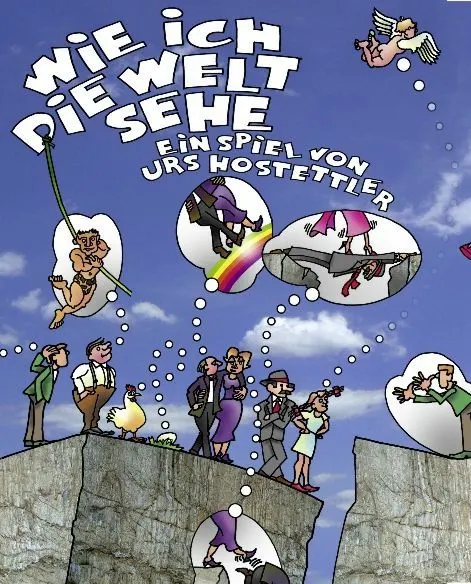
Kremlin (Fourth Edition) to gra planszowa wydana w 2014 roku dla 2–6 graczy, z rozgrywką trwającą 45–90 minut i dla osób od 12 lat. Projekt gry: Urs Hostettler. Główne mechaniki: Hand Management, Secret Unit Deployment i Voting.


Po angielsku
Originally released by Fata Morgana in the 1980s, KREMLIN is a European-style boardgame where players compete to control the Communist Party of the Soviet Union. The Jolly Roger KREMLIN features updated art and better components created in the style of 1930s Soviet poster propaganda. This edition has an error on the board that has the name of the game covering part of the graphics and text on the board. Kremlin is played for up to ten turns, ending as soon as the Party Chief successfully waves three times at the May Day Parade or when so many politicians are dead or in Siberia that the Party Chief can disband the Politburo and take complete power for himself. Each turn has phases. The most important of these are the KGB trials (which can send party members to Siberia or the cemetery) and the Defense Ministry's Spy Investigations which can also force politicians on a winter's gulag holiday. With the KGB, the catch is that the higher up the ladder the target, the more difficult to bring down, and Party Chiefs tend to change KGB leaders who take shots at the top... For the Defense Minister, his investigations require a trial to be successful--and a guilty vote, and that isn't always possible in the Central Committee. The catch? Players allot influence secretly at the start of the game and don't reveal it until it is used, meaning no one knows who controls the KGB or any other ministry, not until Influence is revealed--and even then, who knows who still has undeclared influence on that person? It is possible that players can swap control back and forth over the KGB chief even as he is trying to determine who to assassinate! Once the carnage is done, players have to survive the ravages of aging--and every time a politician takes action, he ages faster than normal...your 50 yr old star of the party? Well, suddenly he's acting like he's 83, Comrade. Life near the top will do that to you. In the Health phase, politicians may die or grow sick--sick politicians can choose to go to the hospital, but while there, they exert no influence and their responsibilities pass on to other politicians. Sometimes this means your man must make the heroic sacrifice to the Rodina and remain on the job even while at death's door. Once we know who is still alive, the Party Chief is allowed to move politicians between posts. After all, he's in control of the bureaucracy. He can move people up and down, and when he's done, upper ministers do so as well--but can only affect politicians below them on the food chain. Heck, politicians can even sponsor comrades in exile in Siberia to come back to the People. Of course, each person you bring back ages you five years....want to bring back five? Age 25 years in the blink of an eye, Tovarich. Intrigue cards allow you to take control of situations or foil other players' schemes. In one of the older versions, you could have things like Chernobyl take place in 1920. That's been corrected--so that while events may be the same, they have now been made era-appropriate. The turn ends with the May Day Parade. If the party chief is healthy, he can wave throughout the day making people happy--clearly our socialist union is prospering. But if he's sick, sometimes he leaves early and is unable to wave, sending doubts through the ranks. If a faction (player) earns three waves, they win the game. The Jolly Roger version provides three different KREMLIN games in one box. The 'original' with fictional politicians, set in a USSR where KGB investigations send those found guilty to Siberia. This version will have victory conditions based on the original Fata Morgana rules. A version inspired by the Avalon Hill variant titled 'Revolution'. Set in the 1920s, it uses historical politicians as well as fictional politicians. It's a more violent game as those arrested by the KGB are shot and removed from the game. A new version, set in the modern USSR and Russia, an era of entrenched bureaucracy and alternatives for escaping KGB persecution. This version introduces the concept of "Going into Exile" to avoid Siberia. It also includes modern politicians from the 1960s onwards, whether it is Kosygin or Putin and Gorbachev.
Według katalogu Kremlin (Fourth Edition) obsługuje od 2 do 6 graczy. Ten zakres odpowiada liczbie graczy podanej przez wydawcę, więc grę można przygotować dla dowolnej grupy w jego granicach. Przygotowanie, niektóre zasady i punktacja mogą jednak różnić się w zależności od liczby graczy; dokładną konfigurację sprawdź w instrukcji swojego wydania.
Podany czas rozgrywki w Kremlin (Fourth Edition) wynosi 45–90 minut. To szacunek wydawcy dla pełnej partii. Rzeczywisty czas zależy od grupy, liczby graczy i znajomości zasad: pierwsze partie zwykle trwają dłużej, a doświadczone grupy kończą szybciej. Przygotowanie gry i tłumaczenie zasad nie są wliczone w ten szacunek.
Katalog podaje dla Kremlin (Fourth Edition) wiek od 12 lat. To zalecenie wydawcy, które uwzględnia wymagania dotyczące czytania, złożoność zasad i drobne elementy, a nie tylko tematykę. Młodsi gracze często mogą dołączyć z pomocą dorosłego; sprawdź zalecenie wiekowe swojego wydania i weź pod uwagę doświadczenie grupy z grami planszowymi.
Kremlin (Fourth Edition) ma ocenę złożoności 2,4 na 5 według graczy BoardGameGeek, co czyni ją grą raczej lekką. Ocena pokazuje, ile znajomości zasad, planowania i podejmowania decyzji wymaga typowa rozgrywka. Cięższe gry wymagają dłuższego pierwszego tłumaczenia, dlatego przed wieczorem z grami warto skorzystać z przewodnika przygotowania.
Kremlin (Fourth Edition) należy do tych kategorii: Humor, Bluffing i Political. Główne mechaniki to Hand Management, Secret Unit Deployment i Voting. Kategorie opisują temat i świat gry, a mechaniki to, co gracze faktycznie robią w swojej turze. Każda mechanika prowadzi do strony katalogu z podobnymi grami, co pomaga znaleźć coś porównywalnego na kolejny wieczór.
Autorzy wymienieni przy Kremlin (Fourth Edition) to: Urs Hostettler. Te informacje pochodzą z opublikowanych danych gry i wskazują osoby odpowiedzialne za jej projekt, a nie ilustratorów czy wydawców. Strony autorów w MeepleRules zbierają inne tytuły tych samych twórców, co pomaga, gdy gra ci się podoba i szukasz podobnych.
W katalogu Kremlin (Fourth Edition) figuruje jako gra podstawowa. Można w nią grać samodzielnie, korzystając z elementów z pudełka, bez żadnego innego tytułu. Dodatki, jeśli istnieją, dokładają nową zawartość lub zasady i są wymienione w katalogu osobno, z odnośnikiem do tej gry podstawowej.