
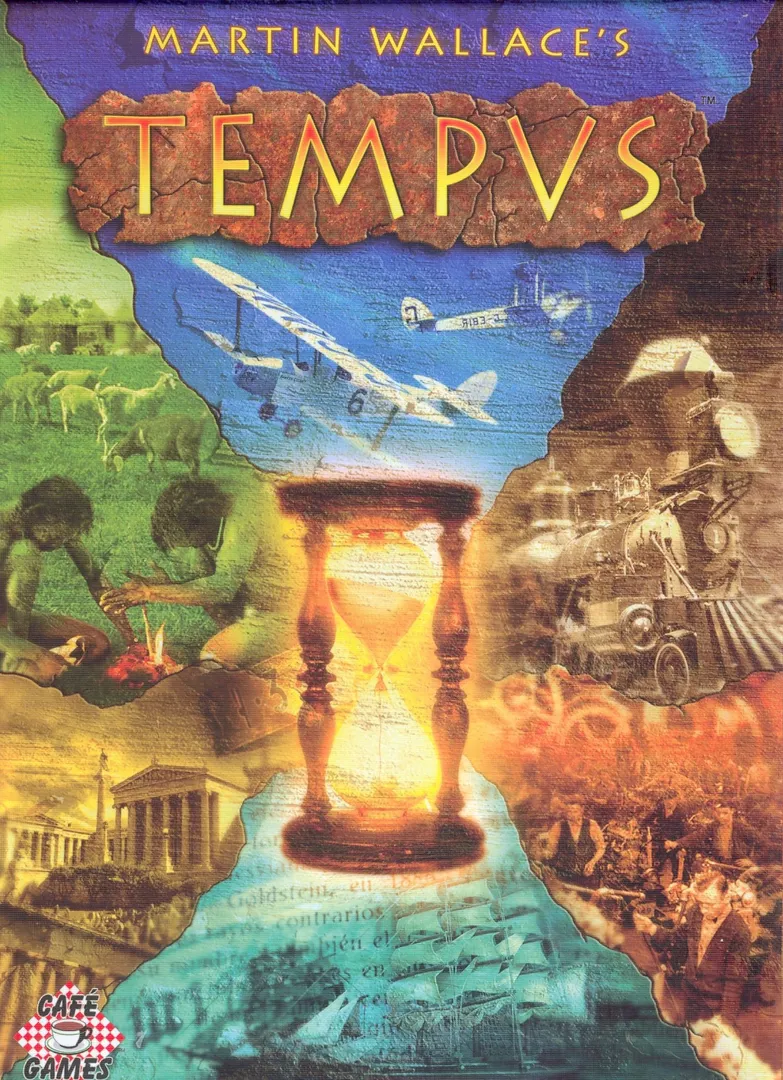
- Pozycja w BGG
- BGG #3305
- Ocena BGG
- 6,5
Tempus
- 3–5 graczy
- 60–120 min
- Złożoność 2,8/5
- 2006
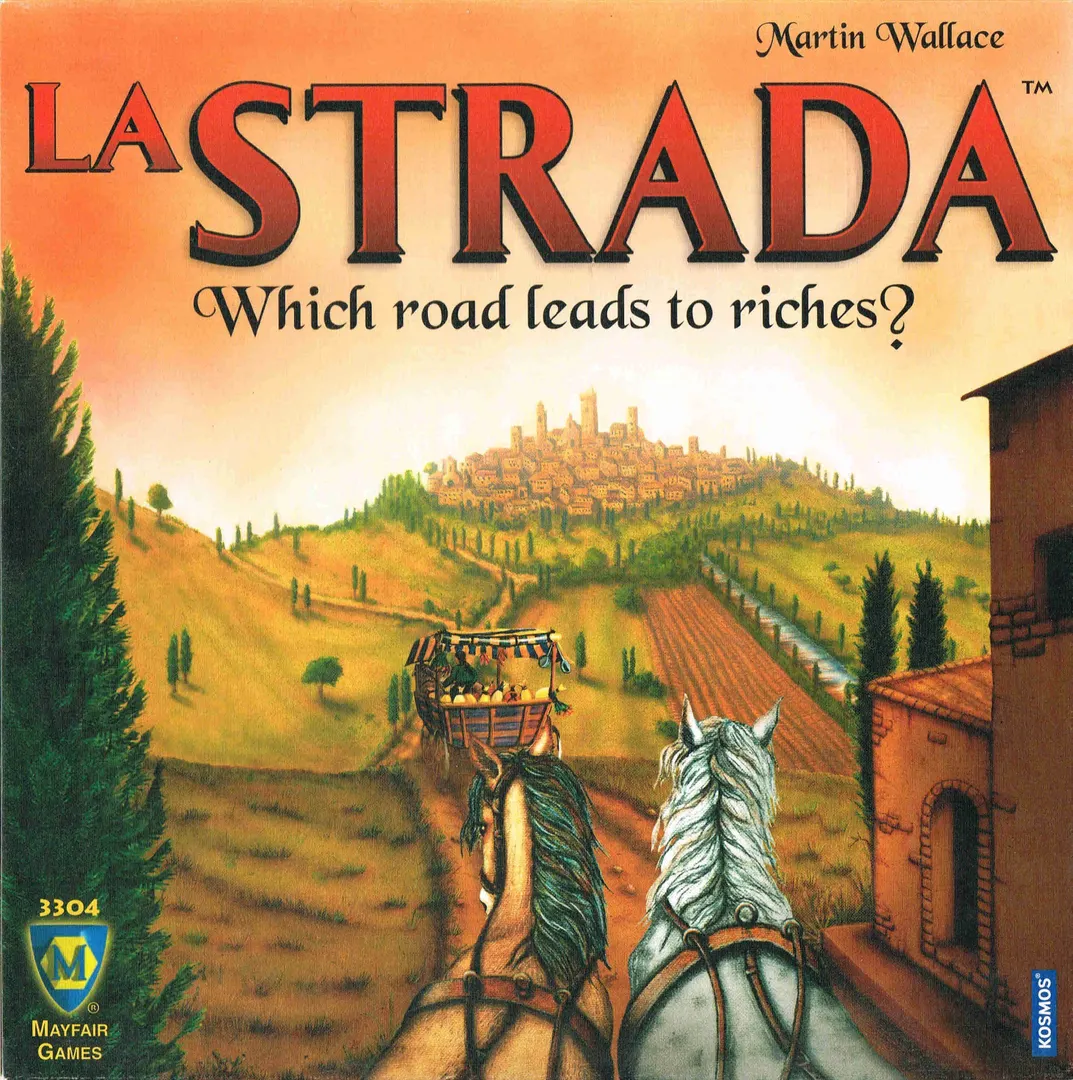
2004
Pomoc w zasadach gry La Strada
Zrozumiałe wyjaśnienia tur, efektów kart i spornych sytuacji z odnośnikami do oficjalnych źródeł i zapisaną historią pytań.
Dla 2 graczy
Co chcesz wiedzieć?
Odpowiedzi pochodzą z oficjalnej instrukcji, ze stroną do sprawdzenia.
La Strada to gra planszowa wydana w 2004 roku dla 2–4 graczy, z rozgrywką trwającą 30 minut i dla osób od 10 lat. Projekt gry: Martin Wallace. Główne mechaniki: Hand Management, Area Majority / Influence i Variable Set-up.


Po angielsku
The route-building game genre can be counted as the greatest passion of English game designer and history teacher Martin Wallace. And with La Strada, he has come up with a particularly clever road-building game. Everything – from the rules to the game play – is devilishly simple. The game lets players claim successes throughout the game, and turn-by-turn one reaches one or even multiple goals. But at the end, someone else wins? How did that happen? The game features a variable game board, built up out of hex tiles that depict easily traveled flatland, forests, or hills. Before the start of the game, nineteen different settlements (ranging from cities to tiny villages) with varying victory point values are randomly placed onto those spaces featuring a gray symbol. Each player then places his or her starting marker onto a chosen flatland tile. The object here is of course to try to put your starting marker near as many high-value cities as possible. The object of the game is to connect together as many settlements with your roads as possible, in order to get as many victory points as possible. The catch is that settlements award fewer and fewer victory points the more players connect to them. The cities are like pies: the more people want a slice, the smaller the slices have to be. Building streets is very simple. One a player’s turn, he receives six gold pieces. Each street segment costs two gold to build over flatland, three over forest, and four over hills. Players can build as many segments as they can afford on their turn, provided that they end at a settlement and don’t intersect any other streets on the way. Put simply: players can’t end a street in the middle of nowhere and then keep building next turn. Streets have to reach their destination at the end of each turn. Once a settlement has been reached, and then the player gets to put one of their trade markers on it. Note that streets can intersect each other only at the settlement locations. If a player doesn’t use up all of his gold on his turn, then he can save it for the next turn (where he will also get another six gold to play with again). Players aren’t allowed to spend more than ten gold pieces on their turn, though, so you can’t save forever. The game ends when one player can’t build any more roads or doesn’t have any trade markers left. Scoring then occurs. A scoring example for a city: The city is worth five victory points, but only if it was connected to by a single player. A doubly connected city is worth four points for each player, while a triply connected city is only worth three each. Cities connected to by four players are only worth two points. This decreasing point system also counts for smaller settlements, worth between four and two victory points. A nicely thought out sorting system ensures that the end game scoring doesn’t turn into a math exercise. Naturally, the player with the most victory points is the winner. In the case of a tie, then the tied player with the most gold left is the winner. La Strada is a very simple game: build roads and connect cities. But it’s not that easy to get ahead with the scores. It’s every player’s dream to claim a fat five point city all to themselves – but a player who spends too much energy trying to protect an investment will find that his other road-building options become tighter. [Text is from a preview by Spielbox]
Według katalogu La Strada obsługuje od 2 do 4 graczy. Ten zakres odpowiada liczbie graczy podanej przez wydawcę, więc grę można przygotować dla dowolnej grupy w jego granicach. Przygotowanie, niektóre zasady i punktacja mogą jednak różnić się w zależności od liczby graczy; dokładną konfigurację sprawdź w instrukcji swojego wydania.
Podany czas rozgrywki w La Strada wynosi 30 minut. To szacunek wydawcy dla pełnej partii. Rzeczywisty czas zależy od grupy, liczby graczy i znajomości zasad: pierwsze partie zwykle trwają dłużej, a doświadczone grupy kończą szybciej. Przygotowanie gry i tłumaczenie zasad nie są wliczone w ten szacunek.
Katalog podaje dla La Strada wiek od 10 lat. To zalecenie wydawcy, które uwzględnia wymagania dotyczące czytania, złożoność zasad i drobne elementy, a nie tylko tematykę. Młodsi gracze często mogą dołączyć z pomocą dorosłego; sprawdź zalecenie wiekowe swojego wydania i weź pod uwagę doświadczenie grupy z grami planszowymi.
La Strada ma ocenę złożoności 1,8 na 5 według graczy BoardGameGeek, co czyni ją grą lekką. Ocena pokazuje, ile znajomości zasad, planowania i podejmowania decyzji wymaga typowa rozgrywka. Cięższe gry wymagają dłuższego pierwszego tłumaczenia, dlatego przed wieczorem z grami warto skorzystać z przewodnika przygotowania.
La Strada należy do tych kategorii: Abstract Strategy i Transportation. Główne mechaniki to Hand Management, Area Majority / Influence i Variable Set-up. Kategorie opisują temat i świat gry, a mechaniki to, co gracze faktycznie robią w swojej turze. Każda mechanika prowadzi do strony katalogu z podobnymi grami, co pomaga znaleźć coś porównywalnego na kolejny wieczór.
Autorzy wymienieni przy La Strada to: Martin Wallace. Te informacje pochodzą z opublikowanych danych gry i wskazują osoby odpowiedzialne za jej projekt, a nie ilustratorów czy wydawców. Strony autorów w MeepleRules zbierają inne tytuły tych samych twórców, co pomaga, gdy gra ci się podoba i szukasz podobnych.
W katalogu La Strada figuruje jako gra podstawowa. Można w nią grać samodzielnie, korzystając z elementów z pudełka, bez żadnego innego tytułu. Dodatki, jeśli istnieją, dokładają nową zawartość lub zasady i są wymienione w katalogu osobno, z odnośnikiem do tej gry podstawowej.