

- Pozycja w BGG
- BGG #6965
- Ocena BGG
- 7,4
Stalingrad: Inferno on the Volga
- 1–3 graczy
- 30–60 min
- Złożoność 2,3/5
- 2018
2017
Pomoc w zasadach gry Leningrad '41
Zrozumiałe wyjaśnienia tur, efektów kart i spornych sytuacji z odnośnikami do oficjalnych źródeł i zapisaną historią pytań.
Dla 1 gracza
Co chcesz wiedzieć?
Odpowiedzi pochodzą z oficjalnej instrukcji, ze stroną do sprawdzenia.
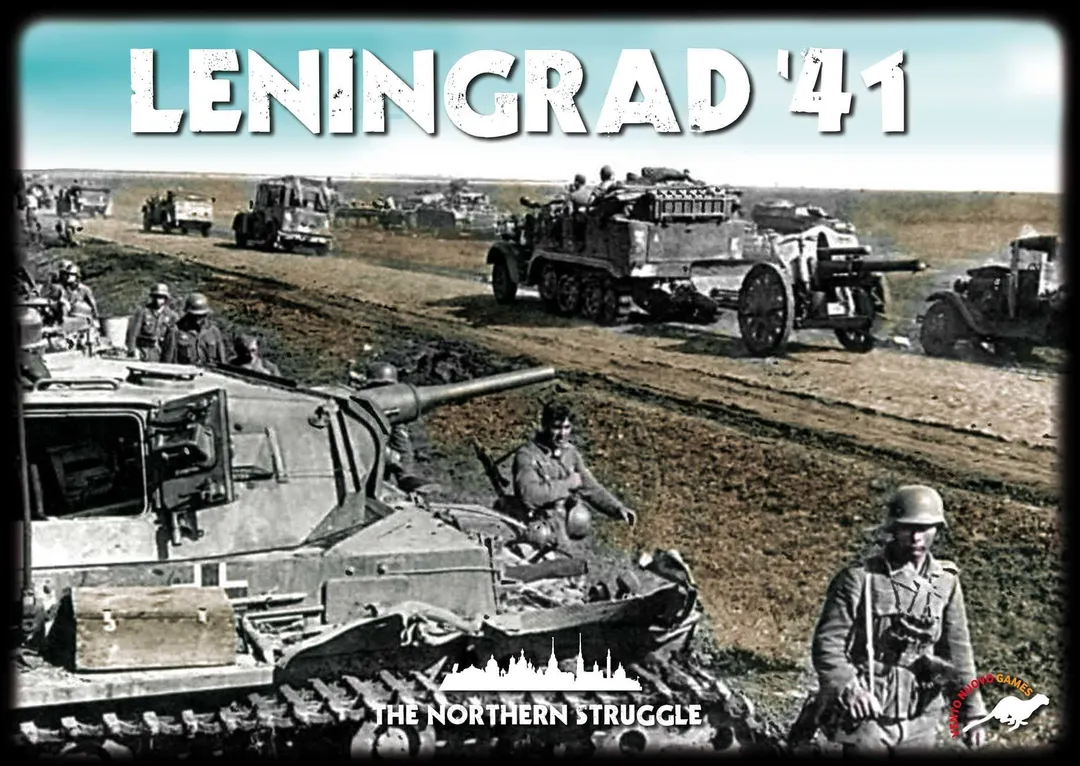
Leningrad '41 to gra planszowa wydana w 2017 roku dla 1–2 graczy, z rozgrywką trwającą 30–120 minut i dla osób od 10 lat. Projekt gry: Emanuele Santandrea. Główne mechaniki: Area Movement, Dice Rolling i Area Majority / Influence.


Po angielsku
This is VentoNuovo's continuation of the system created for Moscow '41, now looking at the campaign of Army Group North in Barbarossa. The final chapter of the Trilogy is Kiev '41. Players take either the German or Soviet Union forces and use colorful wooden blocks to simulate the forces they have involved. Leningrad '41 uses the same basic game engine of Moscow '41, with a few tweaks and changes to suit the differing conditions in the north. The game brings new wrinkles in as well because the Germans have "allies" as part of their forces-- the small but powerful Finnish Army which sought to recover territory lost in the "Winter War" but did not fully match the ambitions of Germany at destroying the U.S.S.R. Four weeks after the commencement of Barbarossa, Hitler visited the headquarters of Army Group North. The Führer’s words were dutifully noted in the army group’s war diary, and culminated in the following observation: “…the loss of Leningrad might result in a complete collapse.” By the end of the third week in July the capture of Leningrad did indeed seem inevitable. The Germans had already covered more than half the distance to the city. And yet, as they advanced into the vastness of Russia, it appeared that everyone on the Axis side of things had a different plan; and as time went by, those plans had a habit of changing. Hitler did not want his tanks entering the city; but then, he did not want his infantry engaged in prolonged street fighting either. So, after another think about things, the Führer decided the city should be simply cut off and starved, or relentlessly bombarded and starved… or the Finns would be welcome to breach Lake Lagoda and flood it. Whatever the means, the Führer purposed that the “Cradle of Bolshevism” was to be wiped off the face of the earth, and its population left to dwindle away to nothing. The problem was, despite the rush of victories, or perhaps because of them, the Germans had precious little idea what to do next. Halder wrote that July: “…there seem to certain differences in von Leeb’s and Hoepner’s views of what the next moves should be.” They waited to be told what to do, or argued between themselves. Manstein, commanding one of Army Group North’s panzer corps, knew what to do, but he was not in charge of the operation. Delays accrued, brought on by lack of supply and the first recovery of Soviet forces. Already within one short drive of Leningrad, the Finns were meant to help, but the Finns had their own plans; and, for the time being, they did not involve doing more than reclaiming what they had lost in the Winter War. And what of Stalin? Beyond the speeches, the threats and the executions, he sent Zhukov to the city in early September 1941, and there the man who would eventually oversee the fall of Berlin organized the workers’ militias and planned a defence that was meant to face the expected German onslaught - an onslaught, which as the weeks went by, never actually came. As the German player, in reaching for a victory that will have meaning, you are up against the clock, the terrain, and alongside Soviet resistance, the loss of units that some other bright idea from somewhere else will impose upon you. The forces of Army Group North are not huge, so you must act to avoid your units being dispersed, and have victory in your grasp before another plan takes the panzers away from you. As the Soviet player you must know what to defend and what to abandon. You cannot be strong everywhere. Limited time is the best ally of those defending with limited forces. Encourage the Germans to use their time up.
Według katalogu Leningrad '41 obsługuje od 1 do 2 graczy. Ten zakres odpowiada liczbie graczy podanej przez wydawcę, więc grę można przygotować dla dowolnej grupy w jego granicach. Przygotowanie, niektóre zasady i punktacja mogą jednak różnić się w zależności od liczby graczy; dokładną konfigurację sprawdź w instrukcji swojego wydania.
Podany czas rozgrywki w Leningrad '41 wynosi 30–120 minut. To szacunek wydawcy dla pełnej partii. Rzeczywisty czas zależy od grupy, liczby graczy i znajomości zasad: pierwsze partie zwykle trwają dłużej, a doświadczone grupy kończą szybciej. Przygotowanie gry i tłumaczenie zasad nie są wliczone w ten szacunek.
Katalog podaje dla Leningrad '41 wiek od 10 lat. To zalecenie wydawcy, które uwzględnia wymagania dotyczące czytania, złożoność zasad i drobne elementy, a nie tylko tematykę. Młodsi gracze często mogą dołączyć z pomocą dorosłego; sprawdź zalecenie wiekowe swojego wydania i weź pod uwagę doświadczenie grupy z grami planszowymi.
Leningrad '41 ma ocenę złożoności 2,6 na 5 według graczy BoardGameGeek, co czyni ją grą raczej lekką. Ocena pokazuje, ile znajomości zasad, planowania i podejmowania decyzji wymaga typowa rozgrywka. Cięższe gry wymagają dłuższego pierwszego tłumaczenia, dlatego przed wieczorem z grami warto skorzystać z przewodnika przygotowania.
Leningrad '41 należy do tych kategorii: Wargame i World War II. Główne mechaniki to Area Movement, Dice Rolling i Area Majority / Influence. Kategorie opisują temat i świat gry, a mechaniki to, co gracze faktycznie robią w swojej turze. Każda mechanika prowadzi do strony katalogu z podobnymi grami, co pomaga znaleźć coś porównywalnego na kolejny wieczór.
Autorzy wymienieni przy Leningrad '41 to: Emanuele Santandrea. Te informacje pochodzą z opublikowanych danych gry i wskazują osoby odpowiedzialne za jej projekt, a nie ilustratorów czy wydawców. Strony autorów w MeepleRules zbierają inne tytuły tych samych twórców, co pomaga, gdy gra ci się podoba i szukasz podobnych.
W katalogu Leningrad '41 figuruje jako gra podstawowa. Można w nią grać samodzielnie, korzystając z elementów z pudełka, bez żadnego innego tytułu. Dodatki, jeśli istnieją, dokładają nową zawartość lub zasady i są wymienione w katalogu osobno, z odnośnikiem do tej gry podstawowej.