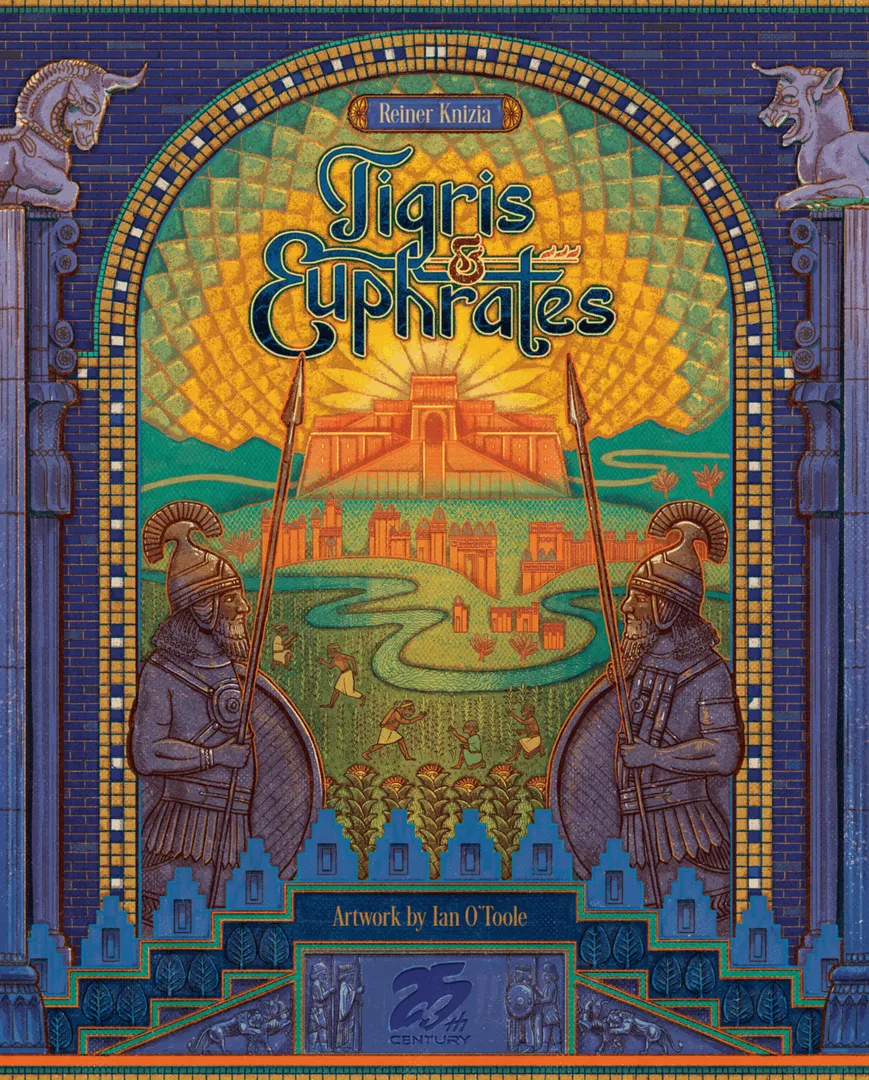
- Pozycja w BGG
- BGG #135
- Ocena BGG
- 7,7
Eufrat i Tygrys
2–4 graczy60–120 min1997
Złożoność 3,5/5
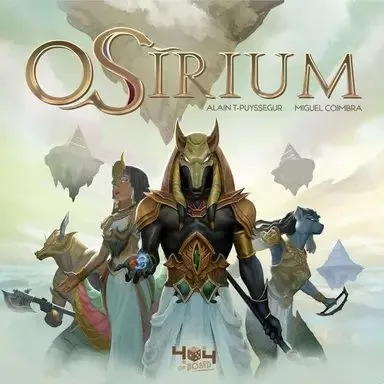
2021
Pomoc w zasadach gry OSIRIUM
Zrozumiałe wyjaśnienia tur, efektów kart i spornych sytuacji z zapisaną historią pytań.
Co chcesz wiedzieć?
Odpowiedzi pochodzą z oficjalnej instrukcji, ze stroną do sprawdzenia.
OSIRIUM to gra planszowa wydana w 2021 roku dla 2–4 graczy, z rozgrywką trwającą 30–90 minut i dla osób od 10 lat. Główne mechaniki: Variable Player Powers, Hand Management i Race.
2–4 graczy60–120 min1997

1–4 graczy40–120 min2024
2–4 graczy120 min2020

2–4 graczy40–60 min2020

2–4 graczy60–120 min2023

1–4 graczy30–60 min2019
2–4 graczy20–25 min2023

2–4 graczy20–40 min2019

1–5 graczy60–150 min2020
1–4 graczy30–45 min2025

1–4 graczy45–90 min2014
1–4 graczy30–60 min2020
Po angielsku
In Ancient Egypt, more than three millenia ago, men confronted each other in the Trial of Osirium under the eyes of the immortal Gods. Inspired by Osiris, the judge of souls who came back from the dead, the Osirium allowed to settle many conficts and to have the truth triumph. If honesty guides your actions, then you won’t be afraid of walking in the duat, and you will make your Deity proud. Goal of the Game Osirium is a trial. Your goal is to defeat your opponents to make the deity to whom you pledged allegiance proud. To do that, you need to collect as many points (or Ankhs) as possible, performing Rituals with various Amulets. 4 deities are available: Isis, Anubis, Bastet and Seth. The Trial The oldest player plays first, since it is assumed that they’ll join the gods sooner than the others… Then, the player on their left plays their turn, and so on. On your turn, You must play one of your 4 Amulet Cards. Place it on any free space of the board, choosing its orientation. Then, draw a new Amulet Card to have 4 Amulet Cards in your hand again. You can either take an Amulet Card from the Deities’ Market, or draw a random Amulet Card from the top of the draw pile. If you take a card from the Market, immediately replace it with a new card from the draw pile. You may cast one of the Rituals of your Deity Board (see Cast a Ritual on p.7). You can do this before or after placing an Amulet on the board. You can cast as many Rituals as you like. Casting a Ritual is not mandatory. Alternatively, you may decide to pass. This allows you to discard your entire hand of Amulet Cards to draw 4 new Amulet Cards instead. When you pass, ignore the two actions listed above. The Trial ends once a player has cast 5 Rituals. Check if any player has completed their Exaltation Card (a secret secondary objective), then proceed to final scoring. Cast a Ritual There are two types of Rituals: Simple Rituals and Advanced Rituals. Players receive Simple Rituals at the beginning of the game. They are easy to cast but do not score many points. Players may draw Advanced Rituals during the game. These Rituals score more points. Each Ritual Card depicts the Amulets required to cast the Ritual. To cast a Ritual, you must make sure that the depicted Amulets are correctly linked to each other: An Amulet is linked to the adjacent Amulet if both arrows are face to face. There must be no other Amulets between the arrows of the Amulets required to cast the Ritual. There can be more Amulets than required, of course. In that case, simply indicate the ones that you are using. A Ritual allows you to gain Ankhs (as many as indicated on the card, in front of the matching symbol). However, casting a Ritual consumes the Amulets’ energy. For this reason, some of them need to be broken. Remove the Amulet(s) of your choice from the ones used for the Ritual and place them in front of you. Rituals can be cast according to two principles: Order OR Chaos. ORDER : Such Rituals score more points and break less Amulets – which means that more Amulets remain available for the other players. CHAOS : The black symbols depict the Chaos Principle. Such Rituals score less points and break more Amulets. —description from the publisher
Według katalogu OSIRIUM obsługuje od 2 do 4 graczy. Ten zakres odpowiada liczbie graczy podanej przez wydawcę, więc grę można przygotować dla dowolnej grupy w jego granicach. Przygotowanie, niektóre zasady i punktacja mogą jednak różnić się w zależności od liczby graczy; dokładną konfigurację sprawdź w instrukcji swojego wydania.
Podany czas rozgrywki w OSIRIUM wynosi 30–90 minut. To szacunek wydawcy dla pełnej partii. Rzeczywisty czas zależy od grupy, liczby graczy i znajomości zasad: pierwsze partie zwykle trwają dłużej, a doświadczone grupy kończą szybciej. Przygotowanie gry i tłumaczenie zasad nie są wliczone w ten szacunek.
Katalog podaje dla OSIRIUM wiek od 10 lat. To zalecenie wydawcy, które uwzględnia wymagania dotyczące czytania, złożoność zasad i drobne elementy, a nie tylko tematykę. Młodsi gracze często mogą dołączyć z pomocą dorosłego; sprawdź zalecenie wiekowe swojego wydania i weź pod uwagę doświadczenie grupy z grami planszowymi.
OSIRIUM ma ocenę złożoności 1,7 na 5 według graczy BoardGameGeek, co czyni ją grą lekką. Ocena pokazuje, ile znajomości zasad, planowania i podejmowania decyzji wymaga typowa rozgrywka. Cięższe gry wymagają dłuższego pierwszego tłumaczenia, dlatego przed wieczorem z grami warto skorzystać z przewodnika przygotowania.
OSIRIUM należy do tych kategorii: Card Game, Abstract Strategy i Ancient. Główne mechaniki to Variable Player Powers, Hand Management i Race. Kategorie opisują temat i świat gry, a mechaniki to, co gracze faktycznie robią w swojej turze. Każda mechanika prowadzi do strony katalogu z podobnymi grami, co pomaga znaleźć coś porównywalnego na kolejny wieczór.
W katalogu OSIRIUM figuruje jako gra podstawowa. Można w nią grać samodzielnie, korzystając z elementów z pudełka, bez żadnego innego tytułu. Dodatki, jeśli istnieją, dokładają nową zawartość lub zasady i są wymienione w katalogu osobno, z odnośnikiem do tej gry podstawowej.
