
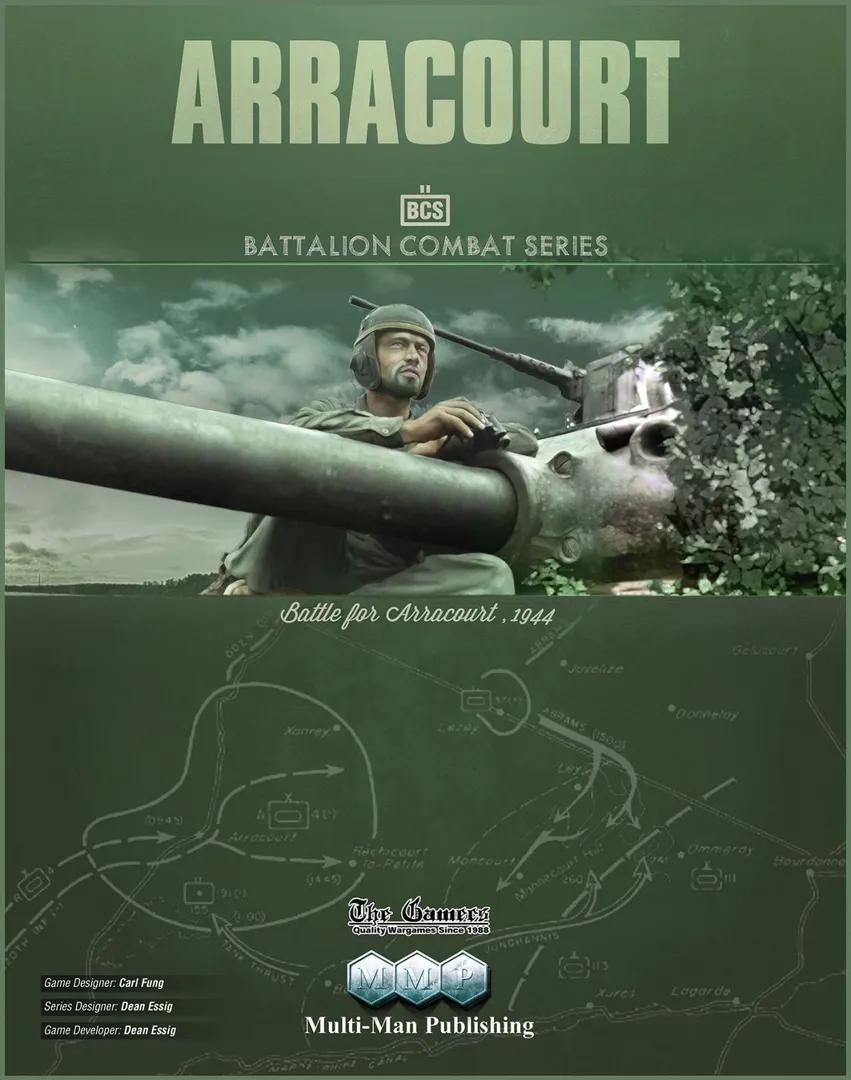
- Pozycja w BGG
- BGG #6107
- Ocena BGG
- 8,4
Arracourt
- 2 graczy
- 120 min
- Złożoność 3,9/5
- 2022
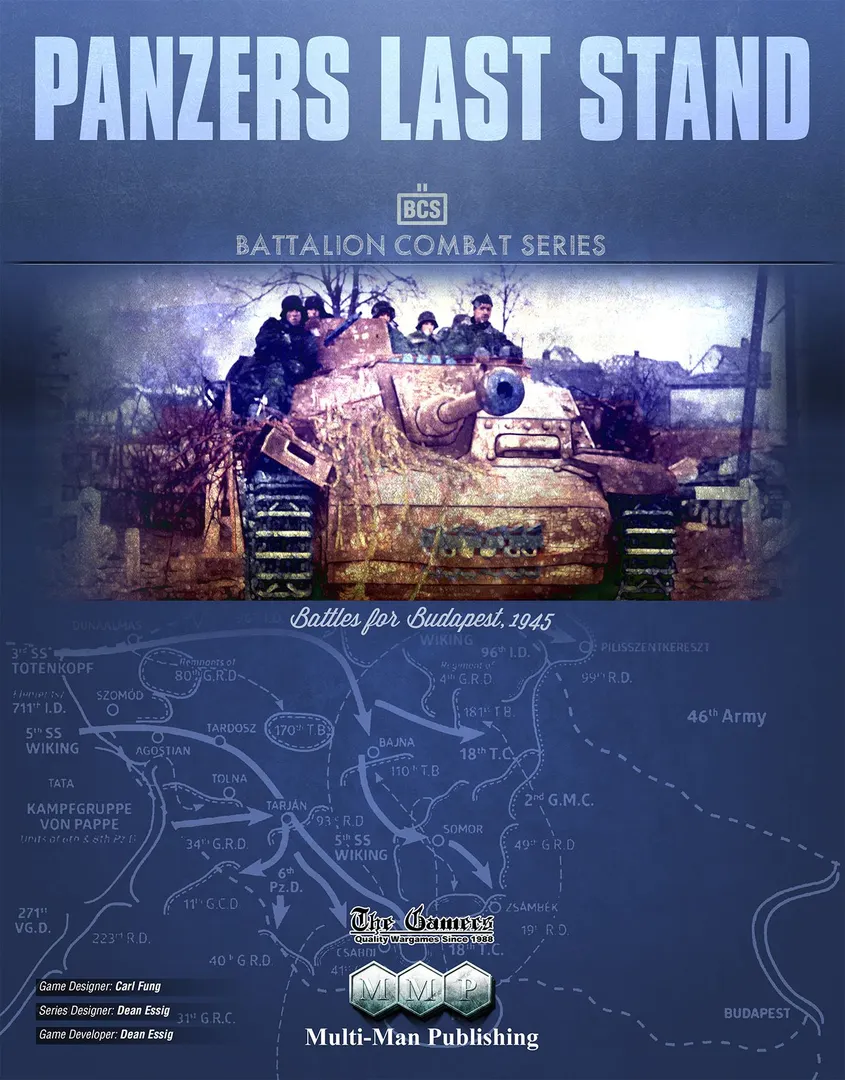
2021
Pomoc w zasadach gry Panzers Last Stand: Battles for Budapest, 1945
Zrozumiałe wyjaśnienia tur, efektów kart i spornych sytuacji z odnośnikami do oficjalnych źródeł i zapisaną historią pytań.
Dla 2 graczy
Co chcesz wiedzieć?
Odpowiedzi pochodzą z oficjalnej instrukcji, ze stroną do sprawdzenia.
Panzers Last Stand: Battles for Budapest, 1945 to gra planszowa wydana w 2021 roku dla 2 graczy i z rozgrywką trwającą 120–1560 minut. Projekt gry: Dean Essig i Carl Fung. Główne mechaniki: Dice Rolling, Hexagon Grid i Simulation.





Po angielsku
Panzers Last Stand is a Battalion Combat Series game depicting the Axis relief operations of Budapest from January to March 1945 in what became Germany's last major offensives in the war. The campaign game covers the Konrad Operations (I, II, and III) in January 1945. There are scenarios for each of the Konrad Operations as well as Operation Southwind in February and Operation Spring Awakening in March 1945. In the final months of the war, Germany was still full of fight and believed Budapest to be the key to turning the tide. With Budapest fully surrounded by Soviet and former-Axis Romanian forces, the situation in the city was desperate. The Germans devised a plan to relieve Budapest by bringing in the SS-Totenkopf and SS-Wiking Panzer Divisions from Poland to launch a surprise attack before the Soviets closed the ring on the trapped forces in the city. Launched in the wee hours on New Year's Day, 1945, the fate of the Axis hung in the balance. The Soviets, having campaigned continuously from the summer of 1944, fought back viciously and showed their mettle against the elite SS Panzer Divisions. A great proportion of the armored forces for both sides funneled into the Budapest area. All but one of the seven SS Panzer Divisions and half of the Heer Panzer Divisions on the Eastern Front (a full third of all Panzer Divisions total) ultimately fought here. The Soviets committed three Tank, five Mechanized, and one Cavalry Corps to blunt the Axis drive. The battlefield became a graveyard of tanks. The game showcases late-war equipment like the Tiger II, Brummbär, IS-2, and ISU-152 while also including unique units like Cavalry, Assault Pioneers, Soviet Naval Infantry, Hungarian SS, and ad hoc forces mobilized to defend Budapest. Rules covering Danube River crossing, Urban combat, redeployment deception (Maskirovka), and Festung rules highlight this unique and often misunderstood campaign. Scenarios: The Taking of Budapest 123: Full Campaign (4 maps, 26 turns) Operation Konrad I & II (2 maps without Budapest, 10 turns) Operation Konrad I (2 maps without Budapest, 5 turns) Operation Konrad II (1 map without Budapest, 5 turns) Battle for Zamoly (Part of 1 map, 5 turns) Operation Konrad III (2 maps, 10 turns) Battle for Komárom (Part of 2 maps, 17 turns) Days of Battle: Opening Blows to Komárom (Part of 2 maps, 4 turns) Operation Southwind (Part of 2 maps, 8 turns) Operation Spring Awakening (2 maps, 10 turns) Components: BCS rulebook (v2.0, in full color) Two BCS Charts and Tables (v2.0, in full color) BCS Support rulebook (v2.0, in full color) PLS Game Specific rulebook Axis Player Booklet Soviet Player Booklet Turn Record Track Card Axis Player Display Card Soviet Player Display Card Last Blitzkrieg Addenda sheet Four 22” x 34” Full Color Game Maps 1,680 Counters (four sheets of units and two BCS marker sheets) 10 scenarios total, 2 one-map scenarios, 4 are 5 turns or less Box and Dice —description from the publisher
Według katalogu Panzers Last Stand: Battles for Budapest, 1945 obsługuje 2 graczy. To liczba graczy podana przez wydawcę, więc gra jest zaprojektowana dokładnie dla takiej liczby uczestników. Warianty dla grup innej wielkości, jeśli w ogóle istnieją, opisano w instrukcji twojego wydania; sprawdź ją uważnie, zanim przygotujesz inną konfigurację stołu.
Podany czas rozgrywki w Panzers Last Stand: Battles for Budapest, 1945 wynosi 120–1560 minut. To szacunek wydawcy dla pełnej partii. Rzeczywisty czas zależy od grupy, liczby graczy i znajomości zasad: pierwsze partie zwykle trwają dłużej, a doświadczone grupy kończą szybciej. Przygotowanie gry i tłumaczenie zasad nie są wliczone w ten szacunek.
Panzers Last Stand: Battles for Budapest, 1945 ma ocenę złożoności 3,9 na 5 według graczy BoardGameGeek, co czyni ją grą ciężką. Ocena pokazuje, ile znajomości zasad, planowania i podejmowania decyzji wymaga typowa rozgrywka. Cięższe gry wymagają dłuższego pierwszego tłumaczenia, dlatego przed wieczorem z grami warto skorzystać z przewodnika przygotowania.
Panzers Last Stand: Battles for Budapest, 1945 należy do tych kategorii: Wargame i World War II. Główne mechaniki to Dice Rolling, Hexagon Grid i Simulation. Kategorie opisują temat i świat gry, a mechaniki to, co gracze faktycznie robią w swojej turze. Każda mechanika prowadzi do strony katalogu z podobnymi grami, co pomaga znaleźć coś porównywalnego na kolejny wieczór.
Autorzy wymienieni przy Panzers Last Stand: Battles for Budapest, 1945 to: Dean Essig i Carl Fung. Te informacje pochodzą z opublikowanych danych gry i wskazują osoby odpowiedzialne za jej projekt, a nie ilustratorów czy wydawców. Strony autorów w MeepleRules zbierają inne tytuły tych samych twórców, co pomaga, gdy gra ci się podoba i szukasz podobnych.
W katalogu Panzers Last Stand: Battles for Budapest, 1945 figuruje jako gra podstawowa. Można w nią grać samodzielnie, korzystając z elementów z pudełka, bez żadnego innego tytułu. Dodatki, jeśli istnieją, dokładają nową zawartość lub zasady i są wymienione w katalogu osobno, z odnośnikiem do tej gry podstawowej.