- Ocena BGG
- 7,4
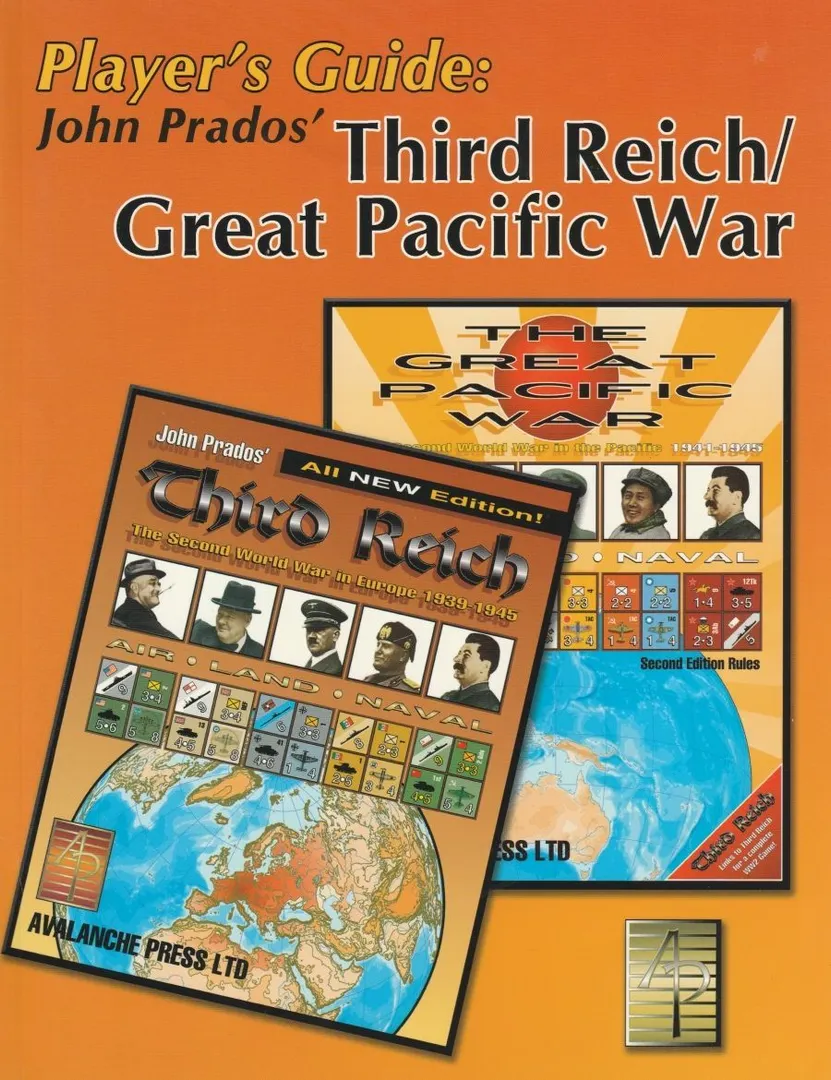
Third Reich/Great Pacific War Player's Guide
- 2–5 graczy
- 360 min
- Złożoność 3,4/5
- 2004
2003
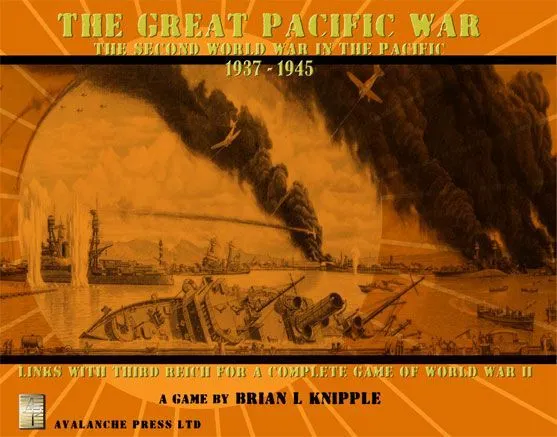
Pomoc w zasadach gry The Great Pacific War: The Second World War in the Pacific 1937-1945
Zrozumiałe wyjaśnienia tur, efektów kart i spornych sytuacji z odnośnikami do oficjalnych źródeł i zapisaną historią pytań.
Dla 2 graczy
Co chcesz wiedzieć?
Odpowiedzi pochodzą z oficjalnej instrukcji, ze stroną do sprawdzenia.
The Great Pacific War: The Second World War in the Pacific 1937-1945 to gra planszowa wydana w 2003 roku dla 2–5 graczy, z rozgrywką trwającą 240–480 minut i dla osób od 12 lat. Projekt gry: Brian L. Knipple. Główne mechaniki: Dice Rolling, Grid Movement i Hexagon Grid.



Po angielsku
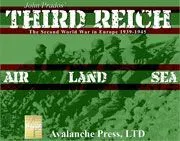
Description from the publisher: Great Pacific War is Avalanche Press' strategic-level game of the War in the Pacific. The game covers the entire war from December 1941 through 1946 and includes the forces of all participants. Players are placed in the positions of the commanders of the Japanese, British, Soviet and American forces in World War Two. The system is the same one used in Avalanche Press' game, Third Reich. In addition to five scenarios covering all or part of the War in the Pacific, Great Pacific War includes rules to link it and Third Reich to play the Second World War, a simulation of the entire conflict with up to seven players. Included in the game are five scenarios for the Great Pacific War and three scenarios for the linked Second World War. One of the Great Pacific War scenarios covers a possible 1931 conflict between Japan and America as postulated by the British journalist Hector Bywater in his book of the same title. The facts: Game scale is 60 miles per hex covering the battlefield on three 34" x 22" maps. Units are represented at corps, fleet and air army level. Each turn represents three months of actual time. The game system is built around players drawing impulse "chits" to determine how they can activate their forces. The emphasis is on the interaction of military, political and economic factors (as in Third Reich). The game system from our Third Reich game allows players to control the military, political and economic destinies of their nations in a struggle to dominate the world. Land, air and sea forces battle across almost a third of the earth's surface as the two mightiest navies fight for control of the Pacific. Players manage their economies and build and operate their military forces within the capabilities of their nations' abilities. In Great Pacific War the Japanese player must decide initially whether war with America or the Soviet Union will be his or her strategy. JapanÍs lack of resources make a war with one or the other a necessity. Also possible is a war with Britain and her ally, The Netherlands, who together control the riches of India, Java and Borneo. This strategy has many risks, the greatest being that America will enter the war on Britain's side. Coloring all is the massive Japanese investment in China and the importance of those conquered territories to the Japanese economy. The American player must move a nation unprepared for war to a position of strength, while attempting to support the Nationalist Chinese in their conflict with the Japanese. In the linked game players have also to consider the effects of their actions on the global conflict. A Soviet player desperately defending Moscow in 1941 can little afford a Japanese attack on Vladivostok. Likewise a British player fighting Germany with only a seemingly soon-to-be-defeated Soviet Union as an ally, will not welcome a Japanese attack on his eastern possessions unless it brings America into the war. Historically Japan went to war to obtain the resources denied her by the Allies embargo of steel and oil and because German successes appeared to offer Japan the opportunity to join a victory almost already won. The question is whether you and your allies can do any better than your historical counterparts. Components: 3 34” x 22” maps 2 countersheets consisting of 560 counters 1 rulebook...separated into 2 booklets 2 scenario booklets 1 "Policial Maker Explanations" booklet 1 Off-Map Movement and Sea Zones Chart 11" x 17" 1 Chart with US Entry/Russian Winter Table/Mud Table 1 Chart with Sequence of Play/Alliance & Individual Victory Tables/Construction and Repair Costs 1 Terrain Effects Chart 1 Turn Impulse Track 1 Production Costs 9 Force Pool Charts(Netherlands,Britain,Soviet Union,Nationalist China,Communist China,United States(x2),Japan(x2)) Note: The maps are not mounted like those in JP's Third Reich were. This solves the problem of the maps not adjoining properly (as in Third Reich), but will upset those that like hard mounted maps. The game marries up with JP's Third Reich, but don't expect the maps to do so. When played together, action will be on separate maps to create a monster game of the entire Second World War.
Według katalogu The Great Pacific War: The Second World War in the Pacific 1937-1945 obsługuje od 2 do 5 graczy. Ten zakres odpowiada liczbie graczy podanej przez wydawcę, więc grę można przygotować dla dowolnej grupy w jego granicach. Przygotowanie, niektóre zasady i punktacja mogą jednak różnić się w zależności od liczby graczy; dokładną konfigurację sprawdź w instrukcji swojego wydania.
Podany czas rozgrywki w The Great Pacific War: The Second World War in the Pacific 1937-1945 wynosi 240–480 minut. To szacunek wydawcy dla pełnej partii. Rzeczywisty czas zależy od grupy, liczby graczy i znajomości zasad: pierwsze partie zwykle trwają dłużej, a doświadczone grupy kończą szybciej. Przygotowanie gry i tłumaczenie zasad nie są wliczone w ten szacunek.
Katalog podaje dla The Great Pacific War: The Second World War in the Pacific 1937-1945 wiek od 12 lat. To zalecenie wydawcy, które uwzględnia wymagania dotyczące czytania, złożoność zasad i drobne elementy, a nie tylko tematykę. Młodsi gracze często mogą dołączyć z pomocą dorosłego; sprawdź zalecenie wiekowe swojego wydania i weź pod uwagę doświadczenie grupy z grami planszowymi.
The Great Pacific War: The Second World War in the Pacific 1937-1945 ma ocenę złożoności 4,0 na 5 według graczy BoardGameGeek, co czyni ją grą ciężką. Ocena pokazuje, ile znajomości zasad, planowania i podejmowania decyzji wymaga typowa rozgrywka. Cięższe gry wymagają dłuższego pierwszego tłumaczenia, dlatego przed wieczorem z grami warto skorzystać z przewodnika przygotowania.
The Great Pacific War: The Second World War in the Pacific 1937-1945 należy do tych kategorii: Wargame i World War II. Główne mechaniki to Dice Rolling, Grid Movement i Hexagon Grid. Kategorie opisują temat i świat gry, a mechaniki to, co gracze faktycznie robią w swojej turze. Każda mechanika prowadzi do strony katalogu z podobnymi grami, co pomaga znaleźć coś porównywalnego na kolejny wieczór.
Autorzy wymienieni przy The Great Pacific War: The Second World War in the Pacific 1937-1945 to: Brian L. Knipple. Te informacje pochodzą z opublikowanych danych gry i wskazują osoby odpowiedzialne za jej projekt, a nie ilustratorów czy wydawców. Strony autorów w MeepleRules zbierają inne tytuły tych samych twórców, co pomaga, gdy gra ci się podoba i szukasz podobnych.
W katalogu The Great Pacific War: The Second World War in the Pacific 1937-1945 figuruje jako gra podstawowa. Można w nią grać samodzielnie, korzystając z elementów z pudełka, bez żadnego innego tytułu. Dodatki, jeśli istnieją, dokładają nową zawartość lub zasady i są wymienione w katalogu osobno, z odnośnikiem do tej gry podstawowej.