- Ocena BGG
- 7,2
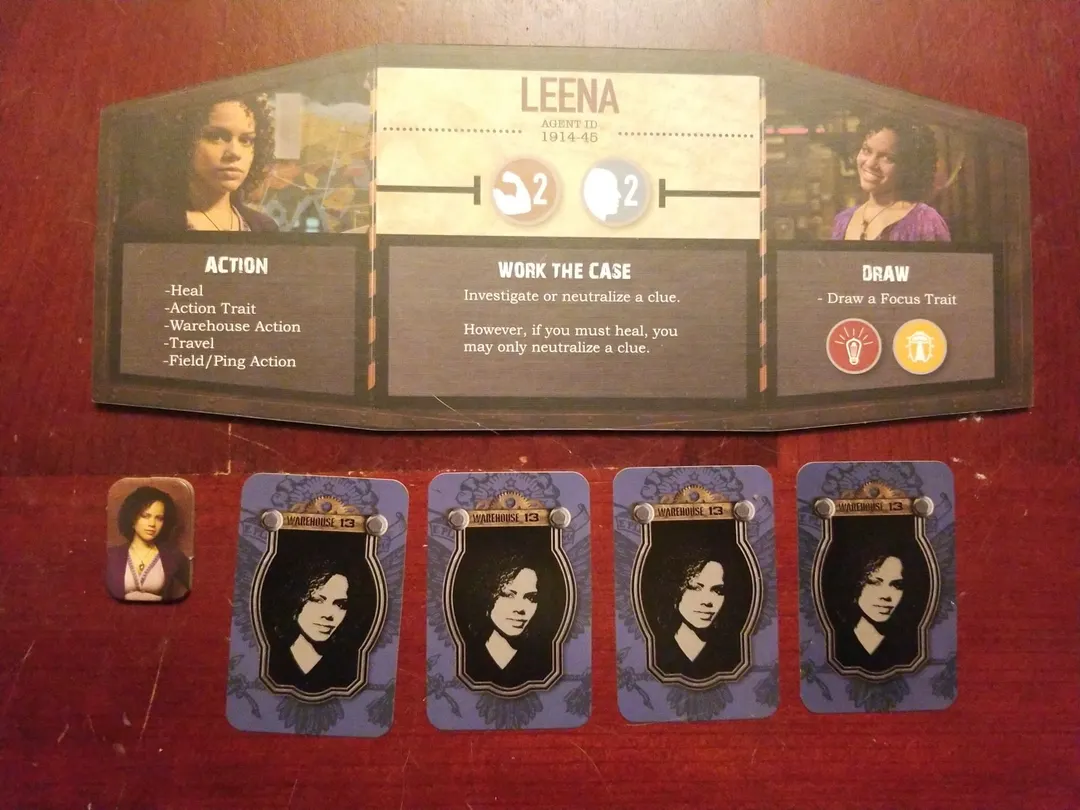
Warehouse 13: Leena
- 2–5 graczy
- 120–150 min
- Złożoność 2,0/5
- 2019
2019
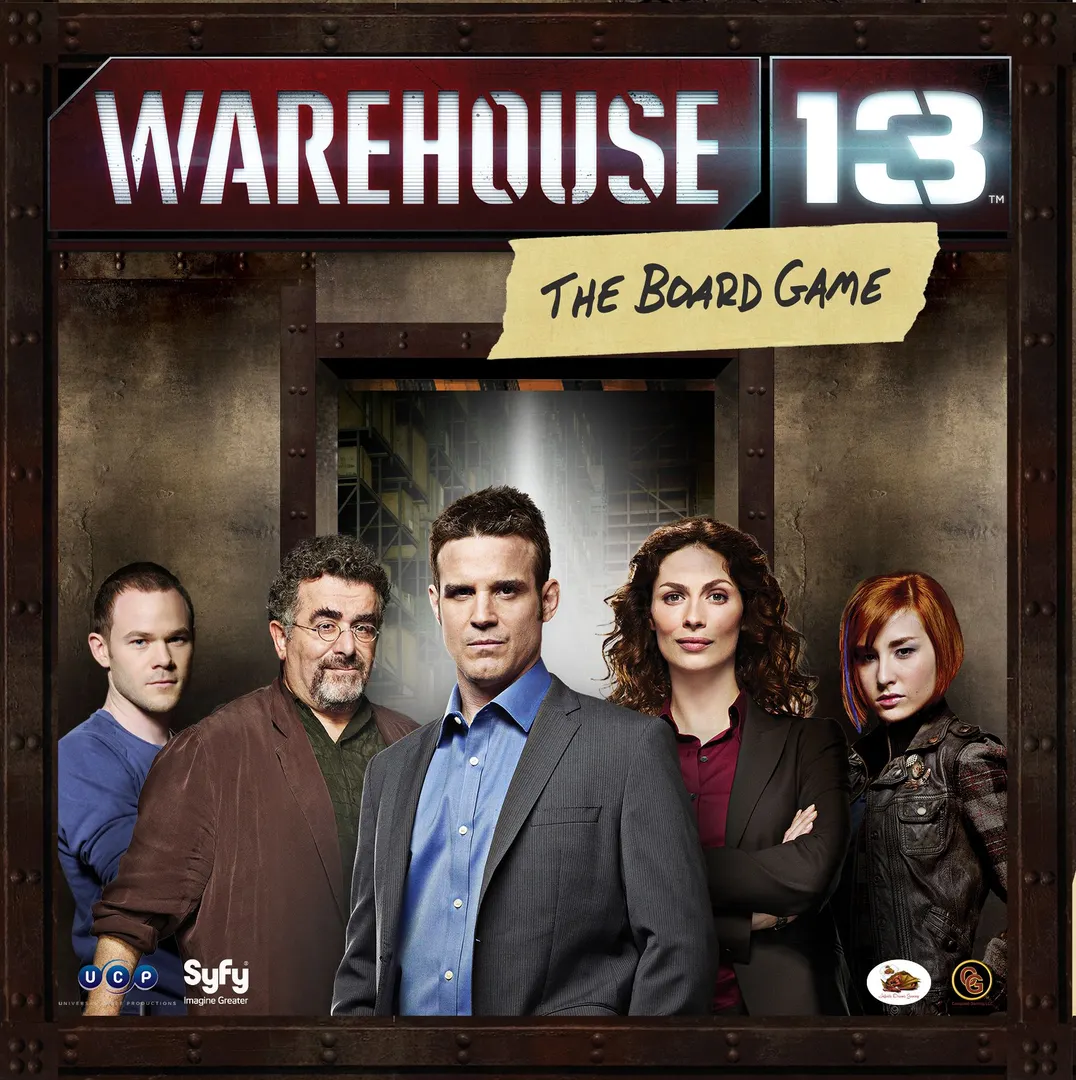
Pomoc w zasadach gry Warehouse 13: The Board Game
Zrozumiałe wyjaśnienia tur, efektów kart i spornych sytuacji z odnośnikami do oficjalnych źródeł i zapisaną historią pytań.
Dla 2 graczy
Co chcesz wiedzieć?
Odpowiedzi pochodzą z oficjalnej instrukcji, ze stroną do sprawdzenia.
Warehouse 13: The Board Game to gra planszowa wydana w 2019 roku dla 2–5 graczy, z rozgrywką trwającą 120–150 minut i dla osób od 14 lat. Projekt gry: Russ Rupe, M. Shawn Smith, II i Michael Aldridge. Główne mechaniki: Variable Player Powers, Hand Management i Dice Rolling.



Po angielsku
The Warehouse is a massive, top-secret government facility in South Dakota that houses dangerous and fantastical objects. Agents assigned to the Warehouse risk their lives to retrieve these artifacts to keep them away from nefarious individuals who seek to use the artifacts for personal gain. In Warehouse 13: The Board Game, players take on the role of Warehouse Agents who must work together to retrieve these artifacts. But is everyone looking out for the Warehouse's interests, or might one of the Agents be secretly working for the Warehouse's most ruthless adversary? Warehouse 13: The Board Game can be played by three to five players in about two hours. Each game of Warehouse 13: The Board Game is considered a Season, played over a series of Episodes. Each Episode will involve the investigation and retrieval of one artifact. Warehouse Agents must investigate clues, then use those clues to retrieve the artifact. However, one player is the Traitor, who secretly works for the Adversary. For every artifact that is lost, the Adversary becomes more powerful and thereby more difficult to defeat. Each Episode begins with the Ping Phase, in which the artifact's location is revealed and clue dice are rolled. Clues are represented by 13 custom six-sided dice. After the Ping Phase, the Investigation Phase begins. During the Adversary turn, the Adversary will act. Afterwards, each Agent must perform an Action, such as drawing Traits, playing a Trait, performing Warehouse Maintenance, or traveling to the Field. Next, each Agent must attempt to claim a clue die. If an Agent cannot claim a clue die, one must be neutralized, removing it from play for the remainder of that Episode. Finally, each Agent must draw a free Trait. The Investigation Phase repeats until all of the clue dice are either claimed or neutralized, then the Retrieval Phase begins. Each artifact displays symbols that correspond to the symbols on the clue dice. During each round of the Retrieval Phase, the players secretly roll all of their clue dice and each player chooses one to apply to the artifact. The chosen dice are revealed simultaneously. The Adversary will intervene by rolling Goo dice which can neutralize clue dice. If enough clues are applied to match the artifact's symbols, the artifact is retrieved. If the Agents run out of clue dice before rolling enough symbols, the artifact is lost to the Adversary. Play then continues to the next Episode. After three artifacts are retrieved, the Warehouse Agents win. However, if three artifacts are lost, the Finale begins, in which the Agents have one last chance to thwart the Adversary's grand scheme. At the beginning of the game, the Traitor is hidden. The Traitor can impact the game by failing to assist the Warehouse Agents, by failing to claim clues, or by failing to apply clues properly. If the Agents believe they have determined who the Traitor is, they can vote to Bronze that player, which reveals their Loyalty.
Według katalogu Warehouse 13: The Board Game obsługuje od 2 do 5 graczy. Ten zakres odpowiada liczbie graczy podanej przez wydawcę, więc grę można przygotować dla dowolnej grupy w jego granicach. Przygotowanie, niektóre zasady i punktacja mogą jednak różnić się w zależności od liczby graczy; dokładną konfigurację sprawdź w instrukcji swojego wydania.
Podany czas rozgrywki w Warehouse 13: The Board Game wynosi 120–150 minut. To szacunek wydawcy dla pełnej partii. Rzeczywisty czas zależy od grupy, liczby graczy i znajomości zasad: pierwsze partie zwykle trwają dłużej, a doświadczone grupy kończą szybciej. Przygotowanie gry i tłumaczenie zasad nie są wliczone w ten szacunek.
Katalog podaje dla Warehouse 13: The Board Game wiek od 14 lat. To zalecenie wydawcy, które uwzględnia wymagania dotyczące czytania, złożoność zasad i drobne elementy, a nie tylko tematykę. Młodsi gracze często mogą dołączyć z pomocą dorosłego; sprawdź zalecenie wiekowe swojego wydania i weź pod uwagę doświadczenie grupy z grami planszowymi.
Warehouse 13: The Board Game ma ocenę złożoności 3,1 na 5 według graczy BoardGameGeek, co czyni ją grą średnio złożoną. Ocena pokazuje, ile znajomości zasad, planowania i podejmowania decyzji wymaga typowa rozgrywka. Cięższe gry wymagają dłuższego pierwszego tłumaczenia, dlatego przed wieczorem z grami warto skorzystać z przewodnika przygotowania.
Warehouse 13: The Board Game należy do tych kategorii: Movies / TV / Radio theme, Deduction i Dice. Główne mechaniki to Variable Player Powers, Hand Management i Dice Rolling. Kategorie opisują temat i świat gry, a mechaniki to, co gracze faktycznie robią w swojej turze. Każda mechanika prowadzi do strony katalogu z podobnymi grami, co pomaga znaleźć coś porównywalnego na kolejny wieczór.
Autorzy wymienieni przy Warehouse 13: The Board Game to: Russ Rupe, M. Shawn Smith, II i Michael Aldridge. Te informacje pochodzą z opublikowanych danych gry i wskazują osoby odpowiedzialne za jej projekt, a nie ilustratorów czy wydawców. Strony autorów w MeepleRules zbierają inne tytuły tych samych twórców, co pomaga, gdy gra ci się podoba i szukasz podobnych.
W katalogu Warehouse 13: The Board Game figuruje jako gra podstawowa. Można w nią grać samodzielnie, korzystając z elementów z pudełka, bez żadnego innego tytułu. Dodatki, jeśli istnieją, dokładają nową zawartość lub zasady i są wymienione w katalogu osobno, z odnośnikiem do tej gry podstawowej.