
- Место в рейтинге BGG
- BGG #2 194
- Оценка BGG
- 7,7
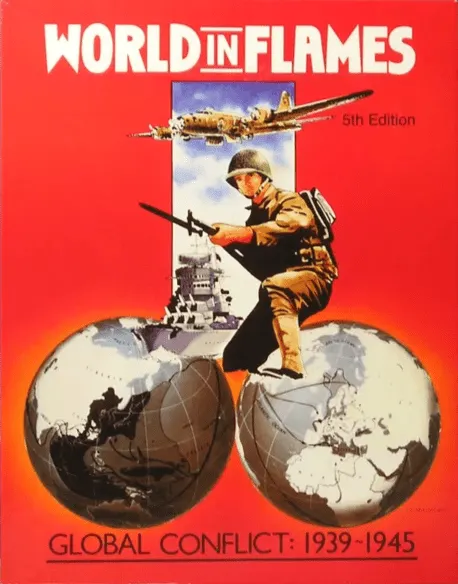
World in Flames
- 2–7 игроков
- 120–6000 мин
- Сложность 4,6/5
- 1985
1971
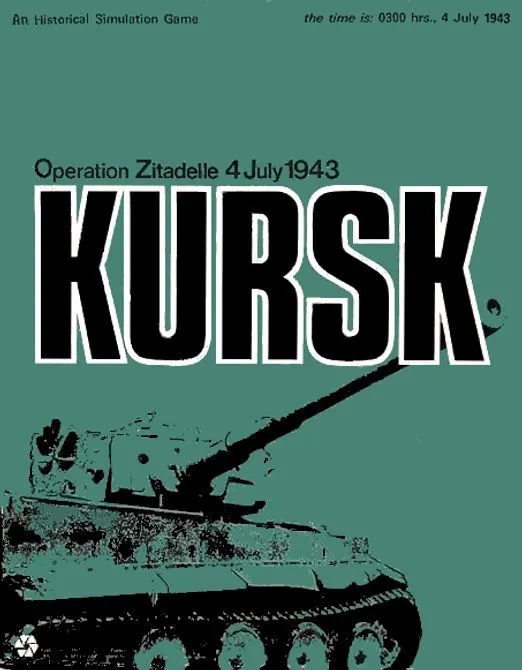
Помощник по правилам Kursk: Operation Zitadelle, 4 July 1943
Понятные объяснения ходов, эффектов карт и спорных ситуаций со ссылками на официальные источники и сохранённой историей вопросов.
Для 2 игроков
Что хотите уточнить?
Отвечаю по официальным правилам и показываю страницу для проверки.
«Kursk: Operation Zitadelle, 4 July 1943» — настольная игра 1971 года: для 2 игроков, 180–210 минут на партию и возраст от 12 лет. Авторы игры — Sterling S. Hart; основные механики — Dice Rolling, Hexagon Grid и Movement Points.
На английском
"Kursk: Operation Zitadelle, 4July 1943" is the first wargame by SPI (or anyone else) on history's largest land battle. The stark four-color map extends 440 miles from north to south at about 9 miles per hex. Games last 6 turns. The time scale, though not stated, is probably two days per turn. (The historical battle ran 12 days.) Units are German divisions (light gray) and ahistorical Soviet "corps" (brown), plus a handful of smaller formations. They have combat and movement factors (e. g., 6-8 for the best German panzer divisions, 2-4 for a Soviet infantry "corps"). The Germans have several non-divisional panzer units that must be stacked with a German division in order to use their combat factor. The Soviets have artillery and anti-tank brigades that can only use their combat factor in attack or defense, respectively. Four bands of fortified lines dominate the map, one German line and three Soviet lines. The Soviet fortified lines are indicated as they existed in May, June and July 1943. All four lines are used during the historical scenario but not all of the Soviet lines apply to some of the hypothetical scenarios. Players alternate turns, each having a movement phase, combat phase and second movement phase for mechanized units. Zones of control are "semi-active" (requiring extra movement points to enter or leave). The stacking limit is three divisions or "corps", plus one smaller formation, per hex. The Combat Results Table has the classic Eliminate, Exchange, Retreat outcomes. Supply lines must be traced over no more than 10 hexes to a rail line leading off a friendly map edge, with lack of supply halving movement and combat factors. Air power is represented semi-abstractly by air units that can fly close support, interdiction, combat air patrol, air superiority or interception missions. There are no command rules, but a couple of optional rules try to suggest organizational differences between the two armies. These options are quite advantageous to the Germans, who, as in reality, need all the help they can get. One of these optional rules is the ability of the German mechanized divisions to not be completely removed from play on an Eliminate result, but be replaced by low-strength Kampfgrupen (this became a standard rule in later games). The wargame includes six scenarios: historical and free setup scenarios for the historical July start date, hypothetical May and June German attacks, and two hypothetical August Soviet counteroffensives (one with a fixed and the other with a free setup). 255 counters For its day, Kursk: Operation Zitadelle was a "monster game" and more attentive to history than many of its rivals. SPI used the same basic system, generally with elaborations, in later World War II games, such as Breakout & Pursuit, The Moscow Campaign and Destruction of Army Group Center.
По данным каталога, «Kursk: Operation Zitadelle, 4 July 1943» рассчитана на 2 игроков. Это число игроков, указанное издателем, то есть игра задумана ровно для такого количества участников. Варианты для другого состава, если они есть, описаны в правилах вашего издания; проверьте их, прежде чем готовить другую конфигурацию.
В каталоге для «Kursk: Operation Zitadelle, 4 July 1943» указано время партии 180–210 минут — это оценка издателя для полной партии. Фактическая длительность зависит от состава, числа игроков и знакомства с правилами: первые партии обычно идут дольше, опытные компании заканчивают быстрее. Подготовка и объяснение правил в эту оценку не входят.
В каталоге для «Kursk: Operation Zitadelle, 4 July 1943» указан возраст от 12 лет. Это рекомендация издателя: она учитывает необходимость чтения, сложность правил и мелкие компоненты, а не только тему. Младшие игроки часто могут участвовать с помощью взрослого; проверьте возрастную рекомендацию на своём издании и учтите опыт вашей компании в настольных играх.
Сложность «Kursk: Operation Zitadelle, 4 July 1943» — 2,4 из 5 по оценкам игроков BoardGameGeek, это игра ниже средней сложности. Оценка отражает, сколько знания правил, планирования и решений требует типичная партия. Сложные игры дольше объяснять в первый раз, поэтому перед игровым вечером пригодится руководство по подготовке.
Категории игры «Kursk: Operation Zitadelle, 4 July 1943»: Wargame и World War II. Основные механики: Dice Rolling, Hexagon Grid и Movement Points. Категории описывают тему и сеттинг игры, а механики — то, что игроки на самом деле делают в свой ход. Каждая механика ведёт в раздел каталога с похожими играми, и так проще найти что-то подобное для следующей партии.
В каталоге авторами «Kursk: Operation Zitadelle, 4 July 1943» указаны: Sterling S. Hart. Эти данные взяты из опубликованной информации об игре и называют людей, ответственных за её дизайн, а не иллюстраторов или издателей. Страницы авторов на MeepleRules собирают другие игры тех же авторов — это удобно, когда игра понравилась и хочется найти похожие.
В каталоге «Kursk: Operation Zitadelle, 4 July 1943» отмечена как самостоятельная игра. В неё можно играть отдельно, используя компоненты из коробки, и никакая другая игра для этого не нужна. Дополнения, если они существуют, добавляют новый контент или правила и указаны в каталоге отдельно со ссылкой на эту базовую игру.