- Місце в рейтингу BGG
- BGG #14 084
- Оцінка BGG
- 6,6
Great War at Sea: 1898, The Spanish American War
- 2–4 гравці
- 30 хв
- Складність 2,6/5
- 2000
1999
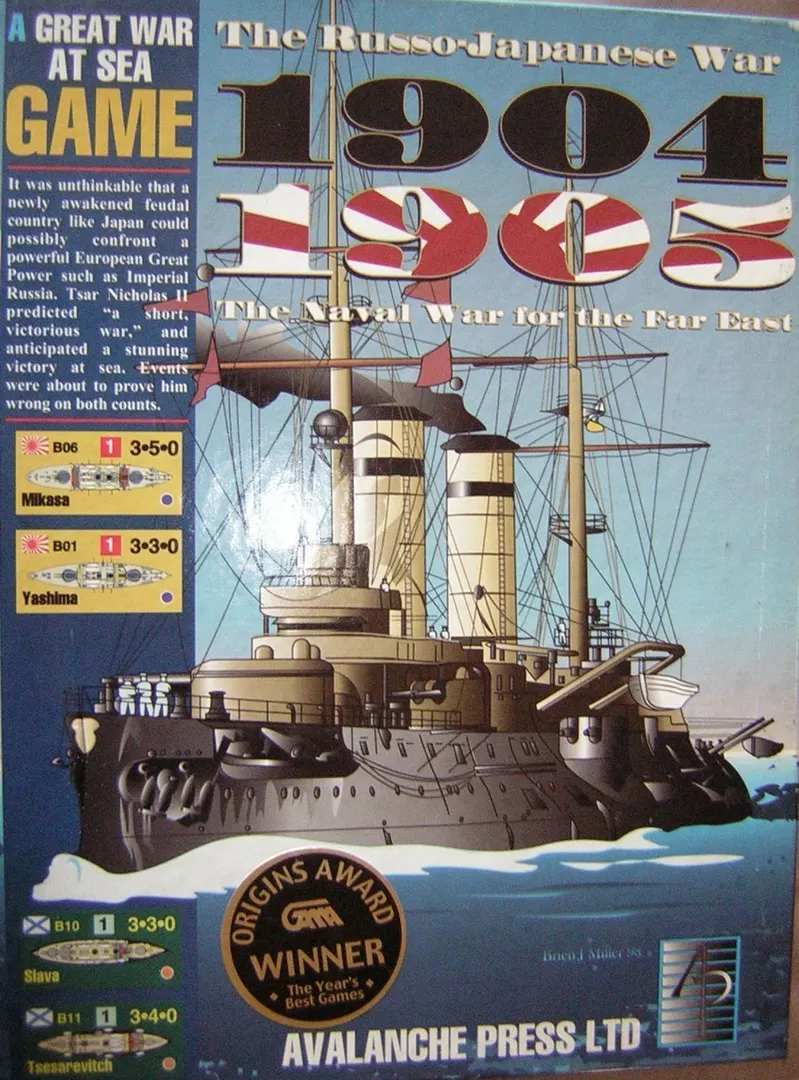
Допомога з правилами Great War at Sea: 1904-1905, The Russo-Japanese War
Зрозумілі пояснення ходів, ефектів карт і спірних ситуацій із посиланнями на офіційні джерела та збереженою історією запитань.
Що ви хочете дізнатися?
Відповіді ґрунтуються на офіційній книзі правил із зазначенням сторінки для перевірки.
«Great War at Sea: 1904-1905, The Russo-Japanese War» — настільна гра, видана у 1999 році: для 2–4 гравців, 30 хвилин на партію і вік від 12 років. Автори гри — Michael Bennighof, Brian L. Knipple і Joe Keller; основні механіки — Dice Rolling і Hexagon Grid.





Англійською
From the original company website entry: Japan entered the modern age in 1868, with a new young emperor determined to make his island nation a world power. After decades of steady progress, Japan began its own practice of colonialism, defeating China in 1894. As the Japanese began to infiltrate the semi-independent Kingdom of Korea, they ran into Russian agents doing the same. Despite Japanese offers to negotiate, the Russian Tsar Nicholas II was set on war. Great War at Sea: 1904-1905, The Russo-Japanese War covers the naval side of this turn-of-the-century conflict, which opened with a Japanese surprise attack on the Russian Pacific Fleet’s base at Port Arthur in northern China. There are 19 scenarios, or game situations, provided, including the climactic Battle of Tsushima. There’s also a campaign game, in which players can “game” the entire naval war. The Russian fleet is a mixed bag of modern battleships and ancient ironclads better suited for a museum. The Pacific Fleet that begins the game in the Far East has modern ships stationed at Port Arthur and a cruiser squadron in Vladivostok. Between them lies Korea, occupied by Japan. The Russian strategic situation is difficult. The Japanese have a better fleet; though not as large, their armored cruisers outclass their Russian counterparts and their torpedo boats are more numerous and more effective. They are also better-led after the death of the Russian Admiral Makarov. The map covers the Japanese home islands and the seas around them. As with other games in the series, it’s divided into zones approximately 31 nautical miles across. Fleets attempt to locate one another on this map. When contact is made, play moves to a tactical map where ships manuever and fight. There are special overlays for Port Arthur and Chemulpo, so players can use the actual terrain of these key coastal zones. The original 1999 game included: 210 Counters One 25"x30" strategic map One 25"x25" tactical map 16 page Rulebook 12 page Scenario book The game is being re-implemented in 2013 as Great War at Sea: Russo-Japanese War with a revised map, updated counters, new scenario book and new box.
За даними каталогу, Great War at Sea: 1904-1905, The Russo-Japanese War розрахована на 2–4 гравців. Цей діапазон указує видавець, тож гру можна підготувати для будь-якої кількості учасників у його межах. Підготовка, правила та підрахунок очок можуть відрізнятися залежно від кількості гравців, тому точні вказівки шукайте в правилах свого видання.
Зазначена тривалість партії в Great War at Sea: 1904-1905, The Russo-Japanese War — 30 хвилин. Це оцінка видавця для повної партії. Фактична тривалість залежить від компанії, кількості гравців і знання правил: перші партії зазвичай довші, а досвідчені гравці часто завершують швидше. Час на підготовку та пояснення правил у цю оцінку не входить.
У каталозі для Great War at Sea: 1904-1905, The Russo-Japanese War зазначено вік від 12 років. Це рекомендація видавця, яка враховує необхідність читати, складність правил і дрібні компоненти, а не лише тематику. Молодші гравці часто можуть долучитися за допомогою дорослого, тому перевірте вікову рекомендацію на своєму виданні та врахуйте досвід вашої компанії в настільних іграх.
Гравці BoardGameGeek оцінили складність Great War at Sea: 1904-1905, The Russo-Japanese War у 2,5 із 5, тож це гра помірно легкої складності. Оцінка відображає, скільки знань правил, планування та обмірковування рішень зазвичай потребує партія. Для складніших ігор закладайте більше часу на перше пояснення та скористайтеся посібником із підготовки перед ігровим вечором.
Great War at Sea: 1904-1905, The Russo-Japanese War належить до таких категорій: Wargame, Nautical і Post-Napoleonic. Основні механіки: Dice Rolling і Hexagon Grid. Категорії описують тематику та світ гри, а механіки — те, що гравці роблять під час своїх ходів. Кожна механіка веде до добірки схожих ігор у каталозі, щоб було легше знайти щось подібне.
Автори гри Great War at Sea: 1904-1905, The Russo-Japanese War: Michael Bennighof, Brian L. Knipple і Joe Keller. Ці відомості взято з опублікованих даних про гру. Тут зазначено людей, які розробили гру, а не її ілюстраторів чи видавців. На сторінках авторів у MeepleRules зібрано інші їхні ігри — це допомагає знайти щось подібне до гри, яка вам сподобалася.
У каталозі Great War at Sea: 1904-1905, The Russo-Japanese War зазначена як базова гра. У неї можна грати самостійно, використовуючи компоненти з коробки, без інших ігор. Доповнення, якщо вони є, додають нові матеріали або правила. Їх наведено в каталозі окремо з посиланням на цю базову гру.
