

- BGG-Rang
- BGG #4.244
- BGG-Bewertung
- 6,8
Arkwright: The Card Game
- 1–4 Spieler
- 60–100 Min.
- Komplexität 4,0/5
- 2021
2014
Regelhilfe für Arkwright
Verständliche Erklärungen zu Spielzügen, Karteneffekten und strittigen Situationen mit Verweisen auf offizielle Quellen und gespeichertem Fragenverlauf.
Für 1 Person
Was möchtest du wissen?
Antworten stammen aus dem offiziellen Regelheft, mit Seitenangabe zum Nachprüfen.
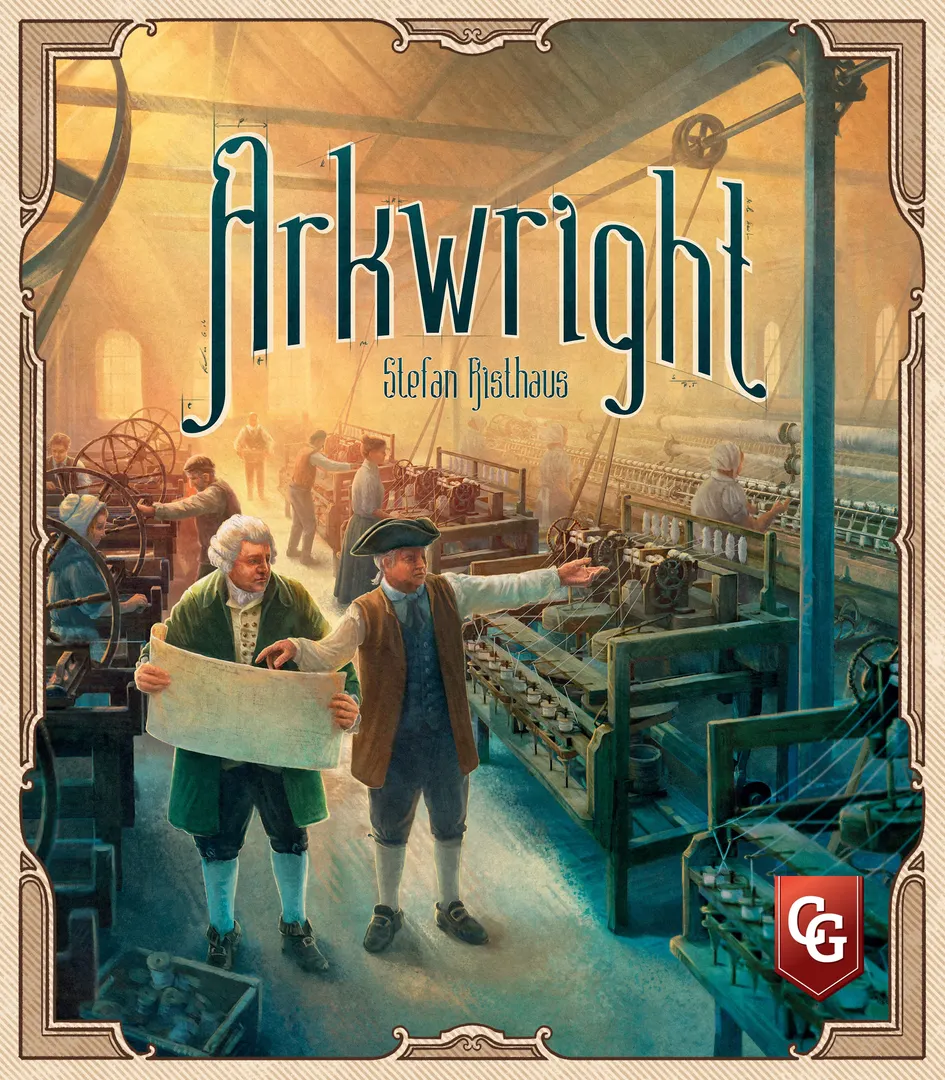
Arkwright ist ein Brettspiel aus dem Jahr 2014 für 1–4 Personen, mit 120–240 Minuten pro Partie und ab 12 Jahren. Entwickelt wurde es von Stefan Risthaus; die wichtigsten Mechaniken sind Income, Loans und Variable Set-up.








Auf Englisch
In Arkwright players run up to four factories in England during the late 18th Century. Your goal is to have the most valuable block of own shares. Thus, you must increase your share value and buy shares from the bank. To run the factories, you need workers. When hiring Workers, demand is automatically created. But of course you want to replace your expensive workers (wage 2-5) by machines (1). To have more output from your factories you may employ new Workers or improve your factory to the next technical level. You fix the price for your goods during an action round. To enhance your chances of selling goods, you improve your factories to higher levels, increase the quality and make some sales promotion. The higher these factors, the better are your chances of success - the higher the price, the lower. Each player has an own set of "action tokens" like "build and modernize factories", "employ new workers", "improve quality" etc. On your turn you place one of those tokens on one of the free spaces in your line of the "Administration board" and pay the according administration costs, ranging from 2 to 10 (even numbers). Some actions depend on how much you paid, i.e. you may buy more machines with one single action, when you pay more (= use a higher space, which is then blocked for the rest of the round). During the game your actions become more and more effective by new tokens, i.e. allow you to buy 3 machines in a single turn instead of 2, increase quality 2 levels instead of only 1...). After each round of actions one kind of factories is active and you have to pay for all your workers and machines there, then sell the manufactured products. The value of your shares increases for sold products and best quality. Goods may also be traded to the colonies by ship - provided you have a contract with the monopoly of the East Indian Company. After four turns each of the factories has produced and the round ends. Players remove the action tokens from the administration board and reveal an event token. After 5 rounds the player with the most valuable block of shares wins. Neither being to be the one with the most shares nor being the one with the highest share value guarantees victory. Arkwright allows you to act in different ways. Run all four factories with most possible output, set the focus on only two factories and improve them more than the others can; use shipping to colony or focus on the home market. In any way you have to react to the opponents and their strategy. Enter markets with deficit in supply or give up business where the other players start to push you out. Buy shares when they are cheap and increase the value, or first make money and buy shares later. To get familiar with the market mechanics you may start with a 120 minutes version "Spinning Jenny", but for those who like full strategy in economic themed games, the 240 minute "Waterframe"-Rules come with more options to improve your factory and use ships.
Laut Katalog unterstützt Arkwright 1–4 Personen. Diese Spanne entspricht der vom Verlag angegebenen Spielerzahl, das Spiel lässt sich also für jede Gruppengröße innerhalb dieser Spanne aufbauen. Aufbau, einzelne Regeln und Wertungsdetails können je nach Personenzahl trotzdem abweichen; prüfe daher die genaue Konfiguration in der Anleitung deiner Ausgabe.
Die angegebene Spieldauer für Arkwright beträgt 120–240 Minuten. Das ist die Schätzung des Verlags für eine vollständige Partie. Die tatsächliche Dauer hängt von der Gruppe, der Personenzahl und der Regelkenntnis ab: Erste Partien dauern meist länger, erfahrene Gruppen sind oft schneller fertig. Aufbau und Regelerklärung sind in dieser Schätzung nicht enthalten.
Im Katalog wird Arkwright ab 12 Jahren empfohlen. Das ist die Empfehlung des Verlags und berücksichtigt Leseanforderungen, Regelkomplexität und Kleinteile, nicht nur das Thema. Jüngere Kinder können oft mit Hilfe eines Erwachsenen mitspielen; beachte die Altersangabe deiner Ausgabe und die Brettspielerfahrung deiner Gruppe.
Arkwright hat bei BoardGameGeek eine Komplexitätswertung von 4,6 von 5 und gilt damit als schweres Spiel. Die Wertung zeigt, wie viel Regelwissen, Planung und Entscheidungen eine typische Partie verlangt. Schwerere Spiele brauchen bei der ersten Erklärung mehr Zeit, daher hilft vor dem Spieleabend eine Vorbereitungsanleitung.
Arkwright gehört zu diesen Kategorien: Economic und Industry / Manufacturing. Die wichtigsten Mechaniken sind Income, Loans und Variable Set-up. Kategorien beschreiben Thema und Setting eines Spiels, Mechaniken dagegen, was die Spielenden in ihrem Zug tatsächlich tun. Jede Mechanik führt zu einer Katalogseite mit ähnlichen Spielen, falls du etwas Vergleichbares suchst.
Als Autoren von Arkwright sind angegeben: Stefan Risthaus. Diese Angaben stammen aus den veröffentlichten Spieldaten und nennen die für das Spieldesign verantwortlichen Personen, nicht die Illustratoren oder Verlage. Die Autorenseiten auf MeepleRules sammeln weitere Titel derselben Autoren – praktisch, wenn dir ein Spiel gefällt und du ähnliche Spiele suchst.
Im Katalog ist Arkwright als Grundspiel aufgeführt. Es lässt sich eigenständig mit dem Material aus der Schachtel spielen und benötigt keinen weiteren Titel. Erweiterungen, sofern es welche gibt, ergänzen neues Material oder neue Regeln und sind im Katalog separat mit einem Verweis auf dieses Grundspiel aufgeführt.