- BGG-Bewertung
- 8,1
EPOS: A Gentes Game – Carawansery and Tablets of Law
- 1–4 Spieler
- 90–180 Min.
- 2024
2026
Regelhilfe für EPOS: A Gentes Game
Verständliche Erklärungen zu Spielzügen, Karteneffekten und strittigen Situationen mit Verweisen auf offizielle Quellen und gespeichertem Fragenverlauf.
Was möchtest du wissen?
Antworten stammen aus dem offiziellen Regelheft, mit Seitenangabe zum Nachprüfen.
EPOS: A Gentes Game ist ein Brettspiel aus dem Jahr 2026 für 1–4 Personen, mit 90–180 Minuten pro Partie und ab 12 Jahren. Entwickelt wurde es von Stefan Risthaus; die wichtigsten Mechaniken sind Point to Point Movement und Scenario / Mission / Campaign Game.





Auf Englisch
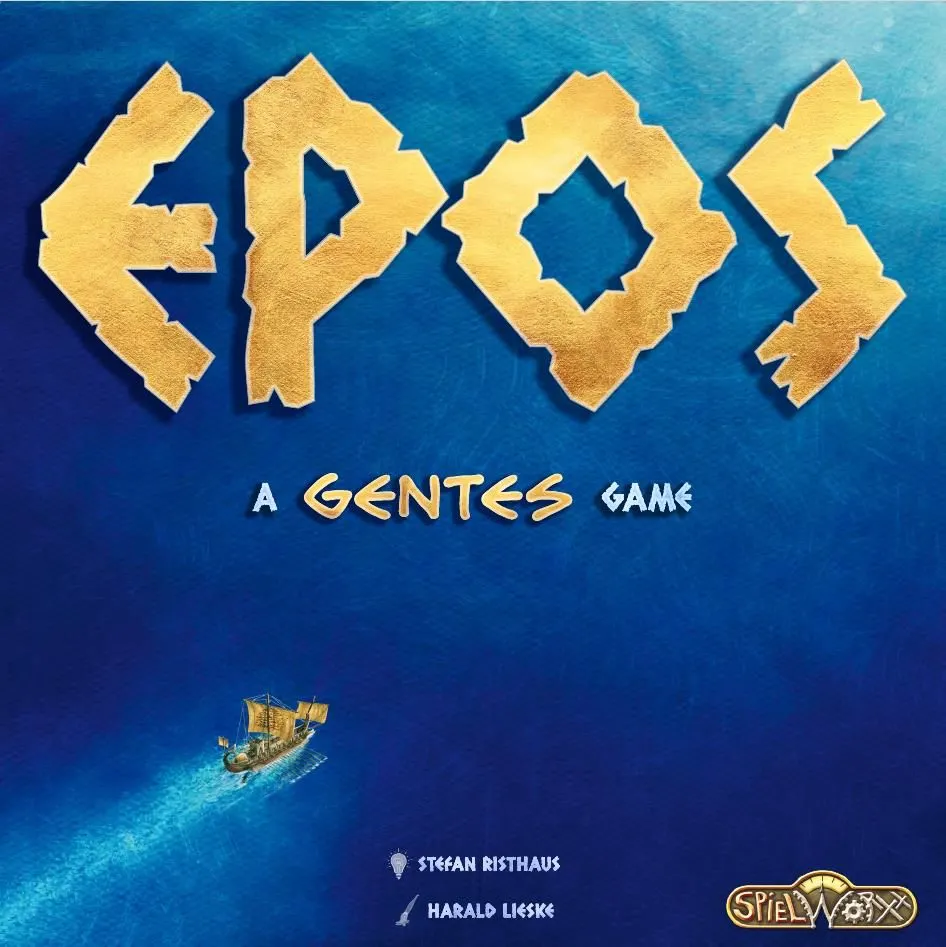
Throughout history, the Mediterranean was inhabited by many different peoples and city-states. In EPOS: A Gentes Game, you lead your people to prosperity to secure a fitting place in history. EPOS is a "game collection" set in the Gentes universe that consists of: A base game Eight scenarios A campaign game (with different lengths and challenges) You can play the scenarios in any order, repeating them or skipping them as you like, or once you're familiar with the base game, you can dive into the campaign. The scenarios are: 1. Kingdoms People start to establish their first settlements, cities, and eventually kingdoms. Help your people grow and expand, and send your pioneers to as many territories as possible. 2. Tributes The competition among your different peoples for resources and power steadily increases, so ask your gods for their help. Whose achievements will find a place in history? 3. Infrastructure After the founding of cities, trading posts are important for the exchange of goods on important trade routes. Increasingly, these routes alone become lucrative sources of power and wealth, surpassing some cities in their importance. 4. Expeditions Curiosity and the need to discover new regions lead brave explorers to distant lands where they create new opportunities for their own glory and for the benefit of their people. Expeditions and the development of your population propel your people to unprecedented prosperity and increase your wealth. 5. Trade As you start to transport increasingly valuable goods over long distances, they become a popular form of currency. Depending on the demand, prices of goods fluctuate, so make sure you trade at the right time to prevent shortages. 6. Progress Kingdoms are connected by trade networks. Your people continuously develop new technologies and improve skills. 7. Turbulent Times After years of prosperity, times get a bit tougher for your people. Enemies at your borders and internal unrest, natural disasters, and plagues afflict them — truly turbulent times! Only together can you fight and overcome these problems, which require you to invest time and resources. 8. New Era Your people have experienced several changes in fortunes and survived turbulent times. Now they stand on the threshold of a new era! It is time to explore new paths, but each people must find its own way. Only those who keep their population in good spirits, using culture and luxury goods, will acquire eternal glory: Panem et Circenses! Embark on the new era in the Mediterranean for generations to come! For the EPOS campaign game, you play either all eight scenarios or a random selection of four.
Laut Katalog unterstützt EPOS: A Gentes Game 1–4 Personen. Diese Spanne entspricht der vom Verlag angegebenen Spielerzahl, das Spiel lässt sich also für jede Gruppengröße innerhalb dieser Spanne aufbauen. Aufbau, einzelne Regeln und Wertungsdetails können je nach Personenzahl trotzdem abweichen; prüfe daher die genaue Konfiguration in der Anleitung deiner Ausgabe.
Die angegebene Spieldauer für EPOS: A Gentes Game beträgt 90–180 Minuten. Das ist die Schätzung des Verlags für eine vollständige Partie. Die tatsächliche Dauer hängt von der Gruppe, der Personenzahl und der Regelkenntnis ab: Erste Partien dauern meist länger, erfahrene Gruppen sind oft schneller fertig. Aufbau und Regelerklärung sind in dieser Schätzung nicht enthalten.
Im Katalog wird EPOS: A Gentes Game ab 12 Jahren empfohlen. Das ist die Empfehlung des Verlags und berücksichtigt Leseanforderungen, Regelkomplexität und Kleinteile, nicht nur das Thema. Jüngere Kinder können oft mit Hilfe eines Erwachsenen mitspielen; beachte die Altersangabe deiner Ausgabe und die Brettspielerfahrung deiner Gruppe.
EPOS: A Gentes Game hat bei BoardGameGeek eine Komplexitätswertung von 3,0 von 5 und gilt damit als mittelschweres Spiel. Die Wertung zeigt, wie viel Regelwissen, Planung und Entscheidungen eine typische Partie verlangt. Schwerere Spiele brauchen bei der ersten Erklärung mehr Zeit, daher hilft vor dem Spieleabend eine Vorbereitungsanleitung.
EPOS: A Gentes Game gehört zu diesen Kategorien: Territory Building, Ancient und Civilization. Die wichtigsten Mechaniken sind Point to Point Movement und Scenario / Mission / Campaign Game. Kategorien beschreiben Thema und Setting eines Spiels, Mechaniken dagegen, was die Spielenden in ihrem Zug tatsächlich tun. Jede Mechanik führt zu einer Katalogseite mit ähnlichen Spielen, falls du etwas Vergleichbares suchst.
Als Autoren von EPOS: A Gentes Game sind angegeben: Stefan Risthaus. Diese Angaben stammen aus den veröffentlichten Spieldaten und nennen die für das Spieldesign verantwortlichen Personen, nicht die Illustratoren oder Verlage. Die Autorenseiten auf MeepleRules sammeln weitere Titel derselben Autoren – praktisch, wenn dir ein Spiel gefällt und du ähnliche Spiele suchst.
Im Katalog ist EPOS: A Gentes Game als Grundspiel aufgeführt. Es lässt sich eigenständig mit dem Material aus der Schachtel spielen und benötigt keinen weiteren Titel. Erweiterungen, sofern es welche gibt, ergänzen neues Material oder neue Regeln und sind im Katalog separat mit einem Verweis auf dieses Grundspiel aufgeführt.