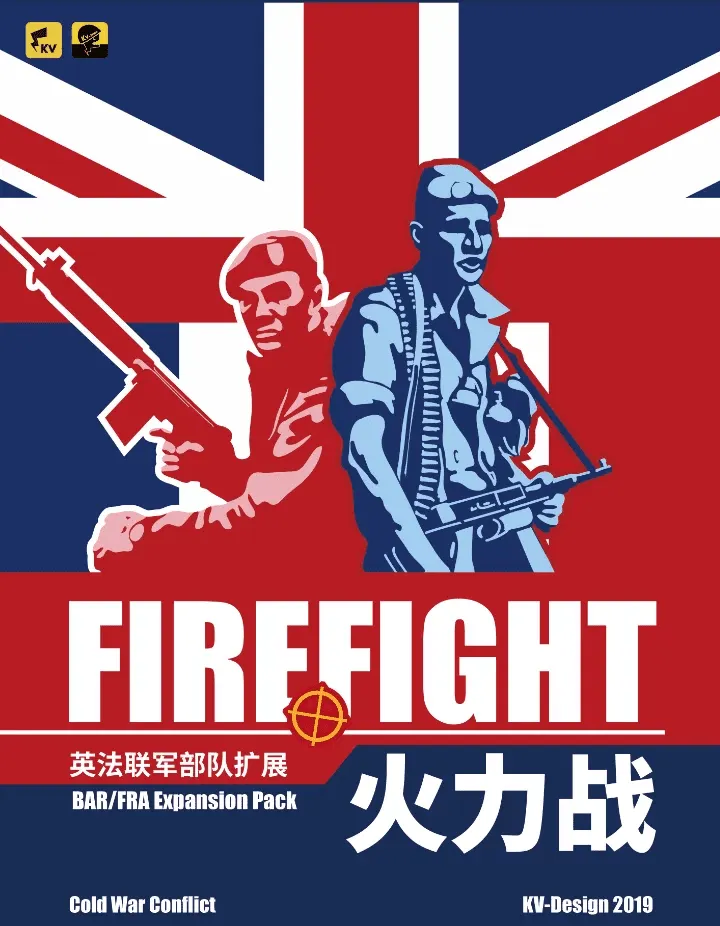
Firefight: BRA/FRA Expansion pack
- 2 Spieler
- 2019
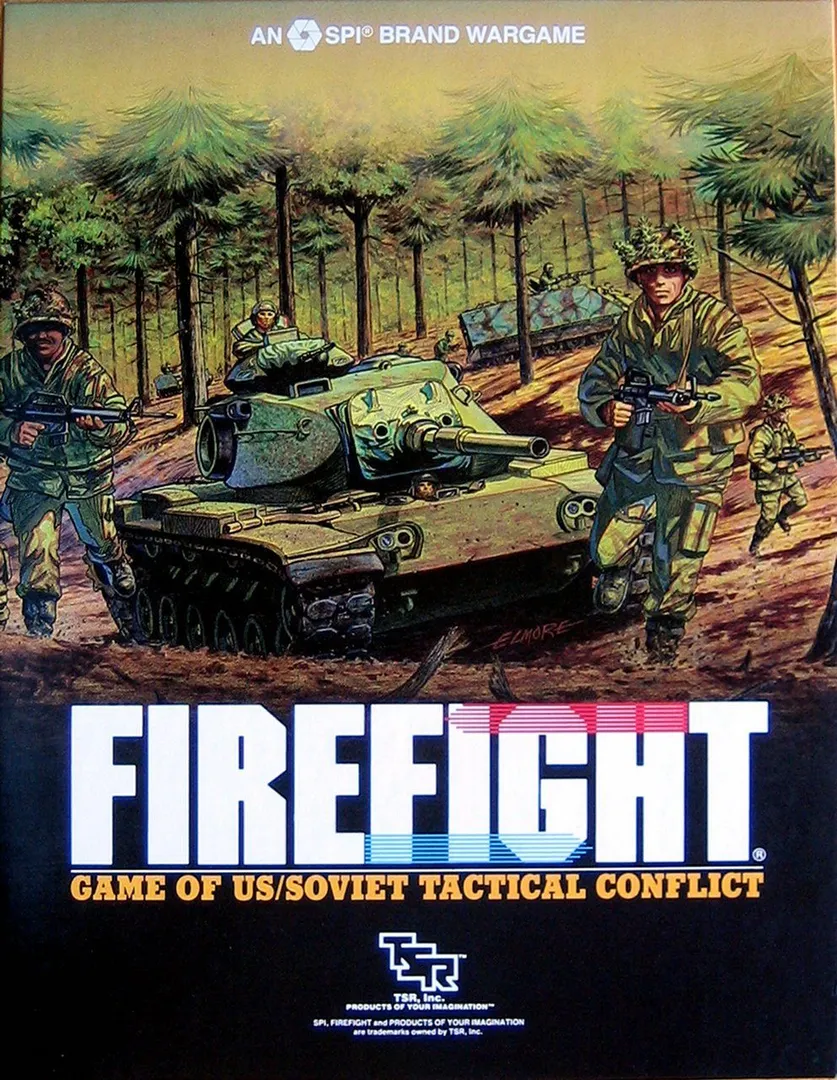
1976
Regelhilfe für Firefight: Modern U.S. and Soviet Small Unit Tactics
Verständliche Erklärungen zu Spielzügen, Karteneffekten und strittigen Situationen mit Verweisen auf offizielle Quellen und gespeichertem Fragenverlauf.
Für 2 Personen
Was möchtest du wissen?
Antworten stammen aus dem offiziellen Regelheft, mit Seitenangabe zum Nachprüfen.
Firefight: Modern U.S. and Soviet Small Unit Tactics ist ein Brettspiel aus dem Jahr 1976 für 2 Personen, mit 90 Minuten pro Partie und ab 12 Jahren. Entwickelt wurde es von Jim Dunnigan und Irad B. Hardy; die wichtigsten Mechaniken sind Dice Rolling, Grid Movement und Hexagon Grid.
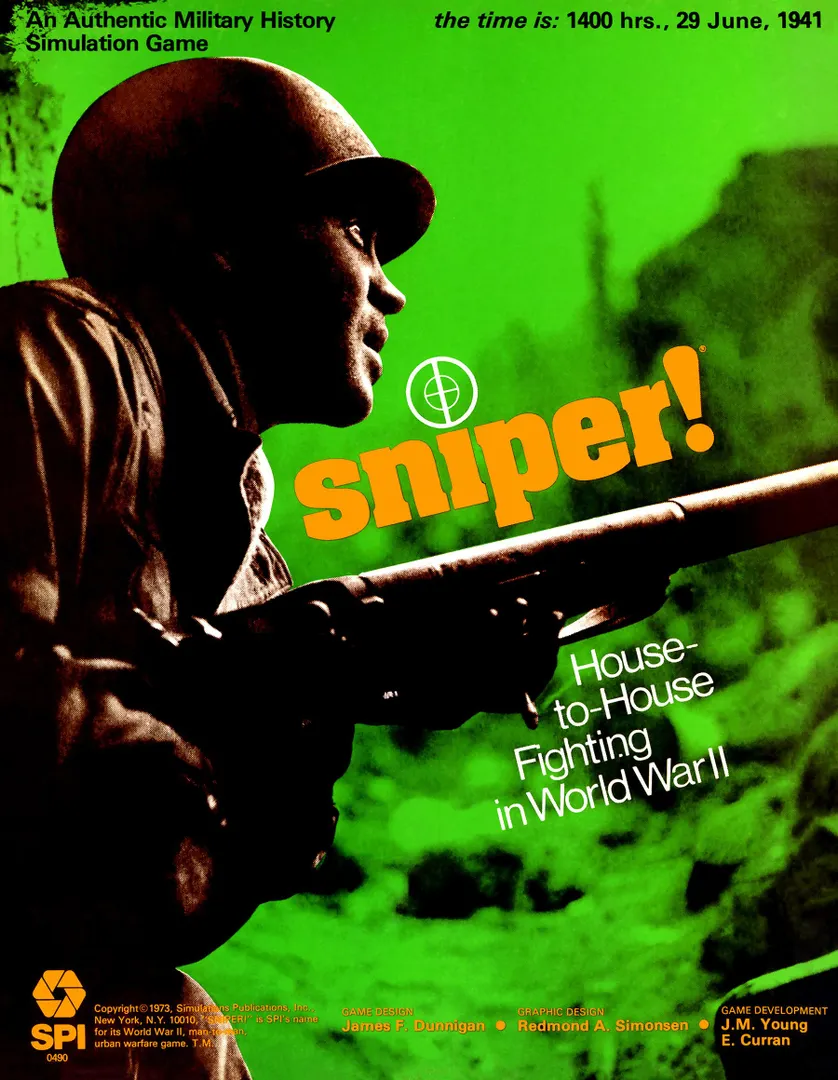



Auf Englisch
Firefight: Game of US/Soviet Tactical Combat, A tactical game of modern (late 1970's) mechanized combat, partly funded by the US Army as a training tool, to show the effects of the long range and lethality of modern weapons on the techniques and tactics of the modern battlefield. Game components: 400 die cut counters, two 22" x34" geomorphic maps, rules booklet, briefing booklet. Game Scale: Game Turn: 40 seconds Hex: 54 yards / 50 meters Units: Fireteams & Individual Vehicles Game Inventory: Two 22 x 34" four color mapsheets One dual-side printed countersheet (400 1/2" counters) One 20-page Firefight rulebook One 20-page Reference Data booklet Two 6-sided dice Solitaire Playability: Medium Complexity Level: Medium Players: 1 or more Playing Time: 2-6 hours (from the original SPI flat tray and z-pack cover sheet:) Modern US and Soviet Small Unit Tactics An Historical Simulation Game the time is: The First Battle of the Next War Two separate 22" x 34" maps in four colors Terrain and target sensitive CRT's Individual, sequenced fire and movement Firefight is game which highlights the dynamics of the modern battlefield. Each unit represents either one vehicle or one "fireteam" (four infantrymen). The game scale is 50 meters per hex and 40 seconds per Game-Turn. Each Game-Turn is comprised of a Fire Phase, followed by a Movement Phase, during which the players alternate moving units (those that have not fired), and terminating with an Indirect Fire Phase, during which the players employ and assess fire from off-map artillery and mortar units. Firefight makes extensive use of tables to express the strength of a firing unit against a particular target at a given distance. This strength (or firepower rating) is then referred to a Combat Results Table. This procedure allows us to rate different weapon systems versus different target types with much greater accuracy than heretofore. Another innovation is the integration of the terrain effects directly onto the CRT's. Results are colour-coded to graphically display the protection offered by woods, building and defilade (hull-down) positions. The whole effect is a much simpler, but more accurate system of combat. Firefight is presented in three stages. Firefight I, II and III. Firefight I introduces the player to the fundamental game system. Firefight II introduces more complex rules, which add realistic effects yo play. Firefight III explores the effects of weapons systems presently under development. (from the SPI soap box cover:) Modern US and Soviet Small Unit Tactics A Fascinating Future-History Simulation Game the time is: The First Battle of the Next War What if the US and USSR were to meet in a conventional war? Firefight highlights the dynamics of today's battlefield and includes an intensive survey of battlefield tactics and doctrine. The range and lethality of weapons in each country's service are contrasted as players use the tactical deployment of their combined arms system to test the capabilities of their small tactical units. Firefight simulates this possible conflict on a map based on US Army specifications of probable terrain conditions. Colorful cardboard playing pieces move, position, and engage for battle through a superimposed hexagonal grid, which functions like a chessboard's squares. Simple probability charts determine each combat's outcome. Contains: comprehensive historical situation briefing; 20 page rules booklet; 400 die-cut cardboard playing pieces; two different 22" x 34" soft map sections; and various playing aids. Level of Complexity: Moderate Average Playing Time: 2 hours Suitability for Solitaire Play: Moderate
Laut Katalog unterstützt Firefight: Modern U.S. and Soviet Small Unit Tactics 2 Personen. Das ist die vom Verlag angegebene Spielerzahl, das Spiel ist also genau für diese Anzahl von Mitspielenden ausgelegt. Varianten für andere Gruppengrößen sind, sofern vorhanden, in der Anleitung deiner Ausgabe beschrieben; prüfe sie, bevor du eine andere Konfiguration aufbaust.
Die angegebene Spieldauer für Firefight: Modern U.S. and Soviet Small Unit Tactics beträgt 90 Minuten. Das ist die Schätzung des Verlags für eine vollständige Partie. Die tatsächliche Dauer hängt von der Gruppe, der Personenzahl und der Regelkenntnis ab: Erste Partien dauern meist länger, erfahrene Gruppen sind oft schneller fertig. Aufbau und Regelerklärung sind in dieser Schätzung nicht enthalten.
Im Katalog wird Firefight: Modern U.S. and Soviet Small Unit Tactics ab 12 Jahren empfohlen. Das ist die Empfehlung des Verlags und berücksichtigt Leseanforderungen, Regelkomplexität und Kleinteile, nicht nur das Thema. Jüngere Kinder können oft mit Hilfe eines Erwachsenen mitspielen; beachte die Altersangabe deiner Ausgabe und die Brettspielerfahrung deiner Gruppe.
Firefight: Modern U.S. and Soviet Small Unit Tactics hat bei BoardGameGeek eine Komplexitätswertung von 2,8 von 5 und gilt damit als eher leichtes Spiel. Die Wertung zeigt, wie viel Regelwissen, Planung und Entscheidungen eine typische Partie verlangt. Schwerere Spiele brauchen bei der ersten Erklärung mehr Zeit, daher hilft vor dem Spieleabend eine Vorbereitungsanleitung.
Firefight: Modern U.S. and Soviet Small Unit Tactics gehört zu diesen Kategorien: Wargame und Modern Warfare. Die wichtigsten Mechaniken sind Dice Rolling, Grid Movement und Hexagon Grid. Kategorien beschreiben Thema und Setting eines Spiels, Mechaniken dagegen, was die Spielenden in ihrem Zug tatsächlich tun. Jede Mechanik führt zu einer Katalogseite mit ähnlichen Spielen, falls du etwas Vergleichbares suchst.
Als Autoren von Firefight: Modern U.S. and Soviet Small Unit Tactics sind angegeben: Jim Dunnigan und Irad B. Hardy. Diese Angaben stammen aus den veröffentlichten Spieldaten und nennen die für das Spieldesign verantwortlichen Personen, nicht die Illustratoren oder Verlage. Die Autorenseiten auf MeepleRules sammeln weitere Titel derselben Autoren – praktisch, wenn dir ein Spiel gefällt und du ähnliche Spiele suchst.
Im Katalog ist Firefight: Modern U.S. and Soviet Small Unit Tactics als Grundspiel aufgeführt. Es lässt sich eigenständig mit dem Material aus der Schachtel spielen und benötigt keinen weiteren Titel. Erweiterungen, sofern es welche gibt, ergänzen neues Material oder neue Regeln und sind im Katalog separat mit einem Verweis auf dieses Grundspiel aufgeführt.