
- BGG-Rang
- BGG #10.936
- BGG-Bewertung
- 7,5
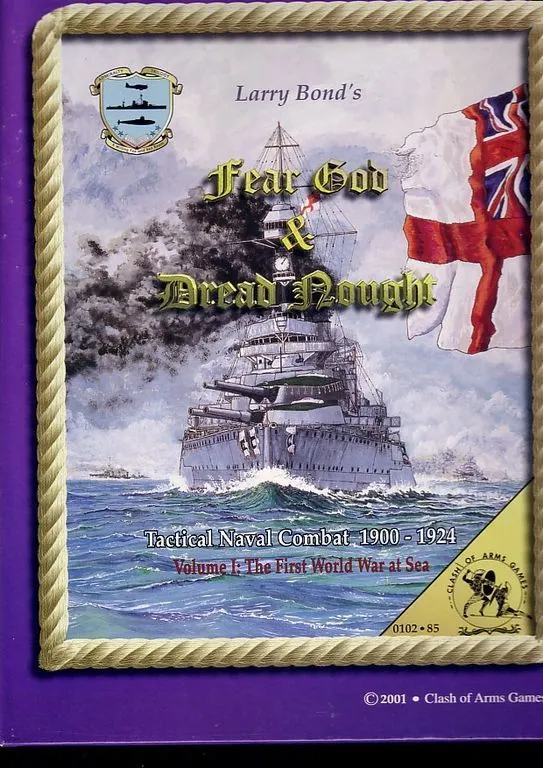
Fear God & Dread Nought
- 2–3 Spieler
- 360 Min.
- Komplexität 4,3/5
- 2001
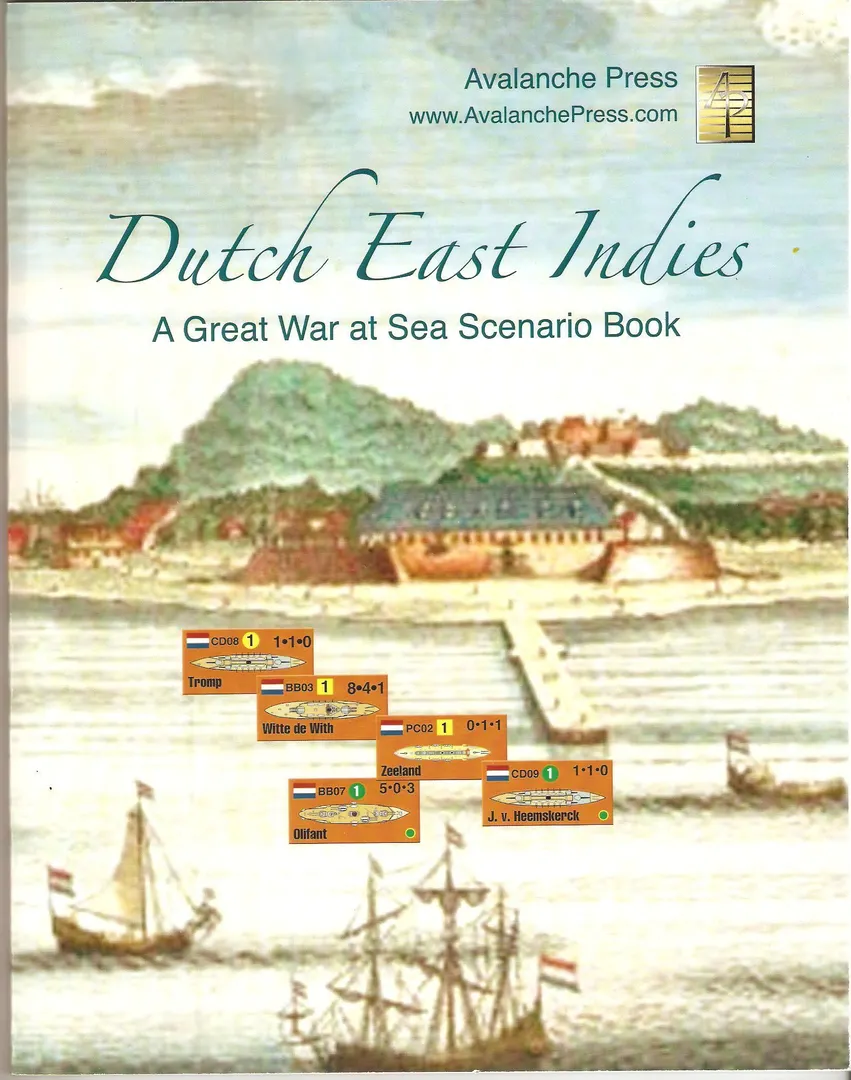
Regelhilfe für Great War at Sea: Dutch East Indies
Verständliche Erklärungen zu Spielzügen, Karteneffekten und strittigen Situationen mit Verweisen auf offizielle Quellen und gespeichertem Fragenverlauf.
Was möchtest du wissen?
Antworten stammen aus dem offiziellen Regelheft, mit Seitenangabe zum Nachprüfen.
Great War at Sea: Dutch East Indies ist eine Erweiterung für Great War at Sea: Cruiser Warfare aus dem Jahr 2012 für 1–2 Personen, mit 30 Minuten pro Partie und ab 12 Jahren. Entwickelt wurde es von James Stear; die wichtigsten Mechaniken sind Dice Rolling, Secret Unit Deployment und Hexagon Grid.





Auf Englisch
From the Avalanche Press website: For hundreds of years, the Dutch maintained dominion over a vast empire of overseas possessions. By the early 1900’s, many of these territories had been lost to Great Britain, however one of significant import remained: the East Indies, which would later become modern day Indonesia. Little Holland controlled the resources of an island empire of some 40 million people, rich in the resources – oil, rubber, tin and other metals - that would ultimately drive the industrial economies of the 20th century. Covetous eyes watched the development of this region with interest. Japan made numerous inroads with trade missions, while more radical voices called for outright conquest, Germany expressed interest in obtaining island bases there (if not overall acquisition), while Britain stood by, intent that no other nation which could pose a threat to her interests should gain control the islands. Fears of Japanese aggression led the Dutch to consider a vastly expanded Koninklijke Marine with modern dreadnoughts to defend their prize. Dutch East Indies is a 64-page book supplement for the Great War at Sea series, focusing on battles which could have and in some cases did take place in and around these islands over the period 1914-1917. Conflicts between the navy the Dutch considered but never built and Japanese invaders (and others) are explored, along with historical battles and hypothetical situations arising as the principal maritime combatants of the Great War, England and Germany, struggled for control of the seas. There are 35 scenarios, or separate game situations, as well as background articles presenting the history of this Dutch territory, the politics of the Great Powers around it, and the ships that fought or might have fought there. In addition, a campaign game is provided, for those wishing to examine the challenges and surprises that would have faced Dutch and IJN planners in a 1916-1917 Japanese invasion of the East Indies. This supplement contains no pieces or maps; ownership of Pacific Crossroads, Jutland, Cruiser Warfare and the operational maps from Strike South (from the Second World War at Sea series) is required to play the majority of the battle and operational scenarios, while Mediterranean and Dreadnoughts are needed to enjoy them all.
Laut Katalog unterstützt Great War at Sea: Dutch East Indies 1–2 Personen. Diese Spanne entspricht der vom Verlag angegebenen Spielerzahl, das Spiel lässt sich also für jede Gruppengröße innerhalb dieser Spanne aufbauen. Aufbau, einzelne Regeln und Wertungsdetails können je nach Personenzahl trotzdem abweichen; prüfe daher die genaue Konfiguration in der Anleitung deiner Ausgabe.
Die angegebene Spieldauer für Great War at Sea: Dutch East Indies beträgt 30 Minuten. Das ist die Schätzung des Verlags für eine vollständige Partie. Die tatsächliche Dauer hängt von der Gruppe, der Personenzahl und der Regelkenntnis ab: Erste Partien dauern meist länger, erfahrene Gruppen sind oft schneller fertig. Aufbau und Regelerklärung sind in dieser Schätzung nicht enthalten.
Im Katalog wird Great War at Sea: Dutch East Indies ab 12 Jahren empfohlen. Das ist die Empfehlung des Verlags und berücksichtigt Leseanforderungen, Regelkomplexität und Kleinteile, nicht nur das Thema. Jüngere Kinder können oft mit Hilfe eines Erwachsenen mitspielen; beachte die Altersangabe deiner Ausgabe und die Brettspielerfahrung deiner Gruppe.
Great War at Sea: Dutch East Indies hat bei BoardGameGeek eine Komplexitätswertung von 3,0 von 5 und gilt damit als mittelschweres Spiel. Die Wertung zeigt, wie viel Regelwissen, Planung und Entscheidungen eine typische Partie verlangt. Schwerere Spiele brauchen bei der ersten Erklärung mehr Zeit, daher hilft vor dem Spieleabend eine Vorbereitungsanleitung.
Great War at Sea: Dutch East Indies gehört zu diesen Kategorien: Wargame, Nautical und Expansion for Base-game. Die wichtigsten Mechaniken sind Dice Rolling, Secret Unit Deployment und Hexagon Grid. Kategorien beschreiben Thema und Setting eines Spiels, Mechaniken dagegen, was die Spielenden in ihrem Zug tatsächlich tun. Jede Mechanik führt zu einer Katalogseite mit ähnlichen Spielen, falls du etwas Vergleichbares suchst.
Als Autoren von Great War at Sea: Dutch East Indies sind angegeben: James Stear. Diese Angaben stammen aus den veröffentlichten Spieldaten und nennen die für das Spieldesign verantwortlichen Personen, nicht die Illustratoren oder Verlage. Die Autorenseiten auf MeepleRules sammeln weitere Titel derselben Autoren – praktisch, wenn dir ein Spiel gefällt und du ähnliche Spiele suchst.
Im Katalog ist Great War at Sea: Dutch East Indies als Erweiterung zu Great War at Sea: Cruiser Warfare aufgeführt. Erweiterungen ergänzen das Grundspiel um neues Material, neue Regeln oder Szenarien und sind meist nicht eigenständig spielbar; du brauchst also Great War at Sea: Cruiser Warfare, um sie zu nutzen. Prüfe, ob deine Ausgabe von Great War at Sea: Cruiser Warfare kompatibel ist, da manche Erweiterungen zwischen den Auflagen überarbeitet wurden.