
- BGG-Rang
- BGG #12.084
- BGG-Bewertung
- 7,6
The First Jihad: The Rise of Islam 632-750
- 1 Spieler
- 30–120 Min.
- Komplexität 3,5/5
- 2020
2019
Regelhilfe für Nubia: Egypt's Black Heirs
Verständliche Erklärungen zu Spielzügen, Karteneffekten und strittigen Situationen mit Verweisen auf offizielle Quellen und gespeichertem Fragenverlauf.
Für 1 Person
Was möchtest du wissen?
Antworten stammen aus dem offiziellen Regelheft, mit Seitenangabe zum Nachprüfen.
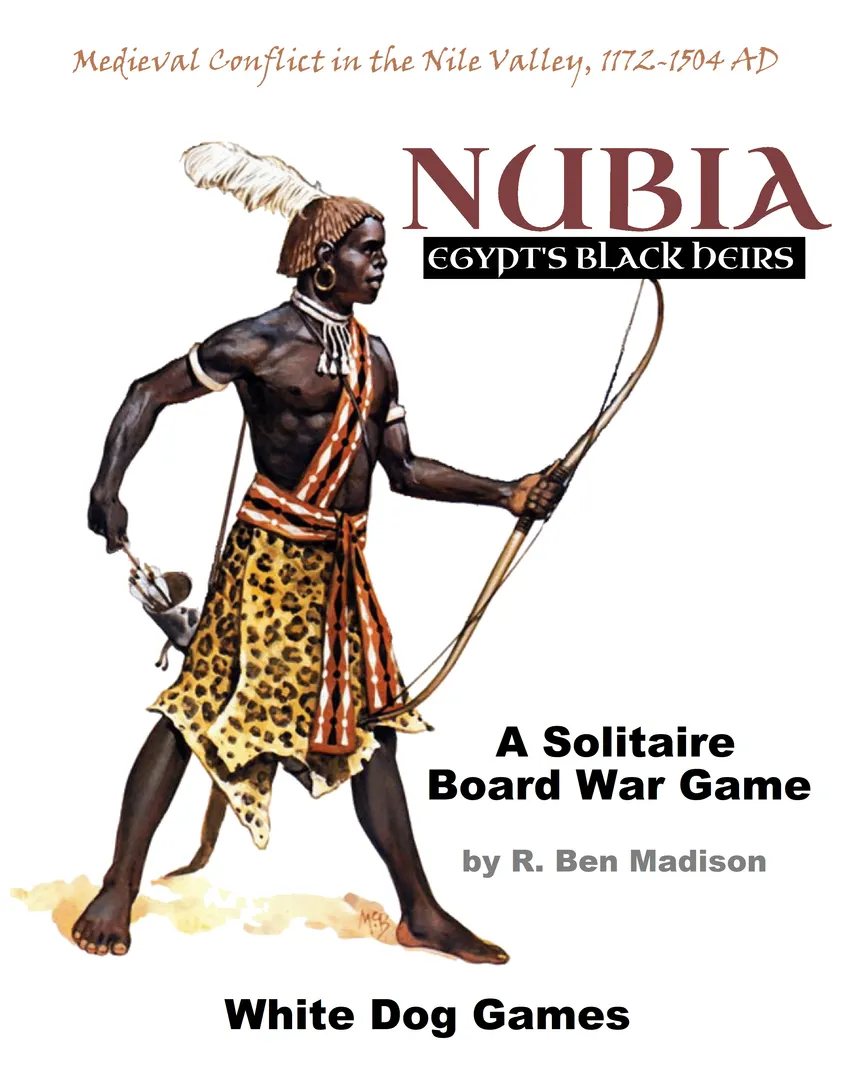
Nubia: Egypt's Black Heirs ist ein Brettspiel aus dem Jahr 2019 für 1 Person, mit 30–60 Minuten pro Partie und ab 10 Jahren. Entwickelt wurde es von Ben Madison und Wes Erni; die wichtigsten Mechaniken sind Dice Rolling, Point to Point Movement und Area Majority / Influence.








Auf Englisch
Nubia is a solitaire game where you rule a Black African civilization of three Christian kingdoms in the Nile Valley: Nobadia, Makuria, and Alodia. Your culture is an heir to the glories of Ancient Egypt and the legendary Kingdom of Kush, but long gone are the days when you were conquering and ruling Egypt. In the game, it is A.D. 1172 and Nubia is under siege! For 400 years, you will battle to defend civilization against the fierce pagans of the Funj, and a jihad of marauding land-hungry Arabs. Deploy your famous archers, build fortified monasteries, send the Crown Prince into battle, and marry off your daughters in a desperate effort to stem the tide. This fast-play, fun, and educational solitaire game uses a system created by Darin Leviloff. “Mek” markers on five converging paths represent hostile Arab and pagan armies that surround your kingdoms. The paths all meet in Soba, your fabulously wealthy capital at the juncture of the Blue and White Nile rivers, where the danger of a “Collapse” exists if any of those armies makes it that far. In addition, three tracks representing medieval Nubian society (Nobility, Kingship, and the Army) greatly impact the overall situation. A card draw determines which paths and tracks move against you this turn, while the cards teach you about the history of ancient and medieval Nubia. The number of “Efforts” which you can use to move them back in your favor (if the Effort die roll succeeds) depends on the personal talents of your current Uru (king) and his chief advisor, the Metropolitan Bishop of the Coptic Orthodox Church. Managing Efforts is key to the game, and you never have as many as you want. You can obtain more by selling off land and using your bishops for political gain instead of their natural religious calling: a short term strategy that can cost you victory points in the end. Each risky gambit is aimed at averting a system-wide social collapse, which can end the game suddenly. Your success (or failure) in holding off the five hostile armies helps determine how many noble families are still on your side when a Collapse approaches, so the better you play the game, the less chance the Collapse gets off the ground. As the game draws to a close, the Portuguese are searching Africa for the fabled Christian “Kingdom of Prester John.” Those legends may refer to you! Can you hold medieval Nubia together long enough to make contact with them and win the game? —description from the publisher
Laut Katalog unterstützt Nubia: Egypt's Black Heirs 1 Person. Das ist die vom Verlag angegebene Spielerzahl, das Spiel ist also genau für diese Anzahl von Mitspielenden ausgelegt. Varianten für andere Gruppengrößen sind, sofern vorhanden, in der Anleitung deiner Ausgabe beschrieben; prüfe sie, bevor du eine andere Konfiguration aufbaust.
Die angegebene Spieldauer für Nubia: Egypt's Black Heirs beträgt 30–60 Minuten. Das ist die Schätzung des Verlags für eine vollständige Partie. Die tatsächliche Dauer hängt von der Gruppe, der Personenzahl und der Regelkenntnis ab: Erste Partien dauern meist länger, erfahrene Gruppen sind oft schneller fertig. Aufbau und Regelerklärung sind in dieser Schätzung nicht enthalten.
Im Katalog wird Nubia: Egypt's Black Heirs ab 10 Jahren empfohlen. Das ist die Empfehlung des Verlags und berücksichtigt Leseanforderungen, Regelkomplexität und Kleinteile, nicht nur das Thema. Jüngere Kinder können oft mit Hilfe eines Erwachsenen mitspielen; beachte die Altersangabe deiner Ausgabe und die Brettspielerfahrung deiner Gruppe.
Nubia: Egypt's Black Heirs hat bei BoardGameGeek eine Komplexitätswertung von 2,9 von 5 und gilt damit als eher leichtes Spiel. Die Wertung zeigt, wie viel Regelwissen, Planung und Entscheidungen eine typische Partie verlangt. Schwerere Spiele brauchen bei der ersten Erklärung mehr Zeit, daher hilft vor dem Spieleabend eine Vorbereitungsanleitung.
Nubia: Egypt's Black Heirs gehört zu diesen Kategorien: Wargame, Medieval und Religious. Die wichtigsten Mechaniken sind Dice Rolling, Point to Point Movement und Area Majority / Influence. Kategorien beschreiben Thema und Setting eines Spiels, Mechaniken dagegen, was die Spielenden in ihrem Zug tatsächlich tun. Jede Mechanik führt zu einer Katalogseite mit ähnlichen Spielen, falls du etwas Vergleichbares suchst.
Als Autoren von Nubia: Egypt's Black Heirs sind angegeben: Ben Madison und Wes Erni. Diese Angaben stammen aus den veröffentlichten Spieldaten und nennen die für das Spieldesign verantwortlichen Personen, nicht die Illustratoren oder Verlage. Die Autorenseiten auf MeepleRules sammeln weitere Titel derselben Autoren – praktisch, wenn dir ein Spiel gefällt und du ähnliche Spiele suchst.
Im Katalog ist Nubia: Egypt's Black Heirs als Grundspiel aufgeführt. Es lässt sich eigenständig mit dem Material aus der Schachtel spielen und benötigt keinen weiteren Titel. Erweiterungen, sofern es welche gibt, ergänzen neues Material oder neue Regeln und sind im Katalog separat mit einem Verweis auf dieses Grundspiel aufgeführt.