
- BGG-Rang
- BGG #2.281
- BGG-Bewertung
- 7,5
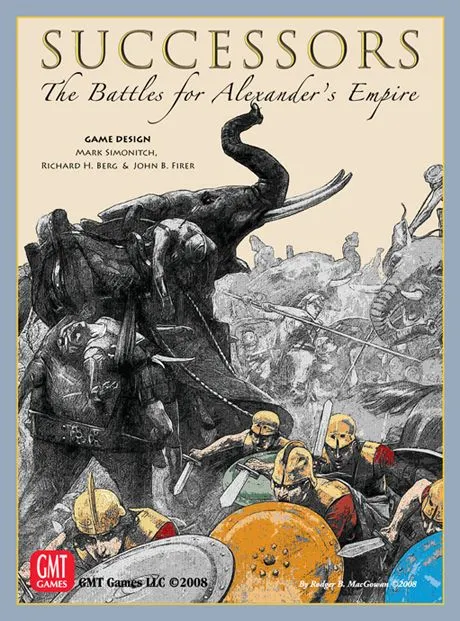
Successors: The Battles for Alexander's Empire
- 3–4 Spieler
- 60–300 Min.
- Komplexität 3,3/5
- 2008
2006
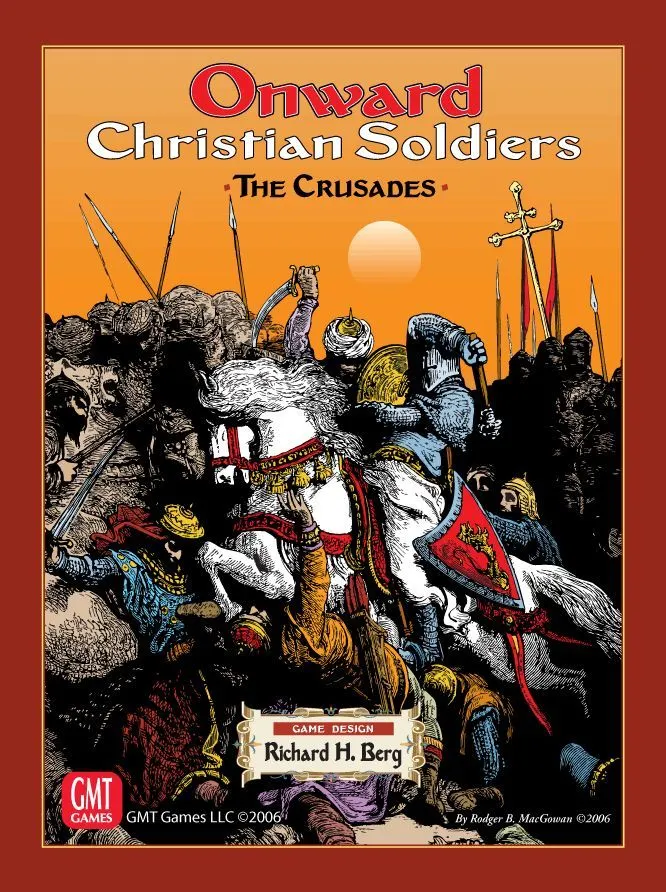
Regelhilfe für Onward Christian Soldiers: The Crusades
Verständliche Erklärungen zu Spielzügen, Karteneffekten und strittigen Situationen mit Verweisen auf offizielle Quellen und gespeichertem Fragenverlauf.
Für 1 Person
Was möchtest du wissen?
Antworten stammen aus dem offiziellen Regelheft, mit Seitenangabe zum Nachprüfen.
Onward Christian Soldiers: The Crusades ist ein Brettspiel aus dem Jahr 2006 für 1–7 Personen, mit 300 Minuten pro Partie und ab 12 Jahren. Entwickelt wurde es von Richard H. Berg; die wichtigsten Mechaniken sind Dice Rolling und Point to Point Movement.



Auf Englisch
(from GMT website:) Onward Christian Soldiers is Richard Berg's newest strategic level game, this one focused on one of, if not THE, central events in the Middle Ages - The Crusades. It will allow gamers to replay not only the first three Crusades - the only 3 that focused on what we call The Middle East - but with scenarios that range from a 7-player version of the 1st Crusade to a 3rd Crusade scenario that supposes Frederick Barbarossa didn't drown in Turkey and his immense army reached the Kingdom of Jerusalem pretty much intact. Onward Christian Soldiers uses numerous innovative mechanics, including: an Activation system that allows players to choose which leaders/armies they want to use most in a given turn, but not know when they will be available for such use. a Movement system with no Movement Allowances or Costs, but a heavy emphasis on Attrition and the ability of commanders to "keep going". Shop 'til ya Drop . . . Combat mechanics that put a major, detailed emphasis on sieges and ravaging the surrounding areas, but still allow for the predilections of the various armies in field battles (such as the famous Frankish Heavy Cavalry Charge), as well as the abilities of their commanders . . . men like the great initial Crusaders, such as Raymond, Bohemond, Godfrey and Tancred, King Louis VII of France (and his troublesome wife, the famous Eleanor of Aquitaine), Frederick Barbarossa (if he stays away from the pool), the dangerous Nur ad-Din, the magnificent Saladin, and the one Christian the Muslims feared more than anyone, Richard Lionheart. Movement and attrition go hand in hand in this game. Leaders may move as far as they want The game uses three sets of cards (110 cards total). Each of the four Crusader factions -- Northern Franks, Southern Franks, Sicilian Normans, Germans -- and three Muslim factions -- Northern Syrians, Southern Syrians, Mosul Turks -- has three or four Leader cards, which the players secretly "purchase" at the beginning of the Game-Turn to create the Activation Deck that determines which leader goes next. In addition, there are two Event Decks - one for the Crusaders and one for the Muslims -- through which a variety of random events occur, ranging from taking cities via treachery to suffering added attrition through oppressive heat. Normally, each Leader controls armies only from its own faction. However, a simple set of multi-faction rules controls situations in which either side wishes to combine their armies into larger forces, mostly for the sake of sieges against major cities. The Siege of Antioch, which usually happens early in the game, often requires such an army. The multi-faction rules particularly come into their own during multi-player games; here you can expect to see players bickering over who controls the combined forces, an important point considering that whoever is in charge when the city falls gains control over the city. If attacked while combined, the players of a multi-faction force have 30 seconds to decide who's in charge: if they don't, they defend using a mediocre formation. COUNTERS: 876 full color counters MAP: One 22"x34" full-color map CARDS: 110 Cards OTHER: Two six-sided dice First Crusade Rule book Second and Third Crusade Rule book Playbook 4 Player Aid cards DESIGNER Richard Berg DEVELOPER Neil Randall ART DIRECTOR Rodger B. MacGowan CARD ART Mark Simonitch MAP ART Mark Simonitch & Wayne Highland COUNTERS Rodger B. MacGowan, Mark Simonitch, & Mike Lemick
Laut Katalog unterstützt Onward Christian Soldiers: The Crusades 1–7 Personen. Diese Spanne entspricht der vom Verlag angegebenen Spielerzahl, das Spiel lässt sich also für jede Gruppengröße innerhalb dieser Spanne aufbauen. Aufbau, einzelne Regeln und Wertungsdetails können je nach Personenzahl trotzdem abweichen; prüfe daher die genaue Konfiguration in der Anleitung deiner Ausgabe.
Die angegebene Spieldauer für Onward Christian Soldiers: The Crusades beträgt 300 Minuten. Das ist die Schätzung des Verlags für eine vollständige Partie. Die tatsächliche Dauer hängt von der Gruppe, der Personenzahl und der Regelkenntnis ab: Erste Partien dauern meist länger, erfahrene Gruppen sind oft schneller fertig. Aufbau und Regelerklärung sind in dieser Schätzung nicht enthalten.
Im Katalog wird Onward Christian Soldiers: The Crusades ab 12 Jahren empfohlen. Das ist die Empfehlung des Verlags und berücksichtigt Leseanforderungen, Regelkomplexität und Kleinteile, nicht nur das Thema. Jüngere Kinder können oft mit Hilfe eines Erwachsenen mitspielen; beachte die Altersangabe deiner Ausgabe und die Brettspielerfahrung deiner Gruppe.
Onward Christian Soldiers: The Crusades hat bei BoardGameGeek eine Komplexitätswertung von 3,6 von 5 und gilt damit als mittelschweres Spiel. Die Wertung zeigt, wie viel Regelwissen, Planung und Entscheidungen eine typische Partie verlangt. Schwerere Spiele brauchen bei der ersten Erklärung mehr Zeit, daher hilft vor dem Spieleabend eine Vorbereitungsanleitung.
Onward Christian Soldiers: The Crusades gehört zu diesen Kategorien: Wargame und Medieval. Die wichtigsten Mechaniken sind Dice Rolling und Point to Point Movement. Kategorien beschreiben Thema und Setting eines Spiels, Mechaniken dagegen, was die Spielenden in ihrem Zug tatsächlich tun. Jede Mechanik führt zu einer Katalogseite mit ähnlichen Spielen, falls du etwas Vergleichbares suchst.
Als Autoren von Onward Christian Soldiers: The Crusades sind angegeben: Richard H. Berg. Diese Angaben stammen aus den veröffentlichten Spieldaten und nennen die für das Spieldesign verantwortlichen Personen, nicht die Illustratoren oder Verlage. Die Autorenseiten auf MeepleRules sammeln weitere Titel derselben Autoren – praktisch, wenn dir ein Spiel gefällt und du ähnliche Spiele suchst.
Im Katalog ist Onward Christian Soldiers: The Crusades als Grundspiel aufgeführt. Es lässt sich eigenständig mit dem Material aus der Schachtel spielen und benötigt keinen weiteren Titel. Erweiterungen, sofern es welche gibt, ergänzen neues Material oder neue Regeln und sind im Katalog separat mit einem Verweis auf dieses Grundspiel aufgeführt.