

- BGG-Rang
- BGG #11.849
- BGG-Bewertung
- 5,8
Senet
- 2 Spieler
- 30 Min.
- Komplexität 1,4/5
1915
Regelhilfe für Pollyanna
Verständliche Erklärungen zu Spielzügen, Karteneffekten und strittigen Situationen mit Verweisen auf offizielle Quellen und gespeichertem Fragenverlauf.
Was möchtest du wissen?
Antworten stammen aus dem offiziellen Regelheft, mit Seitenangabe zum Nachprüfen.
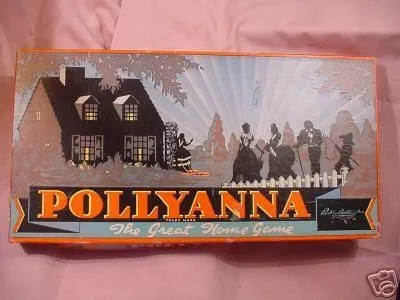
Pollyanna ist ein Brettspiel aus dem Jahr 1915 für 2–4 Personen und mit 30 Minuten pro Partie. Die wichtigsten Mechaniken sind Race, Roll / Spin and Move und Dice Rolling.





Auf Englisch
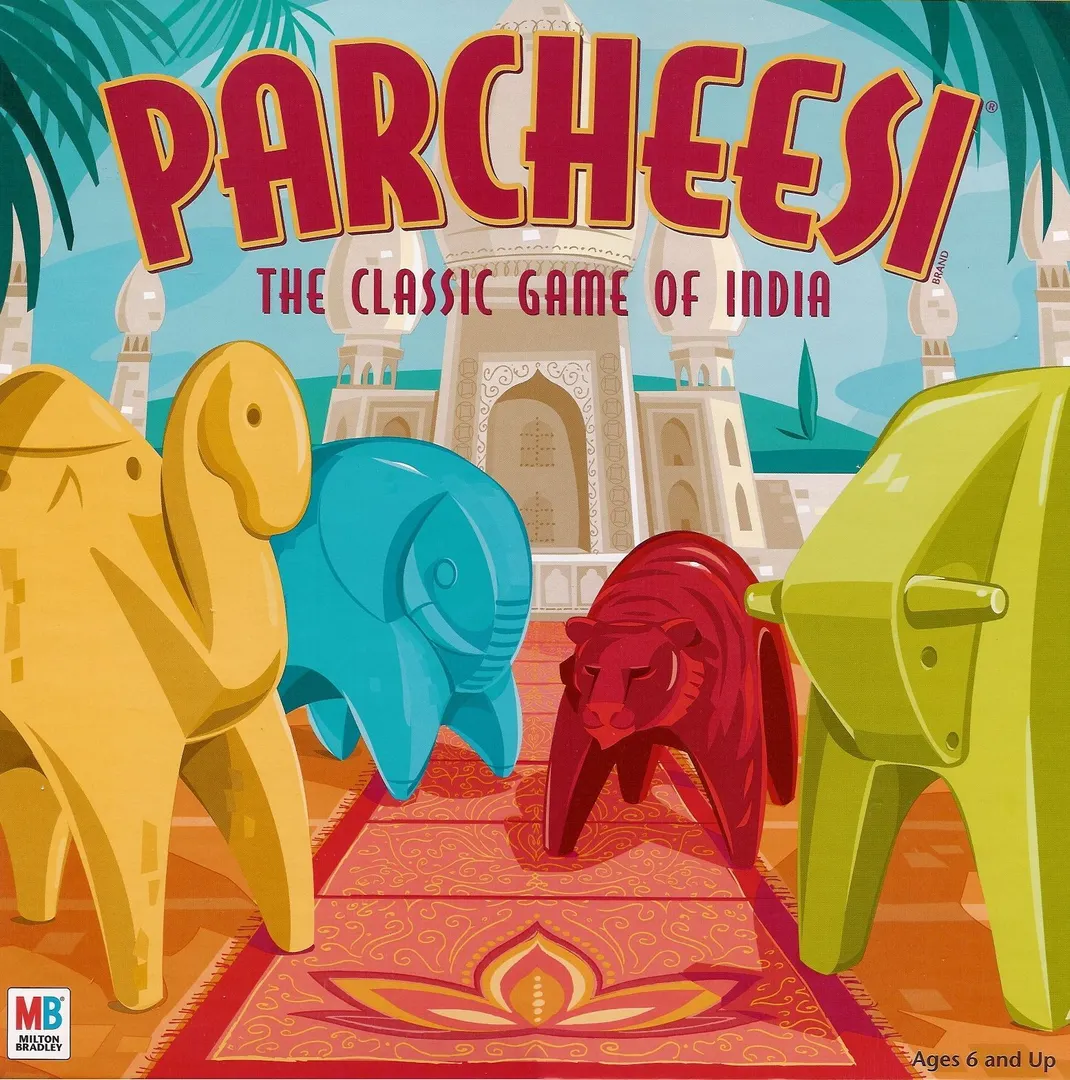
Pollyanna is a race/pursuit game published by Parker Brothers between 1915 and 1967. During those years, several editions appeared with differing artwork and game pieces. Some of these editions are entitled Dixie or Dixie-Pollyanna and some are subtitled "The Great Home Game," "The Glad Game," or "Parker Brothers Track Pursuit Game." In 1917 it was completely rethemed as The Popular Game of Broadway, with artwork of New York scenes featuring famous buildings of the time. Pollyanna itself gets its name from the title of the 1913 children's novel by Eleanor H. Porter. Each piece color in the game is associated with one of the characters in the novel. In the original 1915 edition blue was Aunt Polly; green was Nancy; red was Jimmy; and yellow was John Pendleton. These color associations changed in future editions. The game is widely recognized as a variant of Parcheesi, which is itself derived from Pachisi, a classic game of India. The object of Pollyanna, as in all games of the Pachisi family, is to be the first player to move his or her four men from the start space around the board to the home space. During the course of the game, players may also land on single opposing pieces and send them back to start. Two or three opposing pieces on the same space can neither be captured nor passed. Pollyanna differs from Parcheesi in several important ways. The track is laid out as a square and is 62 spaces long between start and home (in Parcheesi it is laid out as a cross and is 72 spaces long); furthermore Pollyanna employs four turnouts—short semi-circular paths off the main path (known as the broadway). Only single pieces may occupy a turnout space, but pieces there may not be passed and are invulnerable to capture. Turnouts are the most important difference between Pollyanna and Parcheesi. They make the two games play quite differently. The bonus move for capturing an opponent's piece is only 10 spaces, and there is no bonus for a piece reaching home (in Parcheesi these pay a 20-space and 10-space bonus respectively). Doubles are handled differently. In Pollyanna each double earns the right to another roll, provided that the player was able to use both dice. (In Parcheesi, on the third consecutive roll of doubles a player loses his/her turn and must return one of his pieces to start.) In addition, only the obverse faces of dice are counted in doubles. (In Parcheesi, both the obverse faces and reverse faces of the dice are counted.) Up to three pieces of the same color may occupy a space on the broadway. This effectively means that a player can pass his or her own blockade, by first landing exactly on the blockade and joining it, and then moving on. This is not possible in Parcheesi. Pieces are started on a roll of six (on either of the two dice or as the sum of the two dice). In Parcheesi, the roll required is a five. This means that starting a piece in Pollyanna is somewhat easier than in Parcheesi. There are safe spaces for each color; there are no general safe spaces. If a pawn is on a safe space of its own color no other player's pawn may land there, but it may pass through.
Laut Katalog unterstützt Pollyanna 2–4 Personen. Diese Spanne entspricht der vom Verlag angegebenen Spielerzahl, das Spiel lässt sich also für jede Gruppengröße innerhalb dieser Spanne aufbauen. Aufbau, einzelne Regeln und Wertungsdetails können je nach Personenzahl trotzdem abweichen; prüfe daher die genaue Konfiguration in der Anleitung deiner Ausgabe.
Die angegebene Spieldauer für Pollyanna beträgt 30 Minuten. Das ist die Schätzung des Verlags für eine vollständige Partie. Die tatsächliche Dauer hängt von der Gruppe, der Personenzahl und der Regelkenntnis ab: Erste Partien dauern meist länger, erfahrene Gruppen sind oft schneller fertig. Aufbau und Regelerklärung sind in dieser Schätzung nicht enthalten.
Pollyanna hat bei BoardGameGeek eine Komplexitätswertung von 1,0 von 5 und gilt damit als leichtes Spiel. Die Wertung zeigt, wie viel Regelwissen, Planung und Entscheidungen eine typische Partie verlangt. Schwerere Spiele brauchen bei der ersten Erklärung mehr Zeit, daher hilft vor dem Spieleabend eine Vorbereitungsanleitung.
Pollyanna gehört zu diesen Kategorien: Abstract Strategy, Racing und Novel-based. Die wichtigsten Mechaniken sind Race, Roll / Spin and Move und Dice Rolling. Kategorien beschreiben Thema und Setting eines Spiels, Mechaniken dagegen, was die Spielenden in ihrem Zug tatsächlich tun. Jede Mechanik führt zu einer Katalogseite mit ähnlichen Spielen, falls du etwas Vergleichbares suchst.
Im Katalog ist Pollyanna als Grundspiel aufgeführt. Es lässt sich eigenständig mit dem Material aus der Schachtel spielen und benötigt keinen weiteren Titel. Erweiterungen, sofern es welche gibt, ergänzen neues Material oder neue Regeln und sind im Katalog separat mit einem Verweis auf dieses Grundspiel aufgeführt.