

- BGG-Rang
- BGG #4.062
- BGG-Bewertung
- 6,8
Magnastorm
- 2–4 Spieler
- 70–100 Min.
- Komplexität 3,1/5
- 2018
2009
Regelhilfe für Power Struggle
Verständliche Erklärungen zu Spielzügen, Karteneffekten und strittigen Situationen mit Verweisen auf offizielle Quellen und gespeichertem Fragenverlauf.
Für 3 Personen
Was möchtest du wissen?
Antworten stammen aus dem offiziellen Regelheft, mit Seitenangabe zum Nachprüfen.
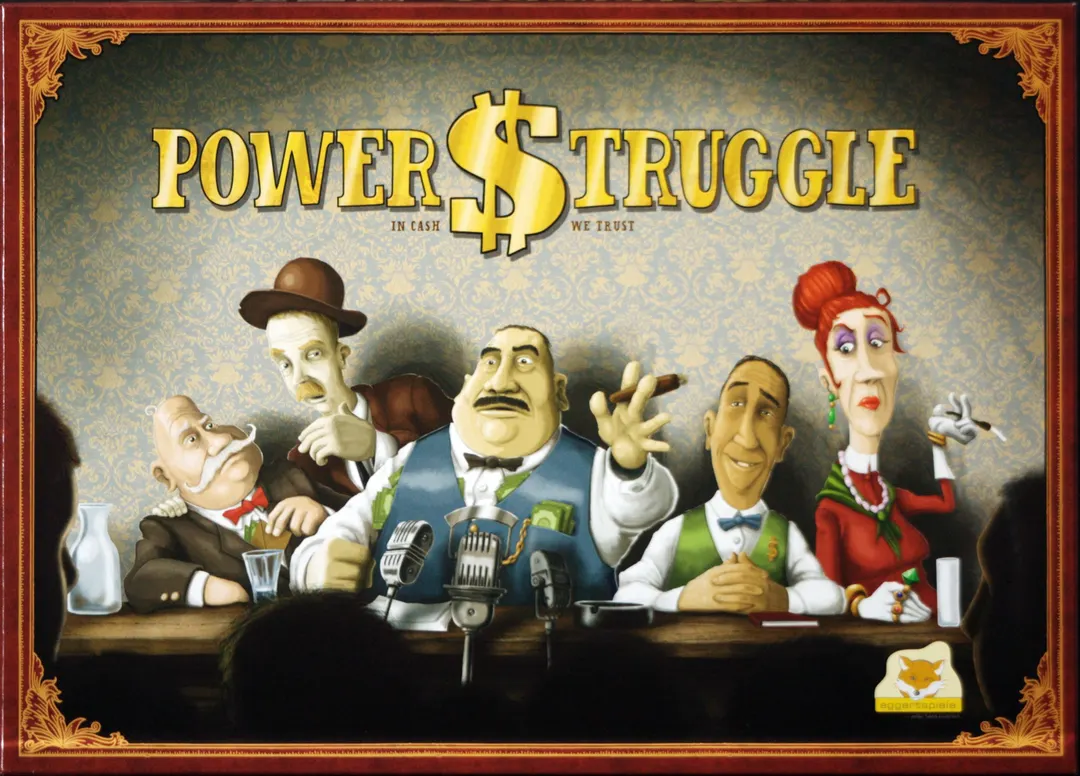
Power Struggle ist ein Brettspiel aus dem Jahr 2009 für 3–5 Personen, mit 105 Minuten pro Partie und ab 12 Jahren. Entwickelt wurde es von Maximilian Maria Thiel und Bauldric & Friends; die wichtigsten Mechaniken sind Area Majority / Influence und Bribery.




Auf Englisch
This description was originally based on a review from BoardgameNews.com. In this corporation-themed game, players compete to be the first to acquire four out of six possible victory points. You earn a point by reaching certain numbers along tracks, such as at least 7 on the influence track or 8 on the majority track. You also may earn a point by beating your secretly assigned archenemy on three specified tracks. The game lasts a number of rounds, with each round consisting of a directors' meeting, followed by 4-7 turns. At the meeting, the "company chairman" is replaced (the next token in line moves up) and the "division heads" are named (by seeing who has the majority in each column of placed cubes). Chairmen and heads get salary bonuses and a card detailing a single advantage for the cardholder. The player who's the "communications" head then secretly looks at the Event cards and determines in which order they will be played (and so how many turns will be in the current round). Other heads' cards will let them pay less for stocks, for example, or place or remove bits. After each event card is revealed, players select one action to perform, such as "hiring and relocating employees" (placing or moving cubes), resigning as a department head, using an advantage card, or bribing players for their advantage cards. These actions result in points on the scoring tracks and sometimes money (which is only used for bribery and buying blocks of stock). A bribed card has more power than an earned one, giving incentive to accept bribes (the card is less useful or even useless to the original owner, depending on the workers' happiness scale). In addition to bribery getting you a power you want, it also moves you up the corruption track. A player who rejects a bribe, however, loses one cube on the majority columns. It's not a business simulation, and gameplay isn't as dastardly as the theme implies. The event cards provide most of the humor. (The card may read that you have failed to fix the breakroom game table, or vacations were canceled, so worker satisfaction goes down, which is what you want). The feel of rising through the ranks (getting more points) is there, and there are many things to attempt to excel in, by doing various business-related (at least in name) actions. Efficient manipulating of your opportunities will win you victory points and, if you gain four, the game. Awards: Machtspiele (Power $truggle) is derived from "Die Firma", which won a special prize in the 2009 Hippodice game design competition for best full-length game.
Laut Katalog unterstützt Power Struggle 3–5 Personen. Diese Spanne entspricht der vom Verlag angegebenen Spielerzahl, das Spiel lässt sich also für jede Gruppengröße innerhalb dieser Spanne aufbauen. Aufbau, einzelne Regeln und Wertungsdetails können je nach Personenzahl trotzdem abweichen; prüfe daher die genaue Konfiguration in der Anleitung deiner Ausgabe.
Die angegebene Spieldauer für Power Struggle beträgt 105 Minuten. Das ist die Schätzung des Verlags für eine vollständige Partie. Die tatsächliche Dauer hängt von der Gruppe, der Personenzahl und der Regelkenntnis ab: Erste Partien dauern meist länger, erfahrene Gruppen sind oft schneller fertig. Aufbau und Regelerklärung sind in dieser Schätzung nicht enthalten.
Im Katalog wird Power Struggle ab 12 Jahren empfohlen. Das ist die Empfehlung des Verlags und berücksichtigt Leseanforderungen, Regelkomplexität und Kleinteile, nicht nur das Thema. Jüngere Kinder können oft mit Hilfe eines Erwachsenen mitspielen; beachte die Altersangabe deiner Ausgabe und die Brettspielerfahrung deiner Gruppe.
Power Struggle hat bei BoardGameGeek eine Komplexitätswertung von 3,4 von 5 und gilt damit als mittelschweres Spiel. Die Wertung zeigt, wie viel Regelwissen, Planung und Entscheidungen eine typische Partie verlangt. Schwerere Spiele brauchen bei der ersten Erklärung mehr Zeit, daher hilft vor dem Spieleabend eine Vorbereitungsanleitung.
Power Struggle gehört zu diesen Kategorien: Humor und Negotiation. Die wichtigsten Mechaniken sind Area Majority / Influence und Bribery. Kategorien beschreiben Thema und Setting eines Spiels, Mechaniken dagegen, was die Spielenden in ihrem Zug tatsächlich tun. Jede Mechanik führt zu einer Katalogseite mit ähnlichen Spielen, falls du etwas Vergleichbares suchst.
Als Autoren von Power Struggle sind angegeben: Maximilian Maria Thiel und Bauldric & Friends. Diese Angaben stammen aus den veröffentlichten Spieldaten und nennen die für das Spieldesign verantwortlichen Personen, nicht die Illustratoren oder Verlage. Die Autorenseiten auf MeepleRules sammeln weitere Titel derselben Autoren – praktisch, wenn dir ein Spiel gefällt und du ähnliche Spiele suchst.
Im Katalog ist Power Struggle als Grundspiel aufgeführt. Es lässt sich eigenständig mit dem Material aus der Schachtel spielen und benötigt keinen weiteren Titel. Erweiterungen, sofern es welche gibt, ergänzen neues Material oder neue Regeln und sind im Katalog separat mit einem Verweis auf dieses Grundspiel aufgeführt.