
- BGG-Rang
- BGG #9.316
- BGG-Bewertung
- 7,6
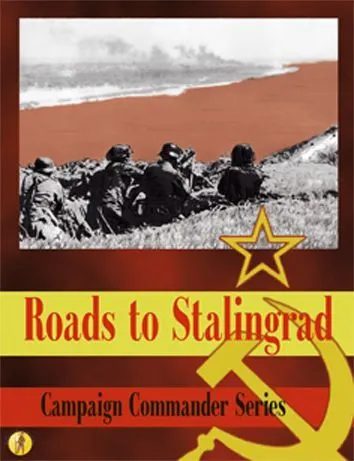
Roads to Stalingrad: Campaign Commander Series
- 2 Spieler
- 180 Min.
- Komplexität 2,5/5
- 2009
2011
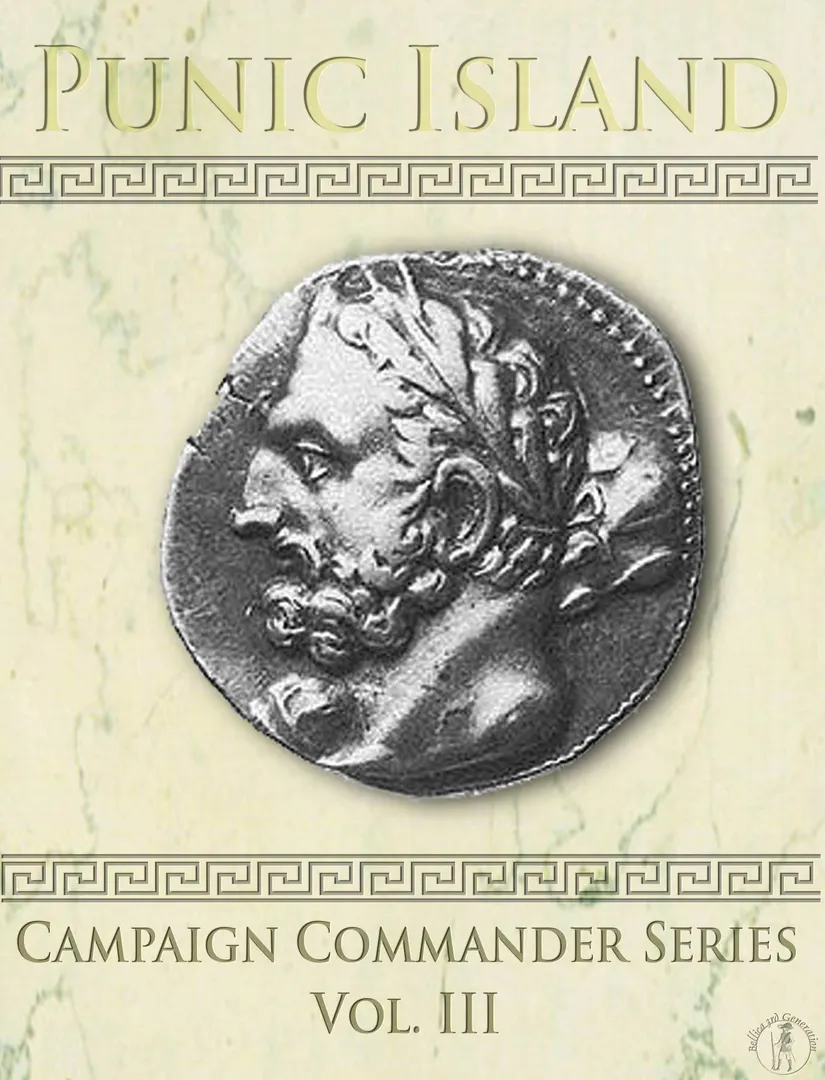
Regelhilfe für Punic Island: Campaign Commander Volume III
Verständliche Erklärungen zu Spielzügen, Karteneffekten und strittigen Situationen mit Verweisen auf offizielle Quellen und gespeichertem Fragenverlauf.
Für 2 Personen
Was möchtest du wissen?
Antworten stammen aus dem offiziellen Regelheft, mit Seitenangabe zum Nachprüfen.
Punic Island: Campaign Commander Volume III ist ein Brettspiel aus dem Jahr 2011 für 2 Personen, mit 180–240 Minuten pro Partie und ab 12 Jahren. Entwickelt wurde es von Francisco Ronco; die wichtigsten Mechaniken sind Area Movement, Dice Rolling und Simultaneous Action Selection.
Auf Englisch
“Punic Island” is the third volume in the Campaign Commander series and simulates the campaign for Sicily and North Africa during the First Punic War. The system takes away from Second World War and goes to Ancients. In 264 Roma was summoned to Messina by Mamertines mercenaries to help in their quarrel with Cartage, the main power in Sicily. Carthaginians count on Hiero the Tirant of Syracuse to help defeating the Mamertines. Here begins the First Punic War. Romans and Carthaginians fought for 22 year over Sicily and in North Africa. Rome emerged victorious and Cartage was obliged to quit his long standing presence in Sicily. The land campaign was a long string of Roman victories as city after city was subdued and every Carthaginian army was defeated in battle. Syracuse was forced to make an alliance with Rome and Cartage was left with only a few fortresses in the island. Anyway the war was won and lost in the sea. The war saw the emergence of Rome as a sea-power and a long string of naval victories allow Roman troops to menace even Cartage proper. Only to be saved by Xantipus and his mercenary army at the Bagradas Plains battle. Naval warfare played a prominent role in this war and will give Carthage Senate his las blow. Carthage tried to spend the Roman effort during the whole war. His strategy was of attrition and was unsuccessful; Rome never gave up a prize. The game is developed in an operational scale – area-based map. It is designed for two players with one running the ROMAN forces and the other the CARTHAGINIAN forces -including Syracuse. The game lasts approximately 3-4 hours and uses a two sided system to handle the mechanics of play: cards and counters. The players will have to use their troops and their resources to obtain victory points while eliminating enemy forces and occupying cities in the map. It is not a card driven game as the cards are used to bring about events that influence battles, secure reinforcements, and provide resources with which to carry on the fight. The ROMAN player will be on the offensive during the whole game as he has to conquer the whole island to get victory. CARTHAGINIAN player focuses on spoiling Roman campaigns and plans with ambushes, sallies and bad weather cards. Also he has to recruit an army as he doesn´t has any at the beginning of the game. The ROMAN player must plan his offensives carefully as he will need a new army and resources for each one. Also he will need to build a fleet his doesn´t have at the start of the war. The sea contest will be evenly match and you better take into account bad weather as it sinks more ships than enemy action. Siege warfare takes a prominent role in this game as every city in the game map is a walled on with his own intrinsic garrison. Like all the games of this Series, the rules are simple and straight forward. Our objective was to create games that are very interactive, and offer players a pleasant creative experience. We aim for solid games for players who do not have the time or the space to leave a game setup and in place over a long period of play. Components: - 1 80x60 cm map of Sicily and North Africa. - two ten-sided dice - 176 unit counters - 1 Rules Book for the Series “Campaign Commander” and Exclusive Rules of “Punic Island”; historical and designer notes. - 70 cards (divided in two decks, plus help cards) - 3 plastic bags.
Laut Katalog unterstützt Punic Island: Campaign Commander Volume III 2 Personen. Das ist die vom Verlag angegebene Spielerzahl, das Spiel ist also genau für diese Anzahl von Mitspielenden ausgelegt. Varianten für andere Gruppengrößen sind, sofern vorhanden, in der Anleitung deiner Ausgabe beschrieben; prüfe sie, bevor du eine andere Konfiguration aufbaust.
Die angegebene Spieldauer für Punic Island: Campaign Commander Volume III beträgt 180–240 Minuten. Das ist die Schätzung des Verlags für eine vollständige Partie. Die tatsächliche Dauer hängt von der Gruppe, der Personenzahl und der Regelkenntnis ab: Erste Partien dauern meist länger, erfahrene Gruppen sind oft schneller fertig. Aufbau und Regelerklärung sind in dieser Schätzung nicht enthalten.
Im Katalog wird Punic Island: Campaign Commander Volume III ab 12 Jahren empfohlen. Das ist die Empfehlung des Verlags und berücksichtigt Leseanforderungen, Regelkomplexität und Kleinteile, nicht nur das Thema. Jüngere Kinder können oft mit Hilfe eines Erwachsenen mitspielen; beachte die Altersangabe deiner Ausgabe und die Brettspielerfahrung deiner Gruppe.
Punic Island: Campaign Commander Volume III hat bei BoardGameGeek eine Komplexitätswertung von 3,2 von 5 und gilt damit als mittelschweres Spiel. Die Wertung zeigt, wie viel Regelwissen, Planung und Entscheidungen eine typische Partie verlangt. Schwerere Spiele brauchen bei der ersten Erklärung mehr Zeit, daher hilft vor dem Spieleabend eine Vorbereitungsanleitung.
Punic Island: Campaign Commander Volume III gehört zu diesen Kategorien: Wargame und Ancient. Die wichtigsten Mechaniken sind Area Movement, Dice Rolling und Simultaneous Action Selection. Kategorien beschreiben Thema und Setting eines Spiels, Mechaniken dagegen, was die Spielenden in ihrem Zug tatsächlich tun. Jede Mechanik führt zu einer Katalogseite mit ähnlichen Spielen, falls du etwas Vergleichbares suchst.
Als Autoren von Punic Island: Campaign Commander Volume III sind angegeben: Francisco Ronco. Diese Angaben stammen aus den veröffentlichten Spieldaten und nennen die für das Spieldesign verantwortlichen Personen, nicht die Illustratoren oder Verlage. Die Autorenseiten auf MeepleRules sammeln weitere Titel derselben Autoren – praktisch, wenn dir ein Spiel gefällt und du ähnliche Spiele suchst.
Im Katalog ist Punic Island: Campaign Commander Volume III als Grundspiel aufgeführt. Es lässt sich eigenständig mit dem Material aus der Schachtel spielen und benötigt keinen weiteren Titel. Erweiterungen, sofern es welche gibt, ergänzen neues Material oder neue Regeln und sind im Katalog separat mit einem Verweis auf dieses Grundspiel aufgeführt.