
- BGG-Rang
- BGG #3.518
- BGG-Bewertung
- 7,7
Castle Itter: The Strangest Battle of WWII
- 1 Spieler
- 45–60 Min.
- Komplexität 2,3/5
- 2019
2021
Regelhilfe für Soldiers in Postmen's Uniforms
Verständliche Erklärungen zu Spielzügen, Karteneffekten und strittigen Situationen mit Verweisen auf offizielle Quellen und gespeichertem Fragenverlauf.
Für 1 Person
Was möchtest du wissen?
Antworten stammen aus dem offiziellen Regelheft, mit Seitenangabe zum Nachprüfen.
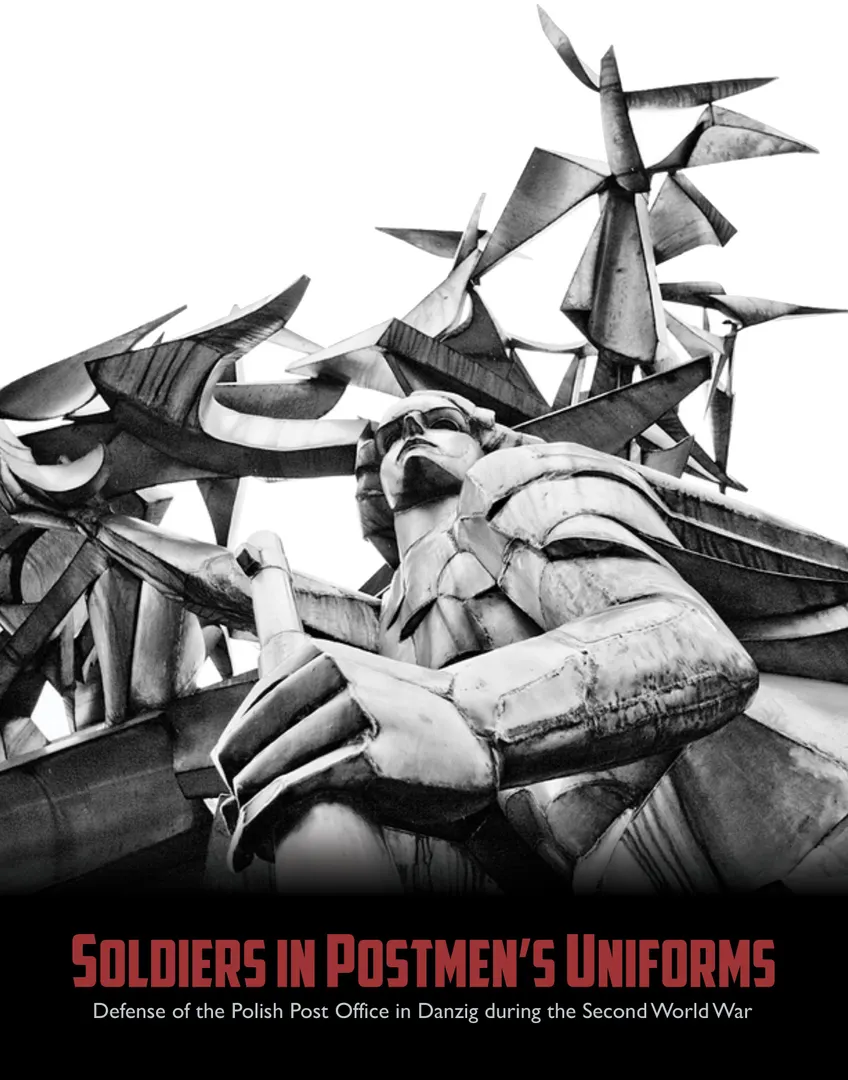
Soldiers in Postmen's Uniforms ist ein Brettspiel aus dem Jahr 2021 für 1 Person, mit 60–75 Minuten pro Partie und ab 10 Jahren. Entwickelt wurde es von David Thompson (I); die wichtigsten Mechaniken sind Dice Rolling, Point to Point Movement und Simulation.


Auf Englisch
"Soldiers in Postmen's Uniforms" is a skirmish-level solitaire wargame that takes place in the Free City of Danzig on the first day of the Second World War. Danzig (present-day Gdańsk) came into being in 1920, in accordance with the 1919 Treaty of Versailles. Over the next two decades the city became a flash-point in Polish-German relations, which culminated in the Danzig Crisis of 1939. On the first day of the Second World War, German forces moved in to seize Polish installations in Danzig. Two of the installations were on alert and under orders to hold out: the Military Transit Depot on the peninsula of Westerplatte and the Polish Postal Office No. 1. The personnel of the post office repulsed repeated assaults, and were forced to surrender only after a day-long siege, when the post office was doused with gasoline and set alight. Though German propaganda cast these acts of defiance as futile and a failure, they were viewed by the Polish people as symbolic of their stand against a materially superior aggressor. In Soldiers in Postmen’s Uniforms you take control of the valiant defenders of Polish Postal Office No. 1 in the Free City of Danzig on the first day of WW2. Under your command, the defenders must fend off relentless attacks from the Danzig Schutzpolizei and two German SS units. Object of the Game The goal of Soldiers in Postmen’s Uniforms is to recreate the incredible historic accomplishment of the Polish postal workers by defending the post office during the day-long siege. You must last until the three enemy card decks are depleted, while protecting the postal workers and non-combatants. You score points for defenders that survive the assault — the higher your score, the better. Gameplay Soldiers in Postmen’s Uniforms is divided into three attack periods, each of which is represented by a deck of enemy cards. Attack 1 took place during the morning hours. This was the Danzig Schutzpolizei’s initial assault, which targeted the rear of the post office. Attack 2 took place during midday. In this assault, the Schutzpolizei attacked the front of the post office and were supported by armored vehicles as well as infantry guns and a howitzer from SS units. Attack 3 took place in the evening. This final assault was conducted by elements of two SS units against the front of the post office. It ended when the attackers brought up a fire engine filled with gasoline, pumped it into the building, and ignited it with a hand grenade. Each attack period is divided into turns, and each turn consists of three or four phases (depending on the attack period): Enemy Phase: Resolve five enemy cards. Defense Phase: Perform four moves and four actions with defenders. Clearing Phase: Assault counters inside the building remove defenders. Escape Phase (Attack 3 only): Defenders escape from the building. The game ends at the end of the turn when you draw the enemy fire engine card during Attack 3. At the end of the game, your score is based on the number of noncombatants and postal workers that survived the attacks. —description from the publisher
Laut Katalog unterstützt Soldiers in Postmen's Uniforms 1 Person. Das ist die vom Verlag angegebene Spielerzahl, das Spiel ist also genau für diese Anzahl von Mitspielenden ausgelegt. Varianten für andere Gruppengrößen sind, sofern vorhanden, in der Anleitung deiner Ausgabe beschrieben; prüfe sie, bevor du eine andere Konfiguration aufbaust.
Die angegebene Spieldauer für Soldiers in Postmen's Uniforms beträgt 60–75 Minuten. Das ist die Schätzung des Verlags für eine vollständige Partie. Die tatsächliche Dauer hängt von der Gruppe, der Personenzahl und der Regelkenntnis ab: Erste Partien dauern meist länger, erfahrene Gruppen sind oft schneller fertig. Aufbau und Regelerklärung sind in dieser Schätzung nicht enthalten.
Im Katalog wird Soldiers in Postmen's Uniforms ab 10 Jahren empfohlen. Das ist die Empfehlung des Verlags und berücksichtigt Leseanforderungen, Regelkomplexität und Kleinteile, nicht nur das Thema. Jüngere Kinder können oft mit Hilfe eines Erwachsenen mitspielen; beachte die Altersangabe deiner Ausgabe und die Brettspielerfahrung deiner Gruppe.
Soldiers in Postmen's Uniforms hat bei BoardGameGeek eine Komplexitätswertung von 2,7 von 5 und gilt damit als eher leichtes Spiel. Die Wertung zeigt, wie viel Regelwissen, Planung und Entscheidungen eine typische Partie verlangt. Schwerere Spiele brauchen bei der ersten Erklärung mehr Zeit, daher hilft vor dem Spieleabend eine Vorbereitungsanleitung.
Soldiers in Postmen's Uniforms gehört zu diesen Kategorien: Wargame und World War II. Die wichtigsten Mechaniken sind Dice Rolling, Point to Point Movement und Simulation. Kategorien beschreiben Thema und Setting eines Spiels, Mechaniken dagegen, was die Spielenden in ihrem Zug tatsächlich tun. Jede Mechanik führt zu einer Katalogseite mit ähnlichen Spielen, falls du etwas Vergleichbares suchst.
Als Autoren von Soldiers in Postmen's Uniforms sind angegeben: David Thompson (I). Diese Angaben stammen aus den veröffentlichten Spieldaten und nennen die für das Spieldesign verantwortlichen Personen, nicht die Illustratoren oder Verlage. Die Autorenseiten auf MeepleRules sammeln weitere Titel derselben Autoren – praktisch, wenn dir ein Spiel gefällt und du ähnliche Spiele suchst.
Im Katalog ist Soldiers in Postmen's Uniforms als Grundspiel aufgeführt. Es lässt sich eigenständig mit dem Material aus der Schachtel spielen und benötigt keinen weiteren Titel. Erweiterungen, sofern es welche gibt, ergänzen neues Material oder neue Regeln und sind im Katalog separat mit einem Verweis auf dieses Grundspiel aufgeführt.