
- BGG-Bewertung
- 7,5
Wargamer's Guide to Stalingrad
- 2 Spieler
- Komplexität 2,0/5
- 1972
1963
Regelhilfe für Stalingrad
Verständliche Erklärungen zu Spielzügen, Karteneffekten und strittigen Situationen mit Verweisen auf offizielle Quellen und gespeichertem Fragenverlauf.
Für 2 Personen
Was möchtest du wissen?
Antworten stammen aus dem offiziellen Regelheft, mit Seitenangabe zum Nachprüfen.
Stalingrad ist ein Brettspiel aus dem Jahr 1963 für 2 Personen, mit 120 Minuten pro Partie und ab 12 Jahren. Entwickelt wurde es von Lindsley Schutz, Charles S. Roberts und Thomas N. Shaw; die wichtigsten Mechaniken sind Dice Rolling, Grid Movement und Hexagon Grid.





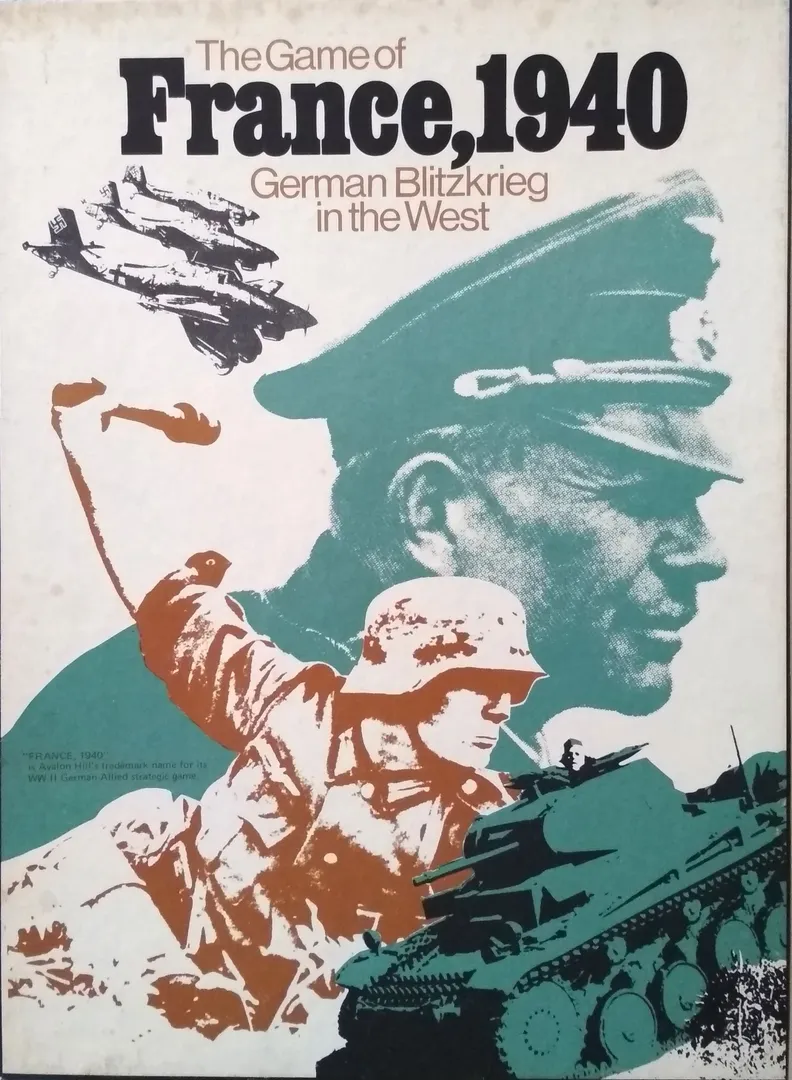
Auf Englisch
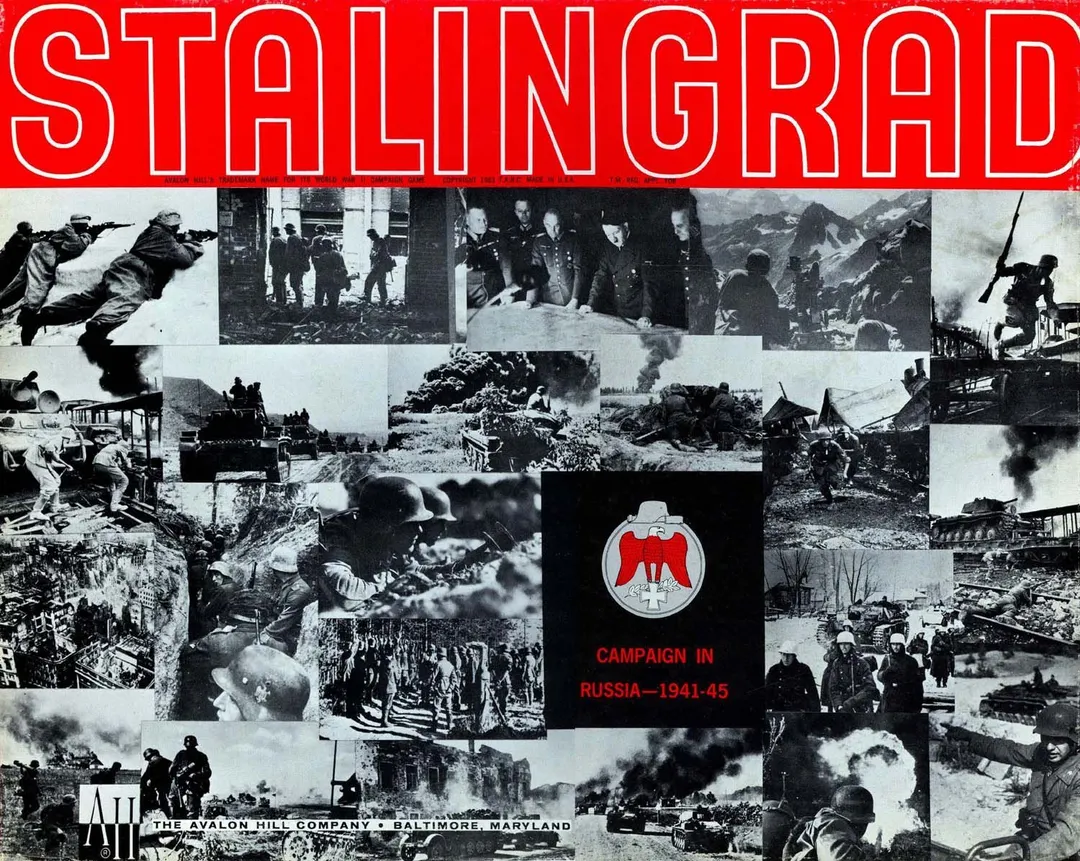
The original edition came out in 1963 in a double-size box. The large box was nearly twice the area of a traditional AH box. Later the game came out in a traditional-size box. A second edition with clarified rules was issued in 1974 with the same standard size box but thinner. The rules are fairly straightforward. The strategies are extremely deep. Stalingrad is by far the most thoroughly and deeply analyzed board war game. Furthermore, the game preserves interest for players at a wide range of levels. Stalingrad is a good game to use to introduce players to hex-based war games. Stalingrad uses a move-combat sequence, alternating between players. There is limited advance (one hex) or retreat (two hexes) after combat. Units have one-hex thick zones of control; movement directly from one hex in the zone of control of a unit into an adjoining hex of the zone of control of the same unit is not allowed. Functional terrain includes swamp (one hex per turn movement), mountains (one hex per turn movement, defenders are doubled), major cities (defenders doubled), rivers (defenders behind rivers are doubled if attacked only across the river), railroads (ten hex movement bonus, must be taken all at once), lakes (impassible). Weather is good in summer, snow in winter, and governed by a table in the spring and fall. Mud halves ground movement. Snow halves ground and rail movement, and freezes (converts to clear terrain) some swamps, rivers, lakes, and oceans. Combat is mandatory between units that are adjacent at the end of each turn, but the attacker chooses which units attack which other units, so long as all adjacent units are in some battle. The classical Avalon Hill D6 table, with results such as D Elim, A Elim, etc is in use. Germans have limited replacements; Russian replacement rates escalate as the game goes on. The objective is to capture the opposition's key cities (for the Russians, Leningrad, Moscow, Stalingrad) or to destroy the other side's army. The Russian (implicit in rules) can also win by taking Helsinki, Warsaw, and Bucharest, and holding them for two complete turns, but I have never heard of this being done between normal players. Several extremely bad German strategic plans are in wide use. Avalon Hill Complexity rating - 2
Laut Katalog unterstützt Stalingrad 2 Personen. Das ist die vom Verlag angegebene Spielerzahl, das Spiel ist also genau für diese Anzahl von Mitspielenden ausgelegt. Varianten für andere Gruppengrößen sind, sofern vorhanden, in der Anleitung deiner Ausgabe beschrieben; prüfe sie, bevor du eine andere Konfiguration aufbaust.
Die angegebene Spieldauer für Stalingrad beträgt 120 Minuten. Das ist die Schätzung des Verlags für eine vollständige Partie. Die tatsächliche Dauer hängt von der Gruppe, der Personenzahl und der Regelkenntnis ab: Erste Partien dauern meist länger, erfahrene Gruppen sind oft schneller fertig. Aufbau und Regelerklärung sind in dieser Schätzung nicht enthalten.
Im Katalog wird Stalingrad ab 12 Jahren empfohlen. Das ist die Empfehlung des Verlags und berücksichtigt Leseanforderungen, Regelkomplexität und Kleinteile, nicht nur das Thema. Jüngere Kinder können oft mit Hilfe eines Erwachsenen mitspielen; beachte die Altersangabe deiner Ausgabe und die Brettspielerfahrung deiner Gruppe.
Stalingrad hat bei BoardGameGeek eine Komplexitätswertung von 2,2 von 5 und gilt damit als eher leichtes Spiel. Die Wertung zeigt, wie viel Regelwissen, Planung und Entscheidungen eine typische Partie verlangt. Schwerere Spiele brauchen bei der ersten Erklärung mehr Zeit, daher hilft vor dem Spieleabend eine Vorbereitungsanleitung.
Stalingrad gehört zu diesen Kategorien: Wargame und World War II. Die wichtigsten Mechaniken sind Dice Rolling, Grid Movement und Hexagon Grid. Kategorien beschreiben Thema und Setting eines Spiels, Mechaniken dagegen, was die Spielenden in ihrem Zug tatsächlich tun. Jede Mechanik führt zu einer Katalogseite mit ähnlichen Spielen, falls du etwas Vergleichbares suchst.
Als Autoren von Stalingrad sind angegeben: Lindsley Schutz, Charles S. Roberts und Thomas N. Shaw. Diese Angaben stammen aus den veröffentlichten Spieldaten und nennen die für das Spieldesign verantwortlichen Personen, nicht die Illustratoren oder Verlage. Die Autorenseiten auf MeepleRules sammeln weitere Titel derselben Autoren – praktisch, wenn dir ein Spiel gefällt und du ähnliche Spiele suchst.
Im Katalog ist Stalingrad als Grundspiel aufgeführt. Es lässt sich eigenständig mit dem Material aus der Schachtel spielen und benötigt keinen weiteren Titel. Erweiterungen, sofern es welche gibt, ergänzen neues Material oder neue Regeln und sind im Katalog separat mit einem Verweis auf dieses Grundspiel aufgeführt.