

- BGG-Rang
- BGG #21.847
- BGG-Bewertung
- 6,3
The Seeker in the Forest of Wyr
- 1 Spieler
- 20 Min.
- Komplexität 1,3/5
- 2014
2015
Regelhilfe für The Court of Xiang Chi
Verständliche Erklärungen zu Spielzügen, Karteneffekten und strittigen Situationen mit Verweisen auf offizielle Quellen und gespeichertem Fragenverlauf.
Für 1 Person
Was möchtest du wissen?
Antworten stammen aus dem offiziellen Regelheft, mit Seitenangabe zum Nachprüfen.
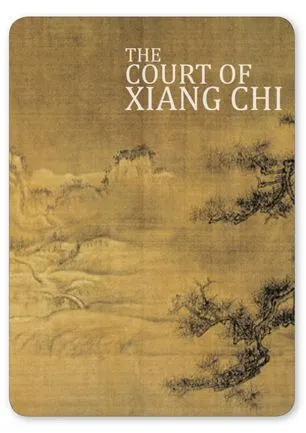
The Court of Xiang Chi ist ein Brettspiel aus dem Jahr 2015 für 1 Person, mit 15–20 Minuten pro Partie und ab 10 Jahren. Entwickelt wurde es von Todd Sanders; die wichtigsten Mechaniken sind Hand Management, Area Majority / Influence und Open Drafting.





Auf Englisch
As ruler of the three clans - Sun, Moon and Earth - it is your task to rule over your court of ministers, tax collectors, generals, poets and courtesans who will bring prosperity to land and protect the people from the Daemon Princes of the Fire Clan. A Solitaire Game lasting 15-20 minutes Setup: Shuffle the 54 cards and place them face down as a draw pile. Four cards are dealt face up to form Society Row. The player chooses 3 of these cards to place below in their Royal Court as starting cards. The cards may be placed in any of the 4 spaces in either of the 2 rows forming the Royal Court. If any Daemon Prince cards are drawn, they are set aside and will be shuffled back into the deck after the player chooses the three they want (dealing out replacement cards to Society Row). The player also begins the game with 10 copper pieces (CP). These starting cards will not have their powers activated during the Game Setup. Play: A game turn consists of three phases: Phase 1A. The player may purchase 1 card from Society Row and place in the Royal Court OR they may skip this phase and go to Phase 1B. If the player purchases a card, any cards to the left of the gap slide to the right and a new card is drawn and placed in Society Row. Cards will be purchased during the game from this row in an auction format. Phase 1B. If the player does not wish to purchase any cards, the rightmost, non-Daemon Prince card is discarded and all remaining cards slide to the right and a new card is drawn and placed in Society Row. The player then receives 1CP and an additional 1CP for each Tax Collector in the Royal Court. Phase 2. The player may now use the combined strength of their Generals to combat one Daemon Prince. If the player has 3 or more Generals in the Royal Court representing each of the three clan icons, the player adds +2 to the total strength to the Generals. To defeat one Daemon Prince during this phase, the total of all Generals’ strengths must be equal to or greater than the Daemon Prince’s strength (as shown by the black number). The player may additionally pay CP to add 1CP/1 Strength to this total. The defeated Daemon Prince is placed to the left of the draw deck, any cards to the left of the gap slide to the right and a new card is drawn and placed in Society Row. The player gains VP as listed on the Daemon Prince card. Phase 3. If Daemon Princes remain in Society Row, the rightmost non-Daemon Prince card is removed from the Society Row and placed in the Court of the Daemon Princes. All remaining cards slide to the right and a new card is drawn and placed in Society Row. Game End: The game will end after Phase 3 if either: 4 Daemon Princes are in the Society Row or all 9 Daemon Princes have been drawn. The player then adds up the total VP gained during the game and additionally gains 1VP for every 3CP they have left. Each card in the Daemon Prince pile subtracts its listed VP from the player’s VP score.
Laut Katalog unterstützt The Court of Xiang Chi 1 Person. Das ist die vom Verlag angegebene Spielerzahl, das Spiel ist also genau für diese Anzahl von Mitspielenden ausgelegt. Varianten für andere Gruppengrößen sind, sofern vorhanden, in der Anleitung deiner Ausgabe beschrieben; prüfe sie, bevor du eine andere Konfiguration aufbaust.
Die angegebene Spieldauer für The Court of Xiang Chi beträgt 15–20 Minuten. Das ist die Schätzung des Verlags für eine vollständige Partie. Die tatsächliche Dauer hängt von der Gruppe, der Personenzahl und der Regelkenntnis ab: Erste Partien dauern meist länger, erfahrene Gruppen sind oft schneller fertig. Aufbau und Regelerklärung sind in dieser Schätzung nicht enthalten.
Im Katalog wird The Court of Xiang Chi ab 10 Jahren empfohlen. Das ist die Empfehlung des Verlags und berücksichtigt Leseanforderungen, Regelkomplexität und Kleinteile, nicht nur das Thema. Jüngere Kinder können oft mit Hilfe eines Erwachsenen mitspielen; beachte die Altersangabe deiner Ausgabe und die Brettspielerfahrung deiner Gruppe.
The Court of Xiang Chi hat bei BoardGameGeek eine Komplexitätswertung von 2,0 von 5 und gilt damit als eher leichtes Spiel. Die Wertung zeigt, wie viel Regelwissen, Planung und Entscheidungen eine typische Partie verlangt. Schwerere Spiele brauchen bei der ersten Erklärung mehr Zeit, daher hilft vor dem Spieleabend eine Vorbereitungsanleitung.
The Court of Xiang Chi gehört zu diesen Kategorien: Fantasy und Print & Play. Die wichtigsten Mechaniken sind Hand Management, Area Majority / Influence und Open Drafting. Kategorien beschreiben Thema und Setting eines Spiels, Mechaniken dagegen, was die Spielenden in ihrem Zug tatsächlich tun. Jede Mechanik führt zu einer Katalogseite mit ähnlichen Spielen, falls du etwas Vergleichbares suchst.
Als Autoren von The Court of Xiang Chi sind angegeben: Todd Sanders. Diese Angaben stammen aus den veröffentlichten Spieldaten und nennen die für das Spieldesign verantwortlichen Personen, nicht die Illustratoren oder Verlage. Die Autorenseiten auf MeepleRules sammeln weitere Titel derselben Autoren – praktisch, wenn dir ein Spiel gefällt und du ähnliche Spiele suchst.
Im Katalog ist The Court of Xiang Chi als Grundspiel aufgeführt. Es lässt sich eigenständig mit dem Material aus der Schachtel spielen und benötigt keinen weiteren Titel. Erweiterungen, sofern es welche gibt, ergänzen neues Material oder neue Regeln und sind im Katalog separat mit einem Verweis auf dieses Grundspiel aufgeführt.