
- BGG-Rang
- BGG #12.182
- BGG-Bewertung
- 7,4
Bulge 20: The Ardennes Offensive
- 2 Spieler
- 75 Min.
- Komplexität 2,3/5
- 2009
2011
Regelhilfe für The Rhineland War, 1936-37
Verständliche Erklärungen zu Spielzügen, Karteneffekten und strittigen Situationen mit Verweisen auf offizielle Quellen und gespeichertem Fragenverlauf.
Für 1 Person
Was möchtest du wissen?
Antworten stammen aus dem offiziellen Regelheft, mit Seitenangabe zum Nachprüfen.
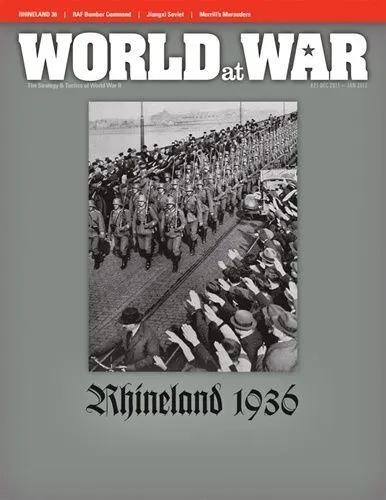
The Rhineland War, 1936-37 ist ein Brettspiel aus dem Jahr 2011 für 1–2 Personen, mit 240 Minuten pro Partie und ab 12 Jahren. Entwickelt wurde es von Joseph Miranda; die wichtigsten Mechaniken sind Hexagon Grid.

Auf Englisch
The Rhineland Crisis War, 1936-37, designed by Joseph Miranda,is a strategic-level simulation of intermediate complexity that covers an alternative World War II in Europe, one that began in 1936. The assumption is, when Hitler ordered his army to march into the Rhineland, the Allied powers, instead of appeasing him, ordered their armed forces to resist. The ensuing chain of events leads to the war expanding throughout Europe. A war fought at that time would’ve found all European militaries woefully unprepared. Central to the play of the game are its “crisis chits.” They represent various diplomatic and military events that could bring other powers into the war. Players pick crisis chits depending on the number of crisis hexes (printed on the map) they control. The more such hexes they control, the greater the chances they have of gaining more allies. At the same time, grabbing too much territory can lead to political collapse at home, as domestic foes work to undermine your power before the conflict explodes into a wider war. Rhineland Crisis War is a two-player game. One player commands the Axis, controlling Germany and the countries that choose to align with Berlin. The other is the Allied player, who controls the anti-German forces. Each hex on the map represents 62 miles (100 km) from side to opposite side. Each full game turn represents one month. Units of maneuver are corps and armies. Special rules cover: crises, political collapse, reinforcements, replacements, terror bombing, railroads, fog of war, airpower, naval and amphibious operations, weather, neutrals, the Soviet Union, armistice and surrender, the Spanish Civil War, expeditionary forces, airborne units, air transport, fifth columns, alpine units, and anti-aircraft units. The turn sequence is as follows. I. Axis Player Turn A. Axis Mobilization Phase B. Axis Terror Bombing Phase C. Axis Movement Phase D. Axis Combat Phase E. Axis Rally Phase F. Axis Crisis Phase II. Allied Player Turn A. Allied Mobilization Phase B. Allied Terror Bombing Phase C. Allied Movement Phase D. Allied Combat Phase E. Allied Rally Phase. F. Allied Crisis Phase III. End of Turn Phase
Laut Katalog unterstützt The Rhineland War, 1936-37 1–2 Personen. Diese Spanne entspricht der vom Verlag angegebenen Spielerzahl, das Spiel lässt sich also für jede Gruppengröße innerhalb dieser Spanne aufbauen. Aufbau, einzelne Regeln und Wertungsdetails können je nach Personenzahl trotzdem abweichen; prüfe daher die genaue Konfiguration in der Anleitung deiner Ausgabe.
Die angegebene Spieldauer für The Rhineland War, 1936-37 beträgt 240 Minuten. Das ist die Schätzung des Verlags für eine vollständige Partie. Die tatsächliche Dauer hängt von der Gruppe, der Personenzahl und der Regelkenntnis ab: Erste Partien dauern meist länger, erfahrene Gruppen sind oft schneller fertig. Aufbau und Regelerklärung sind in dieser Schätzung nicht enthalten.
Im Katalog wird The Rhineland War, 1936-37 ab 12 Jahren empfohlen. Das ist die Empfehlung des Verlags und berücksichtigt Leseanforderungen, Regelkomplexität und Kleinteile, nicht nur das Thema. Jüngere Kinder können oft mit Hilfe eines Erwachsenen mitspielen; beachte die Altersangabe deiner Ausgabe und die Brettspielerfahrung deiner Gruppe.
The Rhineland War, 1936-37 hat bei BoardGameGeek eine Komplexitätswertung von 3,2 von 5 und gilt damit als mittelschweres Spiel. Die Wertung zeigt, wie viel Regelwissen, Planung und Entscheidungen eine typische Partie verlangt. Schwerere Spiele brauchen bei der ersten Erklärung mehr Zeit, daher hilft vor dem Spieleabend eine Vorbereitungsanleitung.
The Rhineland War, 1936-37 gehört zu diesen Kategorien: Wargame und World War II. Die wichtigsten Mechaniken sind Hexagon Grid. Kategorien beschreiben Thema und Setting eines Spiels, Mechaniken dagegen, was die Spielenden in ihrem Zug tatsächlich tun. Jede Mechanik führt zu einer Katalogseite mit ähnlichen Spielen, falls du etwas Vergleichbares suchst.
Als Autoren von The Rhineland War, 1936-37 sind angegeben: Joseph Miranda. Diese Angaben stammen aus den veröffentlichten Spieldaten und nennen die für das Spieldesign verantwortlichen Personen, nicht die Illustratoren oder Verlage. Die Autorenseiten auf MeepleRules sammeln weitere Titel derselben Autoren – praktisch, wenn dir ein Spiel gefällt und du ähnliche Spiele suchst.
Im Katalog ist The Rhineland War, 1936-37 als Grundspiel aufgeführt. Es lässt sich eigenständig mit dem Material aus der Schachtel spielen und benötigt keinen weiteren Titel. Erweiterungen, sofern es welche gibt, ergänzen neues Material oder neue Regeln und sind im Katalog separat mit einem Verweis auf dieses Grundspiel aufgeführt.