
- BGG-Rang
- BGG #5.509
- BGG-Bewertung
- 7,6
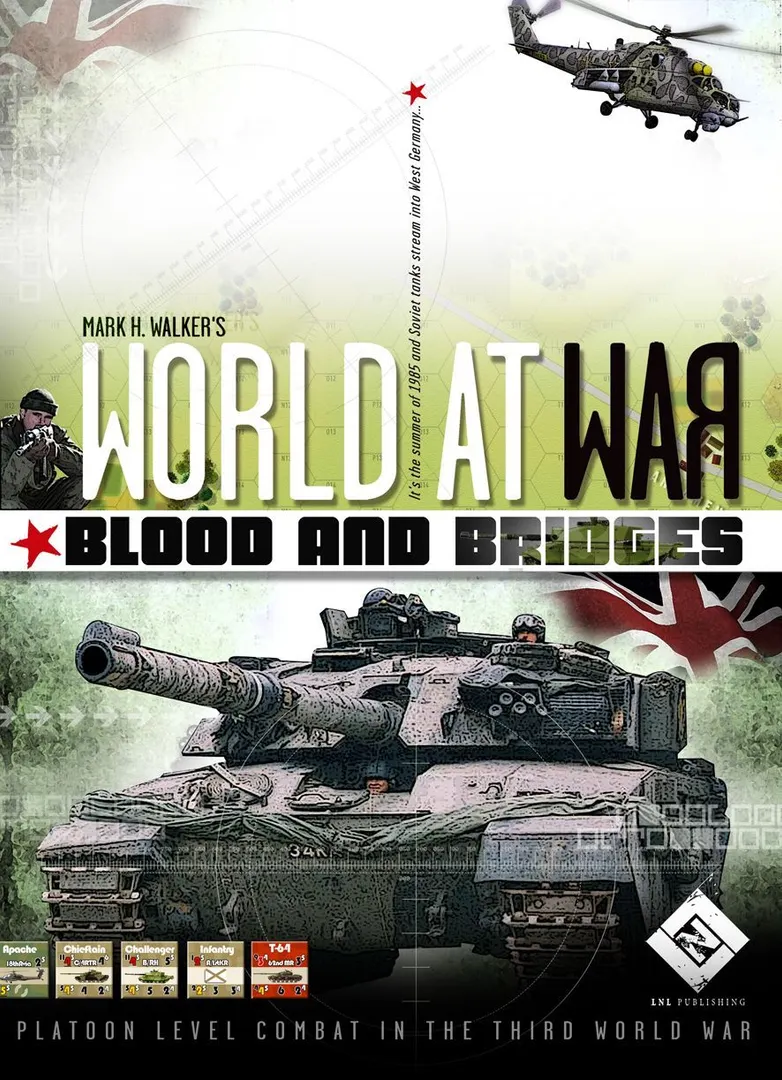
World at War: Blood and Bridges
- 2 Spieler
- 90 Min.
- Komplexität 2,8/5
- 2008

Regelhilfe für World at War: Gamer's Guide
Verständliche Erklärungen zu Spielzügen, Karteneffekten und strittigen Situationen mit Verweisen auf offizielle Quellen und gespeichertem Fragenverlauf.
Was möchtest du wissen?
Antworten stammen aus dem offiziellen Regelheft, mit Seitenangabe zum Nachprüfen.
World at War: Gamer's Guide ist eine Erweiterung für World at War: Death of the 1st Panzer aus dem Jahr 2008 für 2 Personen, mit 180 Minuten pro Partie und ab 12 Jahren. Entwickelt wurde es von Mark H. Walker, Jim Snyder, Peter Bogdasarian, Arrigo Velicogna und Pete Atack; die wichtigsten Mechaniken sind Dice Rolling, Hexagon Grid und Chit-Pull System.



Auf Englisch
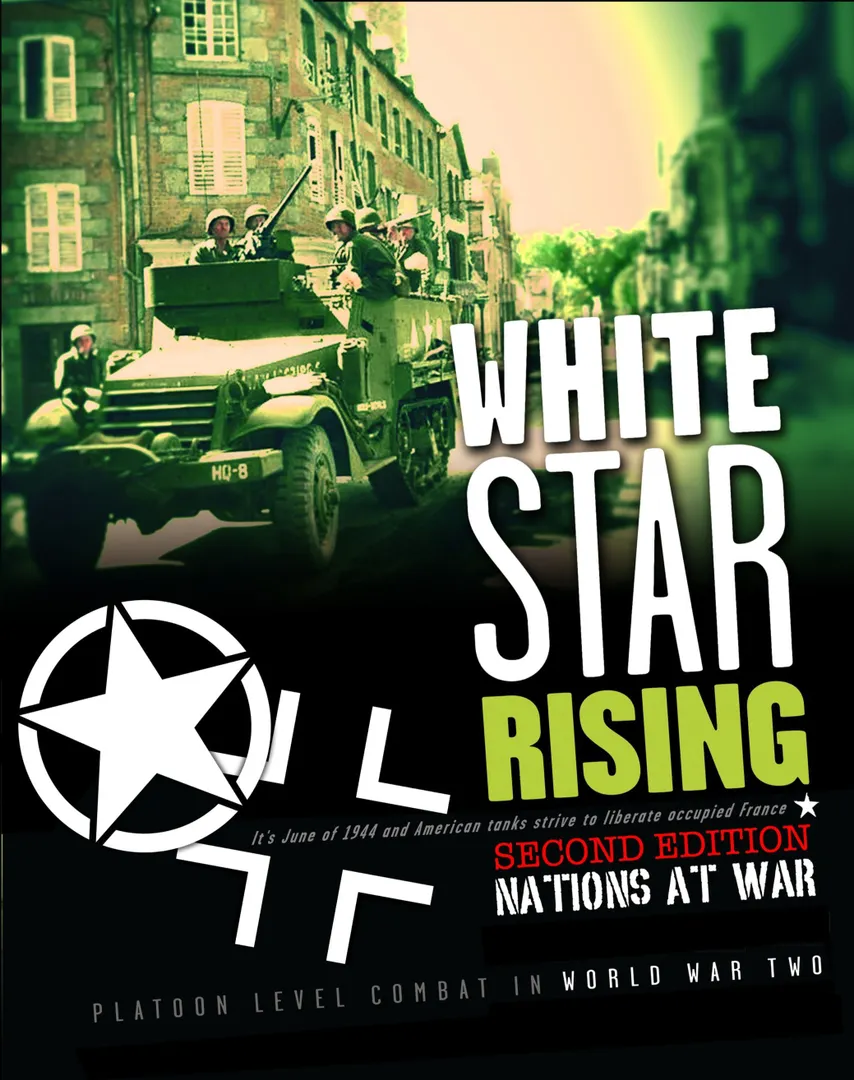
From the publisher: You asked for it (didn't you?), and now it's here (well, almost). Packing with forty professionally printed, and glaringly-glossy pages (including cover) and filled with World at War wisdom, the World at War: Gamer's Guide is on pre-order. You'll find a preview of the upcoming World at War boxed game, World at War: Blood and Bridges. Two new scenarios, Clearing Hell's Highway, and Poor Bloody Infantry. Two battle reports with semi-fictionalized accounts recounts of WaW scenarios (Some of you call these after action reports). A ten page article examining strategy in the World at War series and the specific tactics needed to win all six Eisenbach Gap scenarios. Even variants for night fighting, and a design your own scenarios "how to" article. And much more... including a unit-by-unit analysis of the platoons of Eisenbach Gap... World at War has been a pleasant, if mild, surprise for Lock ‘n Load Publishing. I designed the game because I wanted to play it. Yes, in the back of my mind, I felt that there might be a market for something depicting the war that never happened, but primarily I created the game because it interests me. In ten years of writing and designing, that’s the only thing I’ve found that works. I’ve designed and written on spec, and gave those pieces my best shot, but it seems that the games, the writing, that gets my juices flowing are the things other people also enjoy. I absolutely love playing World at War. I like the combat system, am intrigued by the era, and fascinated by the idea of a series of games that link together to tell a story. So, I’m happy that other people enjoy it too. I also hope that this guide enhances your enjoyment. We have strived to make a guide that is visually appealing, interesting, and diversified. Inside you’ll find articles on strategy, the percentages of rolling dice in World at War, battle reports (or after action reports as some of you prefer), and unit analysis. What you won’t find are dry as dust articles on the actual forces that lined the West German border or mind-numbing diatribes on Soviet Doctrine. Why? Because that stuff just doesn’t interest me. There are lots of tables comparing the strength and weakness of an M1 Abrams platoon and a T-72 platoon in the World at War system. And we go through the platoons of Eisenbach Gap, unit-by-unit, and even provide a walk through for winning Blind Sided (a Death of the 1st Panzer scenario.) All this in a beautifully laid out, two-color 40-page glossy magazine. Yeah, this one's printed. You can hold it in your hands. Not a stand-alone game. Expands: World at War: Eisenbach Gap World at War: Death of the 1st Panzer
Laut Katalog unterstützt World at War: Gamer's Guide 2 Personen. Das ist die vom Verlag angegebene Spielerzahl, das Spiel ist also genau für diese Anzahl von Mitspielenden ausgelegt. Varianten für andere Gruppengrößen sind, sofern vorhanden, in der Anleitung deiner Ausgabe beschrieben; prüfe sie, bevor du eine andere Konfiguration aufbaust.
Die angegebene Spieldauer für World at War: Gamer's Guide beträgt 180 Minuten. Das ist die Schätzung des Verlags für eine vollständige Partie. Die tatsächliche Dauer hängt von der Gruppe, der Personenzahl und der Regelkenntnis ab: Erste Partien dauern meist länger, erfahrene Gruppen sind oft schneller fertig. Aufbau und Regelerklärung sind in dieser Schätzung nicht enthalten.
Im Katalog wird World at War: Gamer's Guide ab 12 Jahren empfohlen. Das ist die Empfehlung des Verlags und berücksichtigt Leseanforderungen, Regelkomplexität und Kleinteile, nicht nur das Thema. Jüngere Kinder können oft mit Hilfe eines Erwachsenen mitspielen; beachte die Altersangabe deiner Ausgabe und die Brettspielerfahrung deiner Gruppe.
World at War: Gamer's Guide hat bei BoardGameGeek eine Komplexitätswertung von 2,2 von 5 und gilt damit als eher leichtes Spiel. Die Wertung zeigt, wie viel Regelwissen, Planung und Entscheidungen eine typische Partie verlangt. Schwerere Spiele brauchen bei der ersten Erklärung mehr Zeit, daher hilft vor dem Spieleabend eine Vorbereitungsanleitung.
World at War: Gamer's Guide gehört zu diesen Kategorien: Wargame, Modern Warfare und Expansion for Base-game. Die wichtigsten Mechaniken sind Dice Rolling, Hexagon Grid und Chit-Pull System. Kategorien beschreiben Thema und Setting eines Spiels, Mechaniken dagegen, was die Spielenden in ihrem Zug tatsächlich tun. Jede Mechanik führt zu einer Katalogseite mit ähnlichen Spielen, falls du etwas Vergleichbares suchst.
Als Autoren von World at War: Gamer's Guide sind angegeben: Mark H. Walker, Jim Snyder, Peter Bogdasarian, Arrigo Velicogna und Pete Atack. Diese Angaben stammen aus den veröffentlichten Spieldaten und nennen die für das Spieldesign verantwortlichen Personen, nicht die Illustratoren oder Verlage. Die Autorenseiten auf MeepleRules sammeln weitere Titel derselben Autoren – praktisch, wenn dir ein Spiel gefällt und du ähnliche Spiele suchst.
Im Katalog ist World at War: Gamer's Guide als Erweiterung zu World at War: Death of the 1st Panzer aufgeführt. Erweiterungen ergänzen das Grundspiel um neues Material, neue Regeln oder Szenarien und sind meist nicht eigenständig spielbar; du brauchst also World at War: Death of the 1st Panzer, um sie zu nutzen. Prüfe, ob deine Ausgabe von World at War: Death of the 1st Panzer kompatibel ist, da manche Erweiterungen zwischen den Auflagen überarbeitet wurden.