

- BGG rank
- BGG #27,689
- BGG rating
- 5.4
Blackbeard's Lost Fleet
- 2–4 players
- 60–120 min
- Complexity 3.0/5
- 2024
2009
Rules assistance for Alchemicus
Plain-language explanations of turns, card effects and disputed situations, with official source references and saved question history.
For 2 players
What would you like to know?
Answers come from the official rulebook, with the page to check.
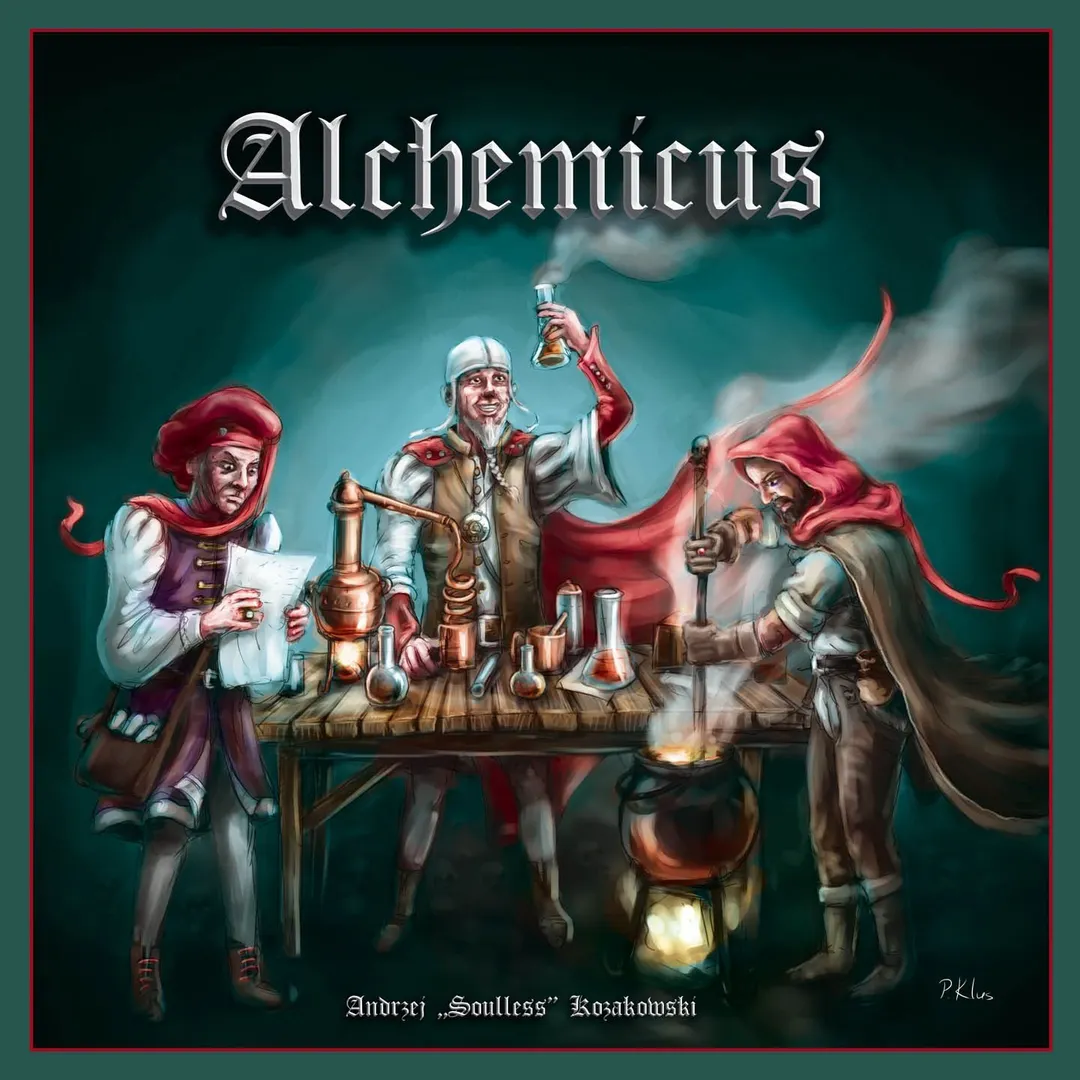
Alchemicus is a board game released in 2009 for 2–4 players, 60 minutes per game, and ages 12 and up. It was designed by Andrzej Kozakowski and its main mechanics are Hand Management, Trading, and Area Movement.

Transformation of metals into gold? It’s possible – any physicist will say nowadays. In the 16th century, alchemists made attempts to do that in their laboratories, aspiring to gain wealth and never-ending fame. Some, as Edward Kelley, thanks to royal sponsors, achieved all that, nevertheless they never succeeded in transmutation of metals… In this magical game that you are holding it’s very simple. Build a laboratory and collect the necessary components. And transformation of metals? If you manage to adjust to the changing moods of the Spirit of Transmutation, then it’s really not complicated at all. So, what is the game about? You have competition in your town – other alchemists who also know the right technology. Only the one of you who is the most efficient will win recognition and fame. It will surely last until the next game, or, who knows, perhaps eternally… Players will try to be the most effective alchemist. To achieve that they will need to build buildings, represented by cards. In these buildings, they will acquire resources, transform them into gold and finally sell them for victory points or cards. Selling gold isn't only way to win the game. Game is using Rondel mechanic to pick an action by players and hand management, where cards represent buildings, currency and resources. Alchemicus was designed as a family game with little negative interaction. Requests planning but also concentrating on other players movements and predicting them. Many beginners forget it, being focused on their own technology structure, so very often they fall behind. We think that this game style can be useful for teaching young players to think beyond their own needs. Anyway, the game is not for kids. The youngest of our testers who was able to win the play against his father was 12 years old (consider that his father is lawyer, so probably he is quite smart ;))) hahaha one of them. Father or son. we are not sure which one :D). Because the factor of negative interaction is not very strong the play goes ahead in a nice atmosphere which is fun for family play. Older players can play a bit differently, by using the position of The Transmutation Ghost to foil your opponents' plans. This strategy can be counteracted by defending yourself with buildings and goods in circulation which are resistant to your opponents' actions.
Alchemicus supports 2–4 players according to the catalogue. This range comes from the publisher’s listed player count, so the game can be set up for any group size within it. Some setups, rules and scoring details may still vary by player count, so check your edition’s rulebook for the exact configuration.
The listed playing time for Alchemicus is 60 minutes. This is the publisher’s estimate for a full game. The actual duration depends on the group, the player count and familiarity with the rules: first sessions usually run longer, while experienced groups often finish faster. Setup and teaching time are not included in this estimate.
The catalogue lists Alchemicus for ages 12 and up. This is the publisher’s recommendation and reflects reading demands, rule complexity and small components rather than theme alone. Younger players can often join with help from an adult, so check the age guidance on your edition and consider your group’s experience with board games.
Alchemicus has a complexity rating of 2.2 out of 5 from BoardGameGeek players, which makes it a medium-light game. The rating reflects how much rules knowledge, planning and decision-making a typical game demands. Expect a longer first teach for heavier games, and use a preparation guide before game night.
Alchemicus belongs to these categories: Card Game, Economic, and Industry / Manufacturing. Its main mechanics are Hand Management, Trading, and Area Movement. Categories describe the theme and setting of a game, while mechanics describe what players actually do on their turns. Each mechanic links to a catalogue hub with similar games, which helps when you want something comparable.
The credited designers of Alchemicus are: Andrzej Kozakowski. These credits come from the published game data and name the people responsible for the game’s design, not its illustrators or publishers. Designer pages on MeepleRules collect other titles by the same designers, which helps when you enjoy a game and want to find similar ones.
The catalogue lists Alchemicus as a base game. It can be played on its own with the components in the box and does not require any other title. Expansions, if any exist, add new content or rules on top of it and are listed separately in the catalogue with a link back to this base game.