

- BGG rank
- BGG #11,454
- BGG rating
- 6.8
2019: The ARCTIC
- 2–4 players
- 120 min
- Complexity 4.0/5
- 2011
2010
Rules assistance for Master of Economy
Plain-language explanations of turns, card effects and disputed situations, with official source references and saved question history.
For 2 players
What would you like to know?
Answers come from the official rulebook, with the page to check.
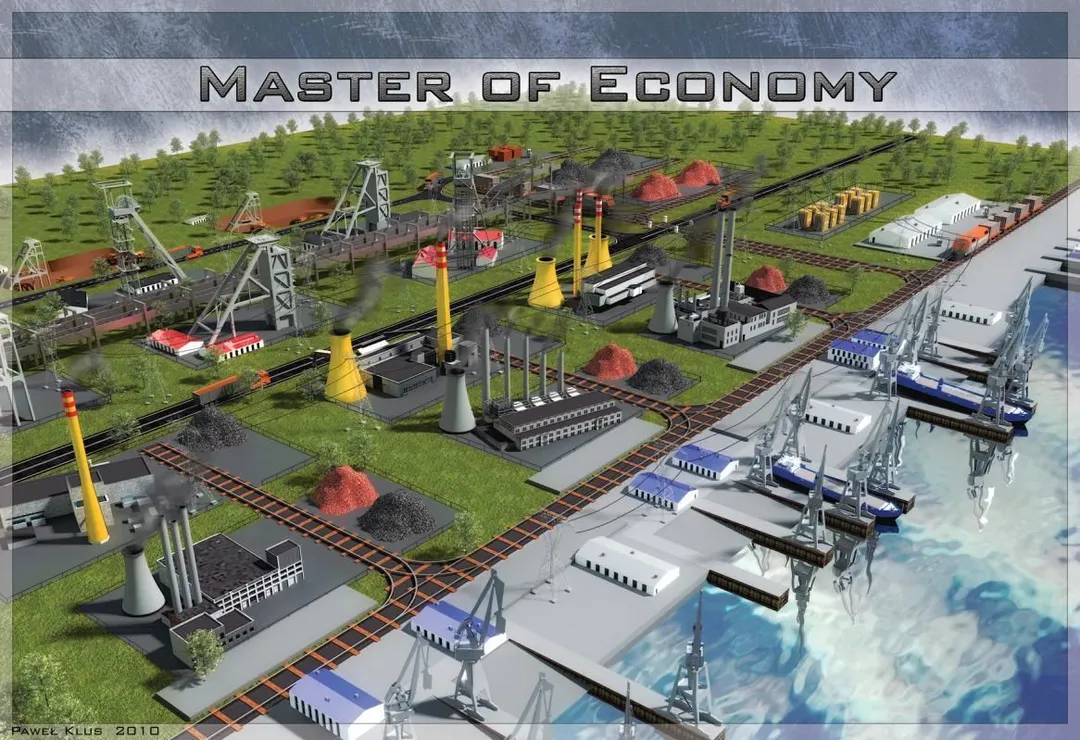
Master of Economy is a board game released in 2010 for 2–4 players, 120 minutes per game, and ages 14 and up. It was designed by Andrzej Kurek and its main mechanics are Hand Management, Trading, and Auction / Bidding.



Financial simulator. Players start the game by managing their corporations (1 of 4) and using them as a tool for increasing the value of private property (like countries in "Imperial"). By effective speculation on the stock market, a player may take control of more than one corporation. Proper corporation management is preferable but not the most essential. The rules attempt to simulate real conditions of business competition and relationships between shareholders. THERE IS NO LUCK FACTOR. Internal balance discourages to play in a relation of 2(3) players versus 1. Most of the rules are quite easy and intuitive. It is the most difficult to use the rules effectively by good planning and predicting opponents’ plans. Players manage their corporations by investing in new factories and trading produced goods to earn money (like in many other games). The point is what the players do with earned money. They can re-invest it to make their corporations earn more during next phase or try to make pressure on another player by buying shares of his/her corporation. The player who has the biggest number of shares can be elected by voting as a new leader of the corporation for the next stage. Even if you don`t have enough shares to take control over another player`s firm, the investment can be quite beneficiary because it can give you some profit (if that firm is managed well) or enforce your opponent to use the corporation money for defending, which makes his final result worse than could be achieved without your pressure. Of course, the more players (max 4), the more fun there is during voting phase when all the shareholders, who are going to manage the corporation in the next stage, vote. The game tries to extract maximum advantage of double circulation of money you can find in the "Imperial". Players have money and corporations have money. So, what is new then? Besides the players, also the corporations can be shareholders and they all (corporations and players) vote for new leaders. It means that if you want to keep control over a corporation you had started with, you can, for instance, first take control over some weaker corporation which has some shares of yours. The best defense is attack, isn`t it? ;) The only weapon in this war is money. There are some tools of defense, so taking control over experienced opponent`s corporation is rather difficult, though possible. When an experienced player plays versus a beginner, he/she shouldn`t have a problem with it. Moreover, keeping control of the corporation is useful, because it is a way of generating money for the leader, although speculating by buying and selling shares is a bit more efficient. It is the best to go both ways at the same time, choosing and changing your engagement alternately. Well, it is also possible to play without any corporation and increase the value of private property only by playing as a stock market profiteer, but this way is recommended only for very experienced players. There is a fixed variant of playing 2 vs. 2.
Master of Economy supports 2–4 players according to the catalogue. This range comes from the publisher’s listed player count, so the game can be set up for any group size within it. Some setups, rules and scoring details may still vary by player count, so check your edition’s rulebook for the exact configuration.
The listed playing time for Master of Economy is 120 minutes. This is the publisher’s estimate for a full game. The actual duration depends on the group, the player count and familiarity with the rules: first sessions usually run longer, while experienced groups often finish faster. Setup and teaching time are not included in this estimate.
The catalogue lists Master of Economy for ages 14 and up. This is the publisher’s recommendation and reflects reading demands, rule complexity and small components rather than theme alone. Younger players can often join with help from an adult, so check the age guidance on your edition and consider your group’s experience with board games.
Master of Economy has a complexity rating of 4.1 out of 5 from BoardGameGeek players, which makes it a heavy game. The rating reflects how much rules knowledge, planning and decision-making a typical game demands. Expect a longer first teach for heavier games, and use a preparation guide before game night.
Master of Economy belongs to these categories: Economic, Negotiation, and Educational. Its main mechanics are Hand Management, Trading, and Auction / Bidding. Categories describe the theme and setting of a game, while mechanics describe what players actually do on their turns. Each mechanic links to a catalogue hub with similar games, which helps when you want something comparable.
The credited designers of Master of Economy are: Andrzej Kurek. These credits come from the published game data and name the people responsible for the game’s design, not its illustrators or publishers. Designer pages on MeepleRules collect other titles by the same designers, which helps when you enjoy a game and want to find similar ones.
The catalogue lists Master of Economy as a base game. It can be played on its own with the components in the box and does not require any other title. Expansions, if any exist, add new content or rules on top of it and are listed separately in the catalogue with a link back to this base game.