

- BGG rank
- BGG #10,274
- BGG rating
- 7.6
Dust 1947
- 2–8 players
- 60–120 min
- Complexity 2.7/5
- 2016
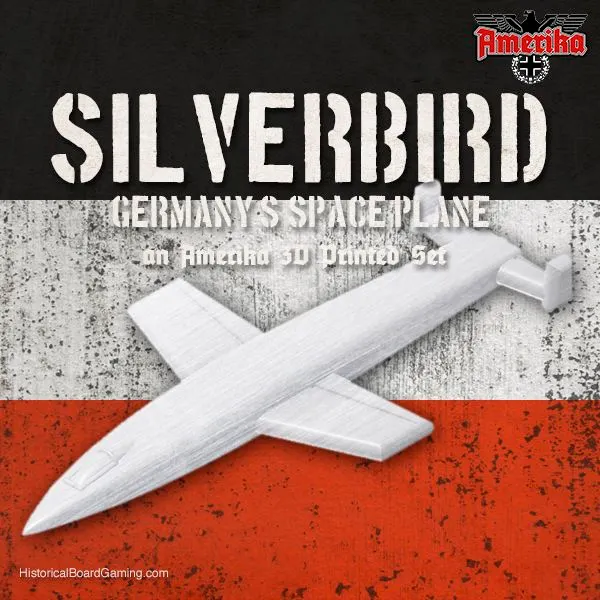
Rules assistance for Amerika: Silverbird – Germany's Space Plane
Plain-language explanations of turns, card effects and disputed situations, with official source references and saved question history.
What would you like to know?
Answers come from the official rulebook, with the page to check.
Amerika: Silverbird – Germany's Space Plane is an expansion for Amerika released in 2016 for 2–3 players, 120–150 minutes per game, and ages 12 and up. It was designed by Michael C. Kelley and its main mechanics are Area Movement and Dice Rolling.





The Sänger Silbervogel “Silverbird” bomber developed from the idea of an intercontinental bomber that would glide around the world on the fringes of space and the Earth’s atmosphere. Launched from a base in Nazi Occupied Europe, it would travel down an approximately three-mile long monorail track, launched initially by V-2 rocket engines into space at a speed so fast, it would circle the earth in only a few hours. Its payload was to be a single composite bomb containing nuclear particles in a fashion similar to “chaff”, with an initial detonation in the higher atmosphere above a city to ensure complete coverage of the nuclear material. The bomb itself was a 5,000-pound high explosive warhead wrapped in special insulated blankets of radioactive silicone, detonating at about 2,000-3,000 feet above the target city. The end result would be radioactive sickness and death for those on the receiving end. After mission completion, the bomber would glide back to Germany reentering the atmosphere gradually and landing at a specially designated airfield. The cost of producing the bomb and the bomber itself though would render this weapon as a relatively expensive endeavor suited mostly for preemptive strikes against heavily fortified cities with the aim to wipe them out quickly. -description from publisher
Amerika: Silverbird – Germany's Space Plane supports 2–3 players according to the catalogue. This range comes from the publisher’s listed player count, so the game can be set up for any group size within it. Some setups, rules and scoring details may still vary by player count, so check your edition’s rulebook for the exact configuration.
The listed playing time for Amerika: Silverbird – Germany's Space Plane is 120–150 minutes. This is the publisher’s estimate for a full game. The actual duration depends on the group, the player count and familiarity with the rules: first sessions usually run longer, while experienced groups often finish faster. Setup and teaching time are not included in this estimate.
The catalogue lists Amerika: Silverbird – Germany's Space Plane for ages 12 and up. This is the publisher’s recommendation and reflects reading demands, rule complexity and small components rather than theme alone. Younger players can often join with help from an adult, so check the age guidance on your edition and consider your group’s experience with board games.
Amerika: Silverbird – Germany's Space Plane belongs to these categories: Wargame, Science Fiction, and World War II. Its main mechanics are Area Movement and Dice Rolling. Categories describe the theme and setting of a game, while mechanics describe what players actually do on their turns. Each mechanic links to a catalogue hub with similar games, which helps when you want something comparable.
The credited designers of Amerika: Silverbird – Germany's Space Plane are: Michael C. Kelley. These credits come from the published game data and name the people responsible for the game’s design, not its illustrators or publishers. Designer pages on MeepleRules collect other titles by the same designers, which helps when you enjoy a game and want to find similar ones.
The catalogue lists Amerika: Silverbird – Germany's Space Plane as an expansion for Amerika. Expansions add new content, rules or scenarios to the base game and usually cannot be played on their own, so you need Amerika to use it. Check that your edition of Amerika is compatible, as some expansions were revised between editions.