

- BGG rank
- BGG #9,111
- BGG rating
- 6.8
Daruma
- 2–5 players
- 20–40 min
- Complexity 1.2/5
- 2023
2026
Rules assistance for ASHES: Blackout Protocol
Plain-language explanations of turns, card effects and disputed situations, with official source references and saved question history.
For 1 player
What would you like to know?
Answers come from the official rulebook, with the page to check.
ASHES: Blackout Protocol is a board game released in 2026 for 1–4 players, 60–120 minutes per game, and ages 14 and up. It was designed by Jorge J. Barroso, Jesús Fuentes, and Eduardo Pavón and its main mechanics are Income, Point to Point Movement, and End Game Bonuses.



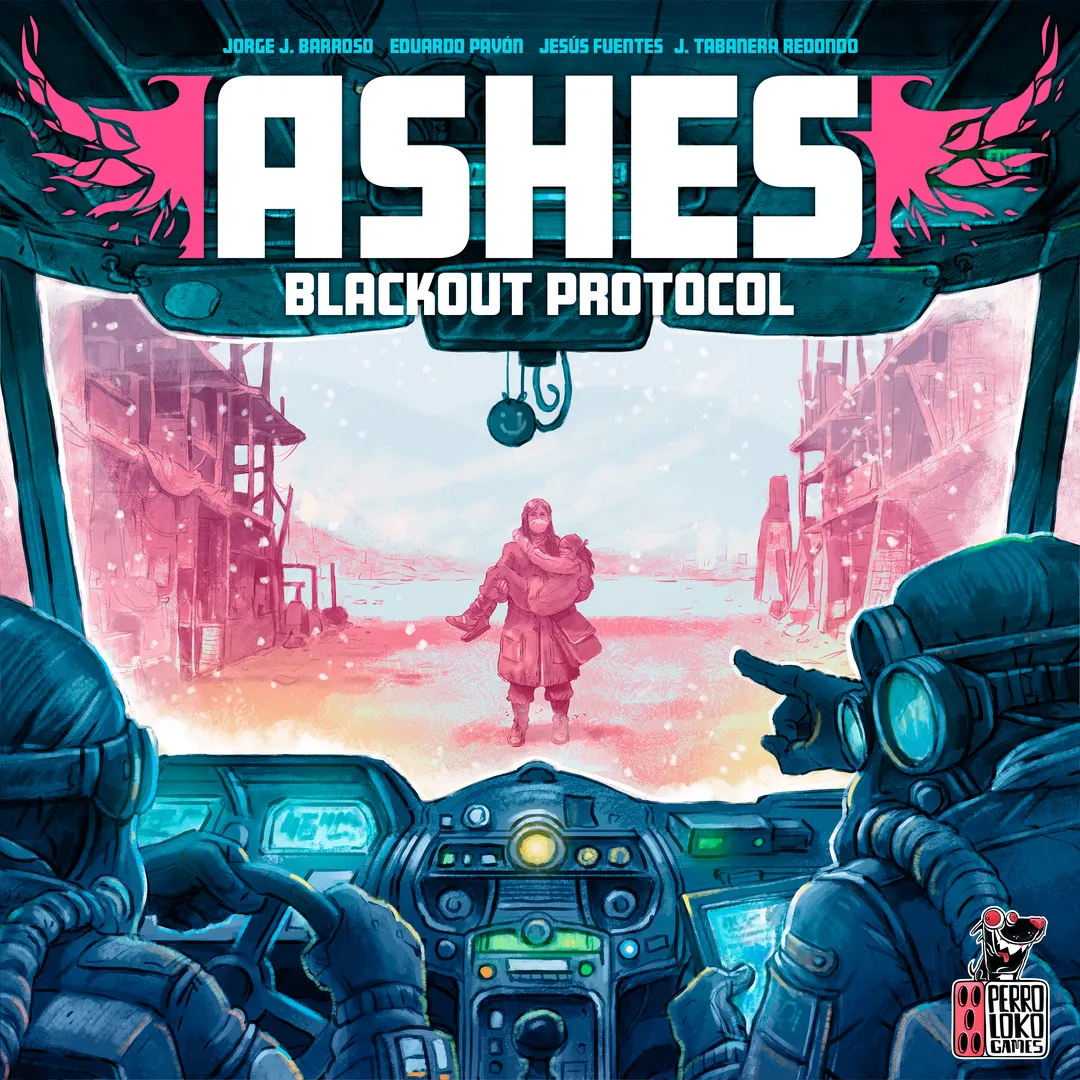
A.S.H.E.S. (Artificial Shelter & Human Evacuation Sequence) From the ashes, the Phoenix will rise. After decades of political tension, the world fell victim to the Great Nuclear War of 1989. In a matter of days, cities were reduced to rubble and the skies burned with fire. Amid the devastation, the remaining survivors united to secure humanity's future. Ancient evacuation systems were reactivated, and the first underground shelters were built. Thus, the A.S.H.E.S. Protocol — Artificial Shelter & Human Evacuation Sequence — was born: a vast network of underground colonies designed to preserve what remained of the human race. Two years later, the last survivors work tirelessly to rescue civilians, rebuild civilization, and develop a project capable of restoring life to the surface: Project Phoenix. In A.S.H.E.S.: Blackout Protocol, you will lead one of these colonies in its struggle for survival. Rescue civilians, expand your shelter network, construct new facilities, and contribute to the development of Project Phoenix—the initiative that may one day restore hope to humanity. HOW TO PLAY The game is played over three rounds. The player with the most Victory Points at the end of the game wins. On your turn, choose one of the following actions: 1. Perform one protocol at Your Base Take a survivor from your base and place them on an action space of your personal board to perform one of the game's main actions: Build Shelters, Install upgrades in the Project Phoenix, or Rescue Survivors. You will also gain a production bonus: Fuel, Data, a Mission Card, or Colony Strength. Build Shelters Use your Colony Strength to construct new shelters capable of housing additional civilians. Gain immediate rewards and receive valuable income at the end of each round. Install upgrades in the Project Phoenix Craft materials and gather data to unlock upgrades for your colony while contributing to humanity's most ambitious undertaking. Rescue Survivors Bring survivors from the wasteland into your shelters to gain immediate benefits and recurring income. Once a shelter is filled, you may flip it to its completed side, sacrificing its income in exchange for a greater Victory Point reward each round. 2. Move Your Evacuation Vehicle Spend Fuel to move your vehicle to a different location on the board. Your vehicle allows you to transport civilians to safety, perform additional actions, and collect materials needed to support Project Phoenix. ADDITIONAL ACTIONS In addition to your main action, you may: Complete a Mission Card from your hand. Craft materials for Project Phoenix. Decontaminate survivors. Seal completed shelters. Search for new survivors. END OF THE ROUND At the end of each round, radiation spreads across the wasteland. Any civilians who remain unrescued on the board will suffer its effects, reducing your Happiness. END OF THE GAME The game ends after the third round. The player with the most Victory Points wins. A.S.H.E.S. Protocol completed. Active shelters: 12 Civilians evacuated: 1,742 Project Phoenix — Phase I initiated "From the ashes, we endure."
ASHES: Blackout Protocol supports 1–4 players according to the catalogue. This range comes from the publisher’s listed player count, so the game can be set up for any group size within it. Some setups, rules and scoring details may still vary by player count, so check your edition’s rulebook for the exact configuration.
The listed playing time for ASHES: Blackout Protocol is 60–120 minutes. This is the publisher’s estimate for a full game. The actual duration depends on the group, the player count and familiarity with the rules: first sessions usually run longer, while experienced groups often finish faster. Setup and teaching time are not included in this estimate.
The catalogue lists ASHES: Blackout Protocol for ages 14 and up. This is the publisher’s recommendation and reflects reading demands, rule complexity and small components rather than theme alone. Younger players can often join with help from an adult, so check the age guidance on your edition and consider your group’s experience with board games.
ASHES: Blackout Protocol has a complexity rating of 3.6 out of 5 from BoardGameGeek players, which makes it a medium-weight game. The rating reflects how much rules knowledge, planning and decision-making a typical game demands. Expect a longer first teach for heavier games, and use a preparation guide before game night.
ASHES: Blackout Protocol belongs to these categories: Territory Building, Science Fiction, and Civilization. Its main mechanics are Income, Point to Point Movement, and End Game Bonuses. Categories describe the theme and setting of a game, while mechanics describe what players actually do on their turns. Each mechanic links to a catalogue hub with similar games, which helps when you want something comparable.
The credited designers of ASHES: Blackout Protocol are: Jorge J. Barroso, Jesús Fuentes, and Eduardo Pavón. These credits come from the published game data and name the people responsible for the game’s design, not its illustrators or publishers. Designer pages on MeepleRules collect other titles by the same designers, which helps when you enjoy a game and want to find similar ones.
The catalogue lists ASHES: Blackout Protocol as a base game. It can be played on its own with the components in the box and does not require any other title. Expansions, if any exist, add new content or rules on top of it and are listed separately in the catalogue with a link back to this base game.