
- BGG rank
- BGG #13,622
- BGG rating
- 8.0
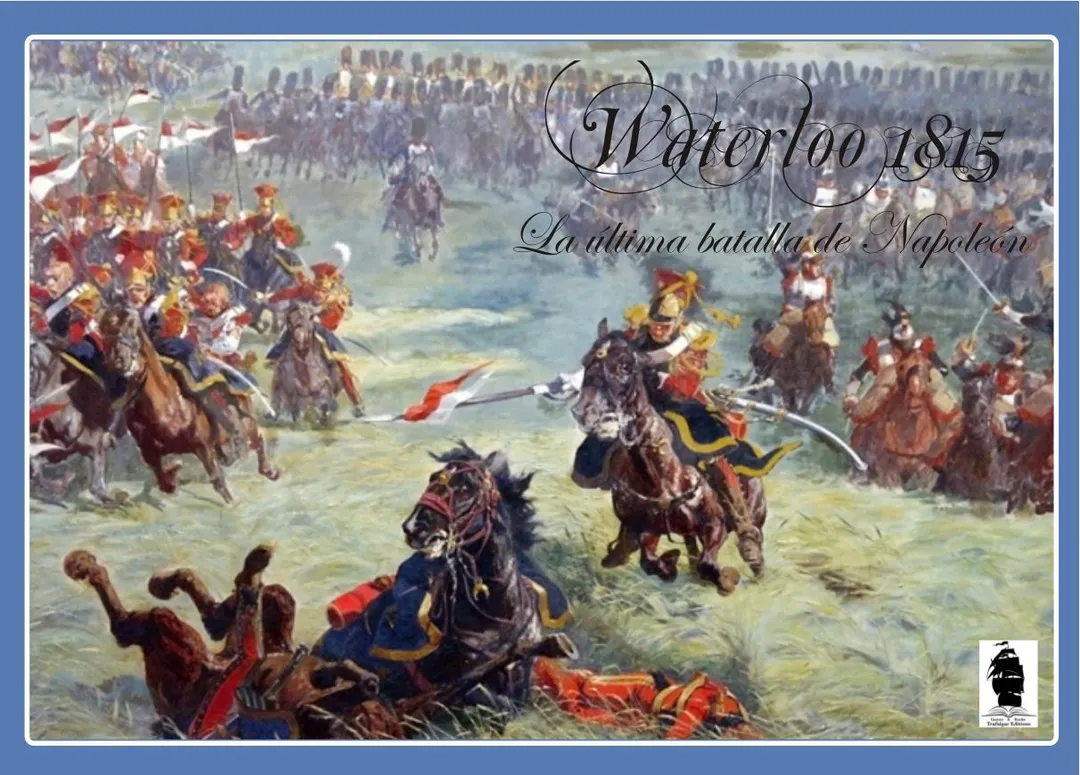
Waterloo 1815: la última batalla de Napoleón
- 1–8 players
- 120–180 min
- Complexity 4.1/5
- 2016
2019
Rules assistance for Austerlitz 1805
Plain-language explanations of turns, card effects and disputed situations, with official source references and saved question history.
What would you like to know?
Answers come from the official rulebook, with the page to check.
Austerlitz 1805 is a board game released in 2019 for 2–10 players, 120–240 minutes per game, and ages 14 and up. It was designed by Jose Antonio Luengo and its main mechanics are Dice Rolling, Simulation, and Scenario / Mission / Campaign Game.


There were three emperors at Austerlitz. Two of those emperors were the product of hidebound tradition and court intrigue; the other was the product of an insatiable ambition for glory coupled with a limitless appetite for hard work. Two saw their armies in terms of being a regal adornment of colour, martial airs, and ceremonial drill; the other knew his army down to the last pot of axle grease and the face of every soldier aspiring to win a marshal’s baton. Two dallied with war; for the other, war was his stock-in-trade. On December 2nd 1805, in a very ordinary part of Moravia, the mettle of all of them was put to the test. Trafalgar Editions’ Austerlitz is a miniatures-orientated rendering of Napoleon Bonaparte’s greatest triumph. Using an adaptation of the system first seen in Waterloo 1815: Napoleon’s Last Battle, Austerlitz offers a larger battlefield for manoeuvre, the early morning effects of fog (hidden movement and the chance that forces will blunder into each other), and opposing armies of contrasting strengths and abilities. The battle is played out on a beautiful and entirely grid-less rendering of the historical terrain, upon which players will deploy and move their forces. Those forces are represented by tokens of various size, depicting infantry in all the key Napoleonic formations, as well as cavalry in both column and line, and foot and horse artillery. Combining modern design sophistication with the practice and look of traditional kriegspiel, this is Napoleon’s greatest victory rendered the way the emperor himself would appreciate. —description from the publisher
Austerlitz 1805 supports 2–10 players according to the catalogue. This range comes from the publisher’s listed player count, so the game can be set up for any group size within it. Some setups, rules and scoring details may still vary by player count, so check your edition’s rulebook for the exact configuration.
The listed playing time for Austerlitz 1805 is 120–240 minutes. This is the publisher’s estimate for a full game. The actual duration depends on the group, the player count and familiarity with the rules: first sessions usually run longer, while experienced groups often finish faster. Setup and teaching time are not included in this estimate.
The catalogue lists Austerlitz 1805 for ages 14 and up. This is the publisher’s recommendation and reflects reading demands, rule complexity and small components rather than theme alone. Younger players can often join with help from an adult, so check the age guidance on your edition and consider your group’s experience with board games.
Austerlitz 1805 has a complexity rating of 3.7 out of 5 from BoardGameGeek players, which makes it a medium-weight game. The rating reflects how much rules knowledge, planning and decision-making a typical game demands. Expect a longer first teach for heavier games, and use a preparation guide before game night.
Austerlitz 1805 belongs to these categories: Wargame and Napoleonic. Its main mechanics are Dice Rolling, Simulation, and Scenario / Mission / Campaign Game. Categories describe the theme and setting of a game, while mechanics describe what players actually do on their turns. Each mechanic links to a catalogue hub with similar games, which helps when you want something comparable.
The credited designers of Austerlitz 1805 are: Jose Antonio Luengo. These credits come from the published game data and name the people responsible for the game’s design, not its illustrators or publishers. Designer pages on MeepleRules collect other titles by the same designers, which helps when you enjoy a game and want to find similar ones.
The catalogue lists Austerlitz 1805 as a base game. It can be played on its own with the components in the box and does not require any other title. Expansions, if any exist, add new content or rules on top of it and are listed separately in the catalogue with a link back to this base game.