

- BGG rank
- BGG #10,662
- BGG rating
- 7.5
Nine Years: The War of the Grand Alliance 1688-1697
- 2 players
- 225 min
- Complexity 2.8/5
- 2017
2022
Rules assistance for Barbarians at the Gates: The Decline and Fall of the Western Roman Empire 337 - 476
Plain-language explanations of turns, card effects and disputed situations, with official source references and saved question history.
For 2 players
What would you like to know?
Answers come from the official rulebook, with the page to check.
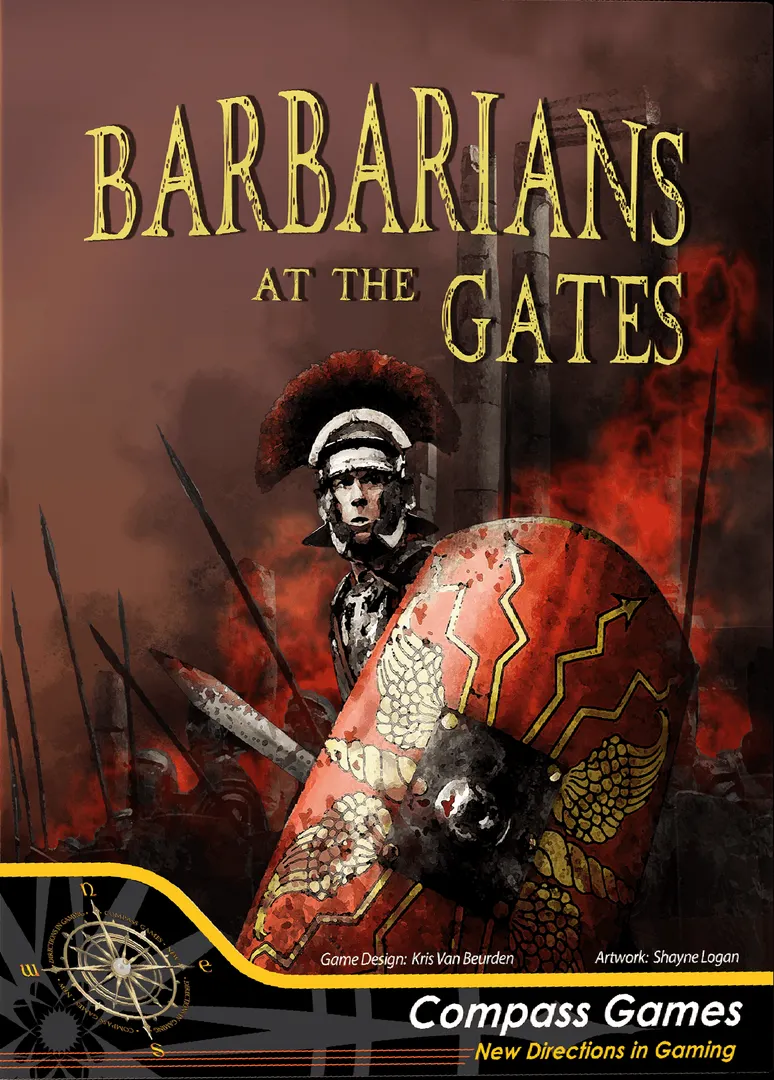
Barbarians at the Gates: The Decline and Fall of the Western Roman Empire 337 - 476 is a board game released in 2022 for 2 players and 120–300 minutes per game. It was designed by Kris Van Beurden and its main mechanics are Point to Point Movement and Campaign / Battle Card Driven.






Barbarians at the Gates, The Decline and Fall of the Western Roman Empire 337 - 476, is a card-driven game for two players set during the final century of the Western Roman Empire. The Roman player commands the Roman legions loyal to the failing central authority and those Germanic peoples who have settled peacefully inside the Roman Empire, while the Barbarian player leads Usurper Emperors, and controls the migrations of the savage Germanic peoples, who are the Barbarians at the Gates. The game is played on a point-to-point map of the Western Roman Empire, divided into 11 diocese (administrative districts) such as Gallia Belgica, Caledonia or Italia Suburbicaria, each composed of spaces such as Roma, Massilia or Nova Carthago. These spaces are connected to each other through the network of Roman roads, rougher connections (mostly in uncivilized territory) or river connections (mostly the Donau and the Rhine). Players take turns playing cards in order to activate Generals (Loyalist Roman generals such as Aetius, Usurper Emperors like Magnentius, and Barbarian leaders such as Atilla or Alaric) for movement and/or sieges, bring new Barbarian invasions into play, recruit new Legions, lead barbarian bands in raids across the border into the Roman interior, settle formerly hostile tribes on Roman soil, or even successfully usurp the Imperial Throne from its previous occupant! As leaders move, they will encounter enemy armies and battle, earning eternal glory or an unrecognized grave. Barbarian tribes will probe the fortified border for weaknesses, while the outnumbered Legions have to use interior lines (and the excellent Roman road network) to face each threat to the unfortified Italian, Iberian and Gallic diocese. From the days of Valentinian I and the first Vandal and Frankish migrations through Theodosius I and the Gothic invasions to Attila and the Huns, Barbarians at the Gates will allow players to vie for the future of Western Europe. Will enough of Roman civilization remain to eventually spark a Renaissance, or will Europe remain forever in the Dark Ages? —description from the designer
Barbarians at the Gates: The Decline and Fall of the Western Roman Empire 337 - 476 supports 2 players according to the catalogue. This is the publisher’s listed player count, so the game is designed for exactly that number of participants. Variants for other group sizes, if any, are described in the rulebook of your edition, so check it before setting up a different configuration.
The listed playing time for Barbarians at the Gates: The Decline and Fall of the Western Roman Empire 337 - 476 is 120–300 minutes. This is the publisher’s estimate for a full game. The actual duration depends on the group, the player count and familiarity with the rules: first sessions usually run longer, while experienced groups often finish faster. Setup and teaching time are not included in this estimate.
Barbarians at the Gates: The Decline and Fall of the Western Roman Empire 337 - 476 has a complexity rating of 3.7 out of 5 from BoardGameGeek players, which makes it a medium-weight game. The rating reflects how much rules knowledge, planning and decision-making a typical game demands. Expect a longer first teach for heavier games, and use a preparation guide before game night.
Barbarians at the Gates: The Decline and Fall of the Western Roman Empire 337 - 476 belongs to these categories: Wargame and Ancient. Its main mechanics are Point to Point Movement and Campaign / Battle Card Driven. Categories describe the theme and setting of a game, while mechanics describe what players actually do on their turns. Each mechanic links to a catalogue hub with similar games, which helps when you want something comparable.
The credited designers of Barbarians at the Gates: The Decline and Fall of the Western Roman Empire 337 - 476 are: Kris Van Beurden. These credits come from the published game data and name the people responsible for the game’s design, not its illustrators or publishers. Designer pages on MeepleRules collect other titles by the same designers, which helps when you enjoy a game and want to find similar ones.
The catalogue lists Barbarians at the Gates: The Decline and Fall of the Western Roman Empire 337 - 476 as a base game. It can be played on its own with the components in the box and does not require any other title. Expansions, if any exist, add new content or rules on top of it and are listed separately in the catalogue with a link back to this base game.