
- BGG rating
- 8.5
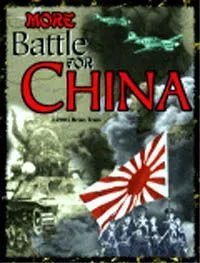
More Battle for China
- 2–3 players
- 180 min
- Complexity 3.0/5
- 2001
1999
Rules assistance for Battle for China
Plain-language explanations of turns, card effects and disputed situations, with official source references and saved question history.
What would you like to know?
Answers come from the official rulebook, with the page to check.
Battle for China is a board game released in 1999 for 2–3 players, 360 minutes per game, and ages 12 and up. It was designed by Brian Train and its main mechanics are Area Movement, Dice Rolling, and Simulation.
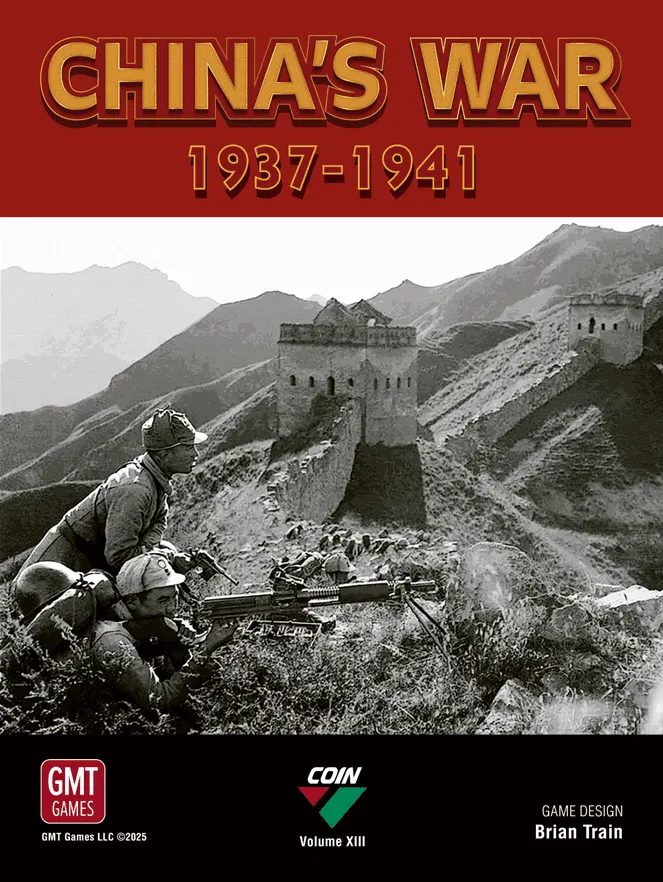




Battle for China is a board game simulation of the War of Resistance against Japan from the initial Japanese invasion in July 1937 to the end of 1941. The game is designed for two players, one directing the military forces acting to defend China against the Japanese invaders (the Chinese Player) and the other the forces of Imperial Japan (the Japanese Player). The game can also be played with a third player taking the Chinese Communist forces. Game comes with a map depicting China, 150 miles to an inch. It is divided into multiple areas, with one or more areas corresponding appproximately to a province. Units are abstract, each representing approximate Corps and Armies for the Chinese and Divisions and Brigades for the Japanese. The Japanese translation of the game came out in Command Magazine Japan #42. It features die-cut counters, an enlarged map, and integrates the More Battle for China expansion kit (more rules, two extra half-maps and more counters to game out the rest of World War Two (1942-45) and the Civil War (1947-49)). June 2009: Fiery Dragon productions has come out with "Battle for China Deluxe", a special edition of the game that includes the expansion kit More Battle for China. The package includes: - 44-page integrated rulebook for all three games, with coil binding - two red dice - 12 cards for the various charts and tables for the three games - 5 sheets of counters, for a total of 480 counters - consisting of the three sheets for the original game, and two new ones for the expansion. Counters might still be a bit thin for some tastes (but then they would not fit in the box) but the diecutting is good. - 3 maps, the original 11x17" central map plus the north and south 8x11" extensions (Siberia-Manchuria and Siam-Burma-India, respectively). The North map matches up well and obviously. For the South map the area north of Burma-1 is Burma-3, and the area north of Burma-2 is Burma-4. The unnamed area north of India-8 is Nepal and is impassable. This was the last version of Battle for China to appear before the Decision Games edition of the basic 1937-41 game in late 2009. Production of the deluxe version is limited, fewer than 125 copies I believe. When the Decision Games edition appears, the designer will post an updated and integrated set of rules and charts for the expansion kit, along with homemade redrawn extension maps to fit the larger 22x34" map. The counter sheets provided do not need to be changed, but be advised that the counters in the Decision Games edition have been changed to iconic style, with a different format. Re-implemented by: Battle for China, 1937-1941 (Second Edition)
Battle for China supports 2–3 players according to the catalogue. This range comes from the publisher’s listed player count, so the game can be set up for any group size within it. Some setups, rules and scoring details may still vary by player count, so check your edition’s rulebook for the exact configuration.
The listed playing time for Battle for China is 360 minutes. This is the publisher’s estimate for a full game. The actual duration depends on the group, the player count and familiarity with the rules: first sessions usually run longer, while experienced groups often finish faster. Setup and teaching time are not included in this estimate.
The catalogue lists Battle for China for ages 12 and up. This is the publisher’s recommendation and reflects reading demands, rule complexity and small components rather than theme alone. Younger players can often join with help from an adult, so check the age guidance on your edition and consider your group’s experience with board games.
Battle for China has a complexity rating of 2.9 out of 5 from BoardGameGeek players, which makes it a medium-light game. The rating reflects how much rules knowledge, planning and decision-making a typical game demands. Expect a longer first teach for heavier games, and use a preparation guide before game night.
Battle for China belongs to these categories: Wargame and World War II. Its main mechanics are Area Movement, Dice Rolling, and Simulation. Categories describe the theme and setting of a game, while mechanics describe what players actually do on their turns. Each mechanic links to a catalogue hub with similar games, which helps when you want something comparable.
The credited designers of Battle for China are: Brian Train. These credits come from the published game data and name the people responsible for the game’s design, not its illustrators or publishers. Designer pages on MeepleRules collect other titles by the same designers, which helps when you enjoy a game and want to find similar ones.
The catalogue lists Battle for China as a base game. It can be played on its own with the components in the box and does not require any other title. Expansions, if any exist, add new content or rules on top of it and are listed separately in the catalogue with a link back to this base game.