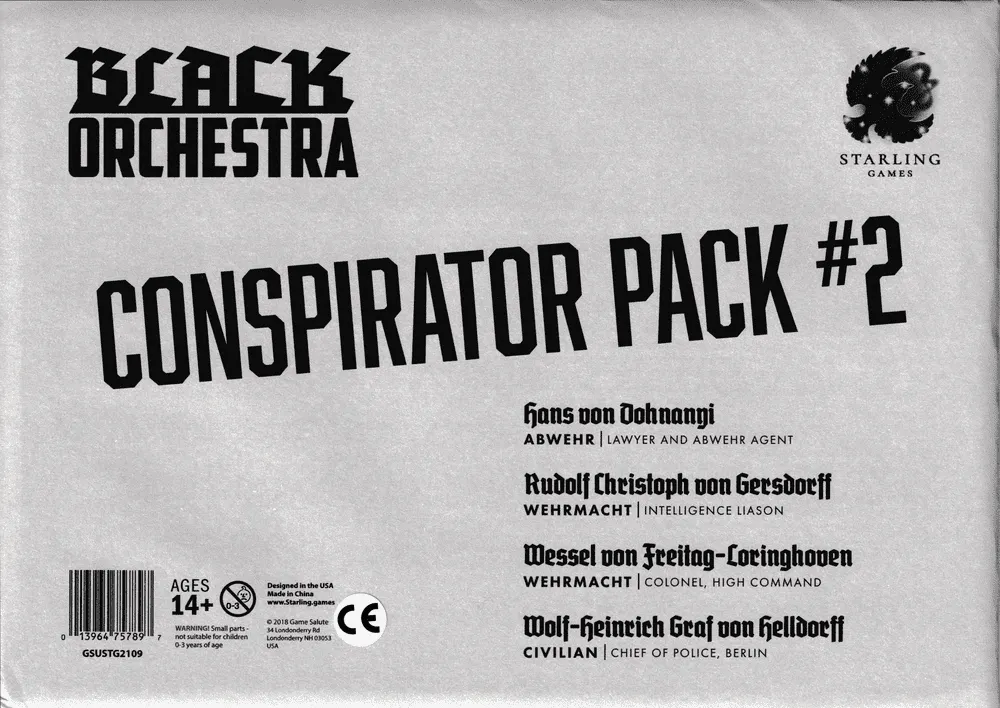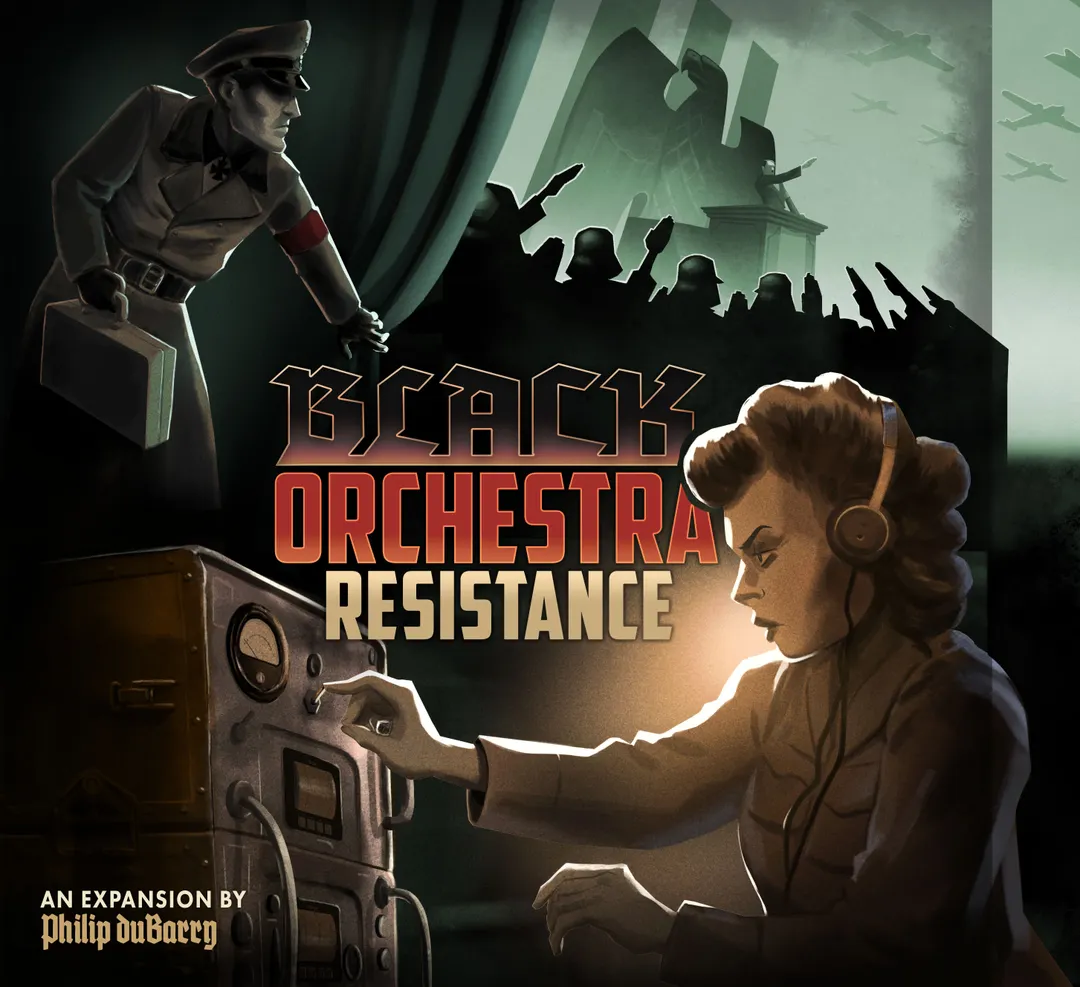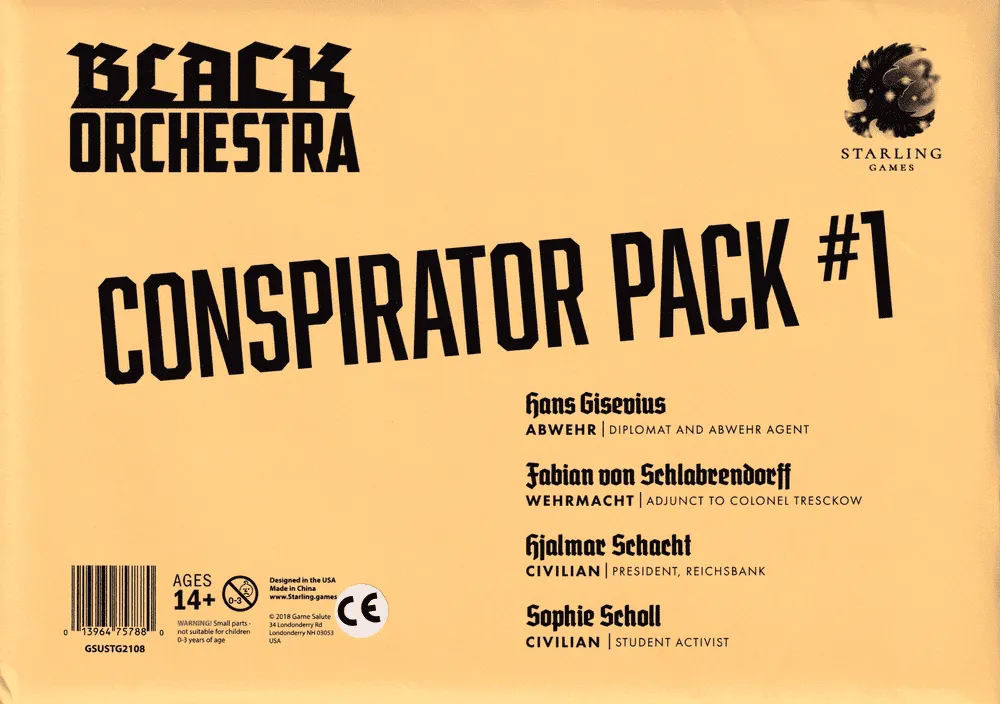
- BGG rating
- 7.7
Black Orchestra: Conspirator Pack #1
- 1–5 players
- 90 min
- Complexity 2.0/5
- 2019
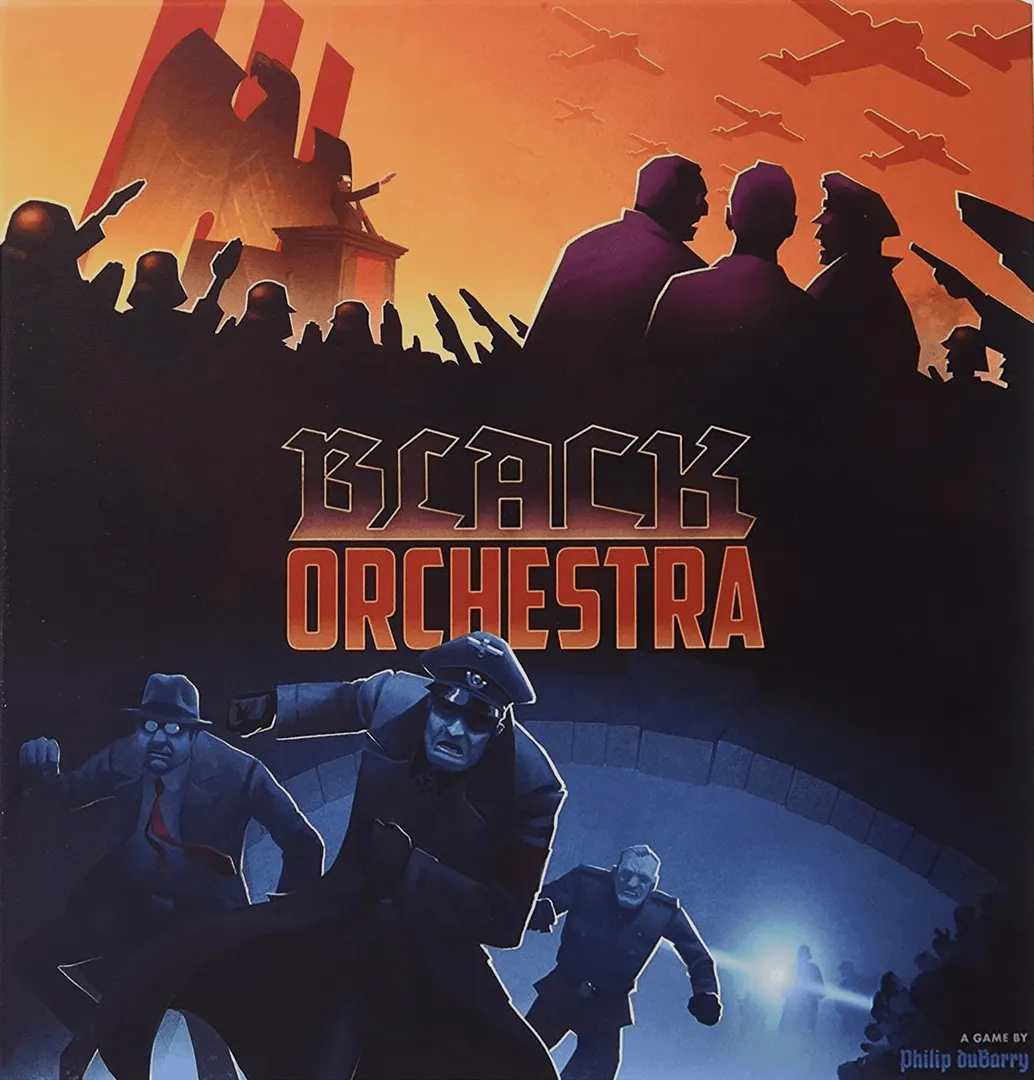
2016
Rules assistance for Black Orchestra
Plain-language explanations of turns, card effects and disputed situations, with official source references and saved question history.
For 1 player
What would you like to know?
Answers come from the official rulebook, with the page to check.
Black Orchestra is a board game released in 2016 for 1–5 players, 90 minutes per game, and ages 14 and up. It was designed by Philip duBarry and its main mechanics are Variable Player Powers, Hand Management, and Set Collection.





As Hitler's grasp on Germany tightens and his maniacal fervor is unmasked, men from the highest levels of the Reich begin to plot his assassination. As the clock ticks and Hitler's ambitions grow, these daring few must build their strength and prepare for the perfect moment to strike. The Gestapo hound their trail, calling these conspirators "Schwarze Kapelle", the Black Orchestra. Will this band of daring patriots save their country from utter ruin before it is too late? Black Orchestra begins with each player choosing a historic figure involved in the conspiracy against Hitler. In this dark and dangerous pursuit, motivation is perhaps your greatest weapon. If you can stay true to your convictions in the face of overwhelming threat and inspire your comrades, then you will be able to use your special ability, attempt plots, and even become zealous (necessary for some extremely daring plots). But every move you make may also increase the suspicion of the authorities. The Gestapo will make routine sweeps, and any players with high suspicion will be arrested and interrogated (possibly resulting in other players being arrested). If you are all arrested or if the Gestapo finds your secret papers, you lose. And the suspicion placed on each conspirator will increase the chances their plots are detected. On a turn, players may take three actions, such as moving, searching for an item, or drawing a card; or, at the cost of one action per die, roll the dice in an attempt to gain even more actions — at the risk of attracting the suspicion of the gestapo. This dice rolling "Conspire" action allows players to make bold moves when most needed. After the actions have been taken, an event card is drawn. The game is played over seven stages of World War 2, represented by seven stacks of event cards. These cards walk you through the events of WWII in a roughly (but not strictly) chronological order. New stages open up new areas of the board, cause Hitler and his deputies to interact with the Conspirators, and present various opportunities or threats. During the final stage, many board spaces become off-limits, as the Allies move closer to Germany. To win, players must collect a plot card and fulfill all necessary requirements listed (such as having Hitler be in a certain space and possessing certain items--detonator & fuse, etc.). The active player may then attempt the plot by rolling the indicated dice, including all additional modifiers and helpful Action cards. The total of number of "Target" symbols needed to kill Hitler is based on Hitler's military support, but a Conspirator's security level decides if any "Eagles" rolled will see them detected, and foil the plot regardless. Players must consider their ability to successfully complete a plot and the relative suspicion levels of the different Conspirators involved. Players will need to work together and agree on the wisest course of action, as well as have a little luck, to succeed. The phenomenon of one player dominating the game because of its cooperative nature is mitigated by the fact that there are no certainties, and often a player will need to make a bold or reckless move to keep the conspiracy alive. Cool heads often prevail, but play it too cool and you may miss your chance. The co-operative dynamic gets really interesting if a player is ever arrested, and fails to resist interrogation, then they will need to make a big decision all by themselves, without revealing their options to the group. No one player can guarantee success. It is hoped that players will have tense conversations similar to those had by the real conspirators and enjoy a truly unique historical experience.
Black Orchestra supports 1–5 players according to the catalogue. This range comes from the publisher’s listed player count, so the game can be set up for any group size within it. Some setups, rules and scoring details may still vary by player count, so check your edition’s rulebook for the exact configuration.
The listed playing time for Black Orchestra is 90 minutes. This is the publisher’s estimate for a full game. The actual duration depends on the group, the player count and familiarity with the rules: first sessions usually run longer, while experienced groups often finish faster. Setup and teaching time are not included in this estimate.
The catalogue lists Black Orchestra for ages 14 and up. This is the publisher’s recommendation and reflects reading demands, rule complexity and small components rather than theme alone. Younger players can often join with help from an adult, so check the age guidance on your edition and consider your group’s experience with board games.
Black Orchestra has a complexity rating of 2.4 out of 5 from BoardGameGeek players, which makes it a medium-light game. The rating reflects how much rules knowledge, planning and decision-making a typical game demands. Expect a longer first teach for heavier games, and use a preparation guide before game night.
Black Orchestra belongs to these categories: World War II and Spies / Secret Agents. Its main mechanics are Variable Player Powers, Hand Management, and Set Collection. Categories describe the theme and setting of a game, while mechanics describe what players actually do on their turns. Each mechanic links to a catalogue hub with similar games, which helps when you want something comparable.
The credited designers of Black Orchestra are: Philip duBarry. These credits come from the published game data and name the people responsible for the game’s design, not its illustrators or publishers. Designer pages on MeepleRules collect other titles by the same designers, which helps when you enjoy a game and want to find similar ones.
The catalogue lists Black Orchestra as a base game. It can be played on its own with the components in the box and does not require any other title. Expansions, if any exist, add new content or rules on top of it and are listed separately in the catalogue with a link back to this base game.