
- BGG rank
- BGG #4,875
- BGG rating
- 7.7
Tunisia
- 1–2 players
- 120–3000 min
- Complexity 4.1/5
- 1995

2007
Rules assistance for Case Blue
Plain-language explanations of turns, card effects and disputed situations, with official source references and saved question history.
For 2 players
What would you like to know?
Answers come from the official rulebook, with the page to check.
Case Blue is a board game released in 2007 for 2 players. It was designed by Dean Essig and its main mechanics are Dice Rolling, Hexagon Grid, and Simulation.
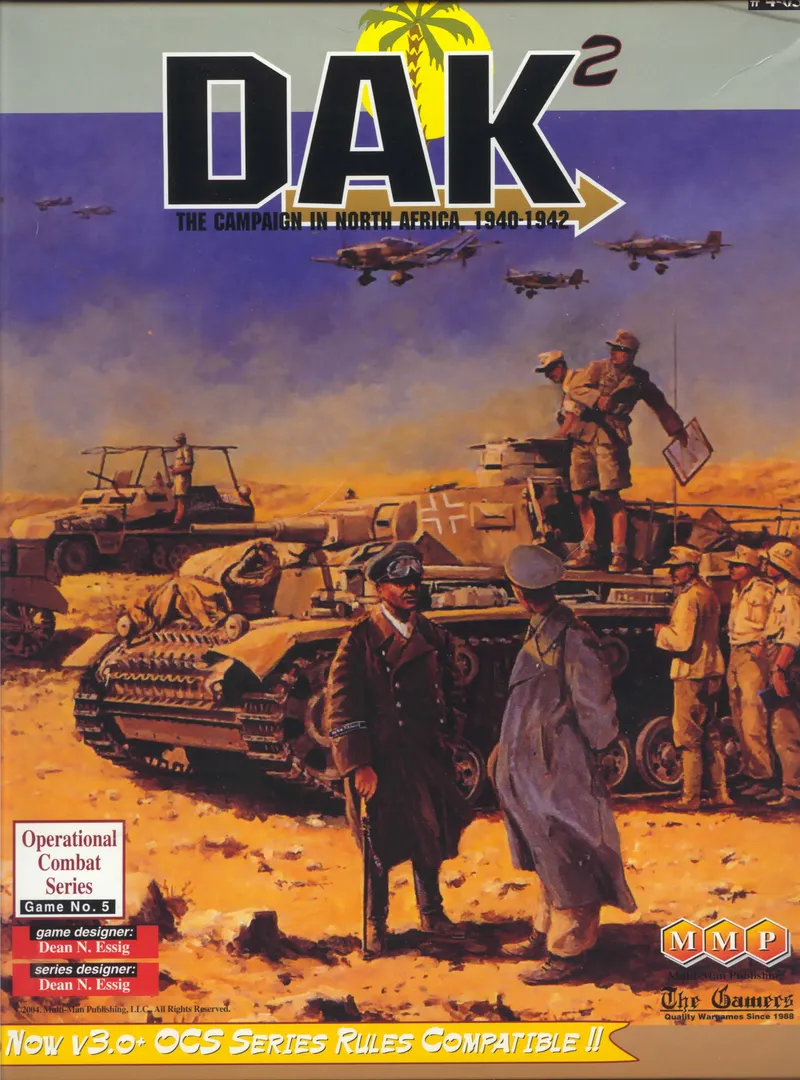




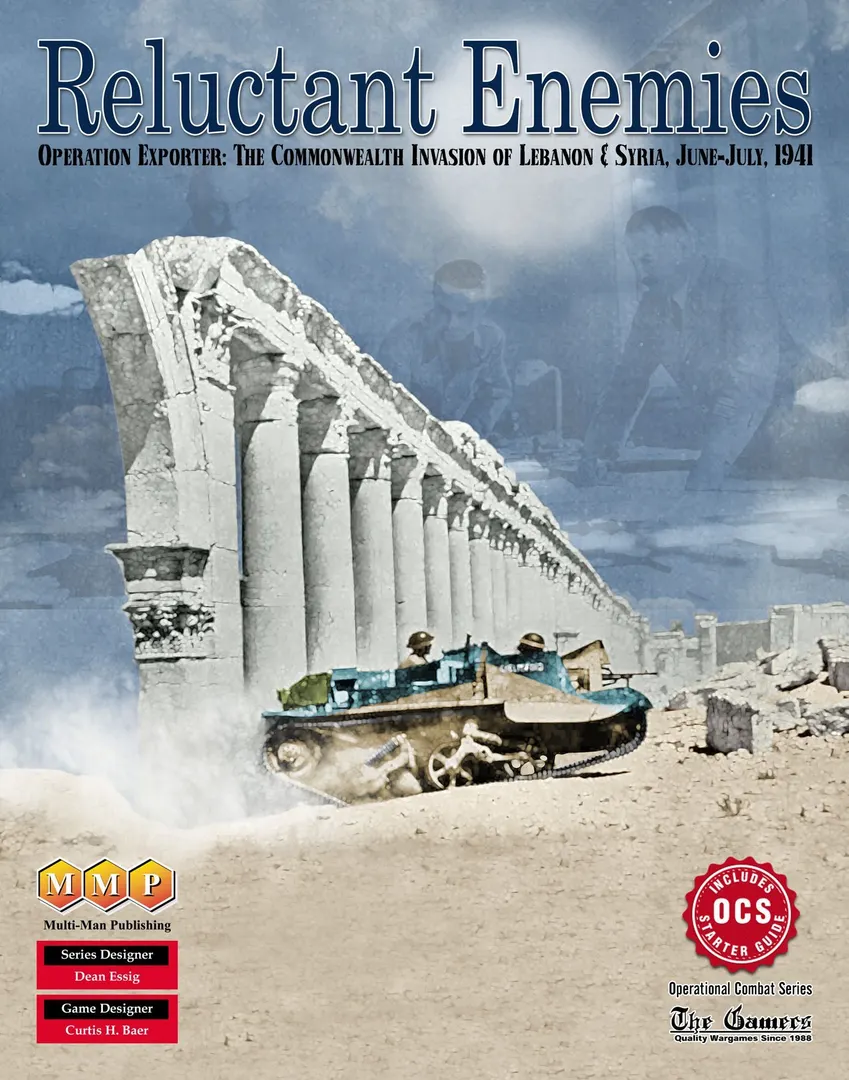
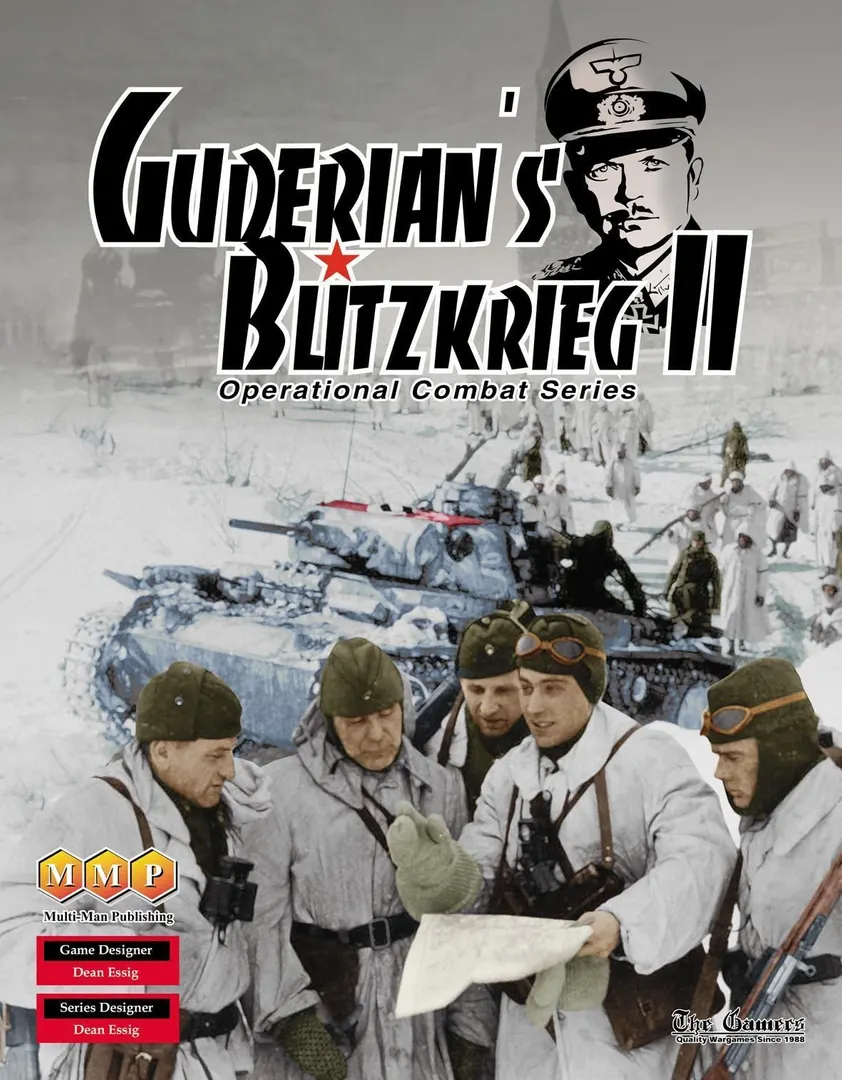

From 1941 through 1943, Army Group South fought a campaign in southern Russia. Hitler issued goals that ranged from the far oil fields to a city on the Volga by the name of Stalingrad, finally deciding not to decide and ordered the far flung Army Group to divide and go for both. Across endless steppe, in the blazing sun and freezing cold, the Axis legions advanced to the edge of Asia and the Caucasus mountains. Some of the oil fields, and most of the city were taken. Then the Red Army had its turn... Case Blue is a game that covers both the Axis advance (1941 and 1942) as well as the Soviet counterattacks (Nov 42 to Jan 43) and the German counteroffensive at Kharkov (Feb-March 1943) that ended the series of campaigns in the south. The game covers in great detail all the operations from October 1941 until May 1943 on a large play area extending from Voronezh almost to the Turkish border. The full scope and grandiose nature of these operations come to life here. Case Blue covers and replaces the 1994 award winning game Enemy at the Gates. Players get to encircle Stalingrad, run their pocket and relief attempts and the many operations that game covered. Case Blue is the 10th game in the award winning Operational Combat System and is the result of over 6 years of intensive research and testing. Players control units ranging from battalions through divisions (OK, there are a few very strange companies), making key decisions on the use, objectives, and means of war. The series is based on modern concepts of maneuver warfare and allows players a far more insightful look into how campaigns (large and small) really work. Case Blue is designed to be played both separately or linked to the 2001 game Guderian's Blitzkrieg II. The monster linked game allows players to run operations on the entire Eastern Front (except for Leningrad) from the fall of 1941 until mid-1943. Multiple scenarios (one map to very large) allow play to be picked up at various key points in the campaign. If you want a serious look at these pivotal campaigns while having fun at the same time, this is the game for you. Perhaps the Operational Combat System finest hour, this game is huge. Game Scale: Game Turn: Half Week Hex: 5 miles / 8 Km Units: Company to Division Game Inventory: Nine 22 x 34" full-color mapsheets (Maps A, B, C, D, E, F, G, H, J, K) One 14 x 22" full-color mapsheet (Map E) Ten dual-side printed countersheets (2,660 1/2" Unit counters) Three dual-side printed countersheets (840 1/2" Marker counters) One 48-page OCS v4.0 series rules booklet One 16-page Case Blue game rules booklet One 80-page Case Blue Scenario Book 1 One 48-page Case Blue Scenario Book 2 One 24-page Case Blue Axis Booklet One 24-page Case Blue Russian Booklet Two 4-page two-color OCS v4.0 Charts & Tables booklets Two 6-sided dice (from MMP web site:)
Case Blue supports 2 players according to the catalogue. This is the publisher’s listed player count, so the game is designed for exactly that number of participants. Variants for other group sizes, if any, are described in the rulebook of your edition, so check it before setting up a different configuration.
Case Blue has a complexity rating of 4.5 out of 5 from BoardGameGeek players, which makes it a heavy game. The rating reflects how much rules knowledge, planning and decision-making a typical game demands. Expect a longer first teach for heavier games, and use a preparation guide before game night.
Case Blue belongs to these categories: Wargame and World War II. Its main mechanics are Dice Rolling, Hexagon Grid, and Simulation. Categories describe the theme and setting of a game, while mechanics describe what players actually do on their turns. Each mechanic links to a catalogue hub with similar games, which helps when you want something comparable.
The credited designers of Case Blue are: Dean Essig. These credits come from the published game data and name the people responsible for the game’s design, not its illustrators or publishers. Designer pages on MeepleRules collect other titles by the same designers, which helps when you enjoy a game and want to find similar ones.
The catalogue lists Case Blue as a base game. It can be played on its own with the components in the box and does not require any other title. Expansions, if any exist, add new content or rules on top of it and are listed separately in the catalogue with a link back to this base game.