

- BGG rank
- BGG #22,372
- BGG rating
- 5.7
Gettysburg
- 2 players
- 120–240 min
- Complexity 2.2/5
- 1958
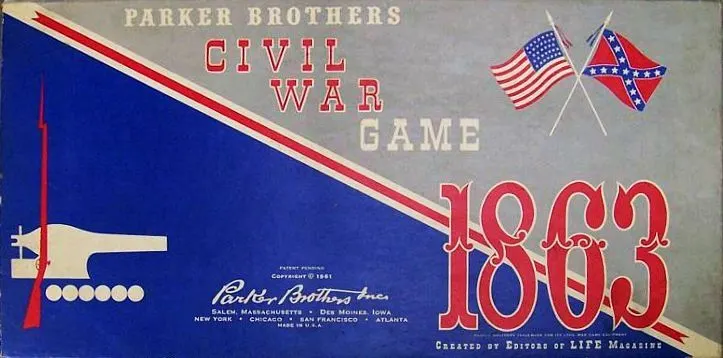
1961
Rules assistance for Civil War Game 1863
Plain-language explanations of turns, card effects and disputed situations, with official source references and saved question history.
For 2 players
What would you like to know?
Answers come from the official rulebook, with the page to check.
Civil War Game 1863 is a board game released in 1961 for 2 players, 30 minutes per game, and ages 10 and up. Its main mechanics are Point to Point Movement, Square Grid, and Grid Movement.

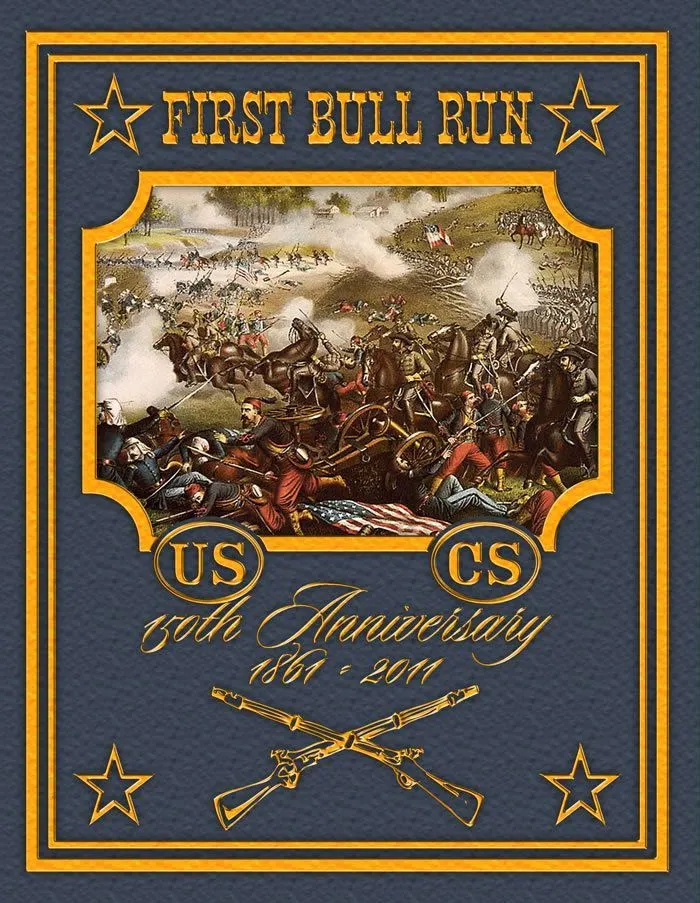


"This game is played by two people. One commands the northern forces, the other commands the southern forces. It is up to you as one of the commanders to develop the strategy and make the decisions which will give you the best chance to win. The course of the war is in your hands. At the beginning of the year 1863, the Confederate and Union armies were closely balanced. Either side could still win. There were differences - the North had more troops while the South had better ones with more mobility. But the decisive battles lay in the future. Final victory would be determined by the same factors for the Union and the Confederacy alike: sufficient fighting strength in the right place at the right time, daring and clever tactics, and luck. The players of this game must fight the same even fight. The same skill, daring and luck are required of you, if you want to win." - Taken from games rules introduction. User review: There are three types of units: infantry, cavalry, and gunboats. Infantry can move one space on land each turn. Cavalry can move up to two spaces on land each turn. Gunboats may move up to two spaces each turn and may transport infantry. Units may move orthogonally and diagonally. The gameboard is an 18 x 18 grid of squares. Starting places for the units, railroads, key cities, mountains, and important waterways are denoted. Players alternate taking turns with the Confederate player moving first. Combat occurs when opposing forces occupy the same space. The rules are more detailed but a larger force always defeats the smaller force. A player forces the opponent to remove units from play by capturing any of the opponent’s key cities. The player who eliminates all of the opponent’s units or gets the opponent to surrender is the winner. [27 December 2012] This game was first published in Life Magazine, volume 50 number 11, 17 March 1961. It was designed by three Life magazine staff members. This Parker Brothers edition was published subsequently, and is thus more accurately described as the second edition. Refer to the brief clip from Life magazine in the graphics.
Civil War Game 1863 supports 2 players according to the catalogue. This is the publisher’s listed player count, so the game is designed for exactly that number of participants. Variants for other group sizes, if any, are described in the rulebook of your edition, so check it before setting up a different configuration.
The listed playing time for Civil War Game 1863 is 30 minutes. This is the publisher’s estimate for a full game. The actual duration depends on the group, the player count and familiarity with the rules: first sessions usually run longer, while experienced groups often finish faster. Setup and teaching time are not included in this estimate.
The catalogue lists Civil War Game 1863 for ages 10 and up. This is the publisher’s recommendation and reflects reading demands, rule complexity and small components rather than theme alone. Younger players can often join with help from an adult, so check the age guidance on your edition and consider your group’s experience with board games.
Civil War Game 1863 has a complexity rating of 1.6 out of 5 from BoardGameGeek players, which makes it a light game. The rating reflects how much rules knowledge, planning and decision-making a typical game demands. Expect a longer first teach for heavier games, and use a preparation guide before game night.
Civil War Game 1863 belongs to these categories: Wargame, Post-Napoleonic, and American Civil War. Its main mechanics are Point to Point Movement, Square Grid, and Grid Movement. Categories describe the theme and setting of a game, while mechanics describe what players actually do on their turns. Each mechanic links to a catalogue hub with similar games, which helps when you want something comparable.
The catalogue lists Civil War Game 1863 as a base game. It can be played on its own with the components in the box and does not require any other title. Expansions, if any exist, add new content or rules on top of it and are listed separately in the catalogue with a link back to this base game.