
- BGG rank
- BGG #24,972
- BGG rating
- 5.8
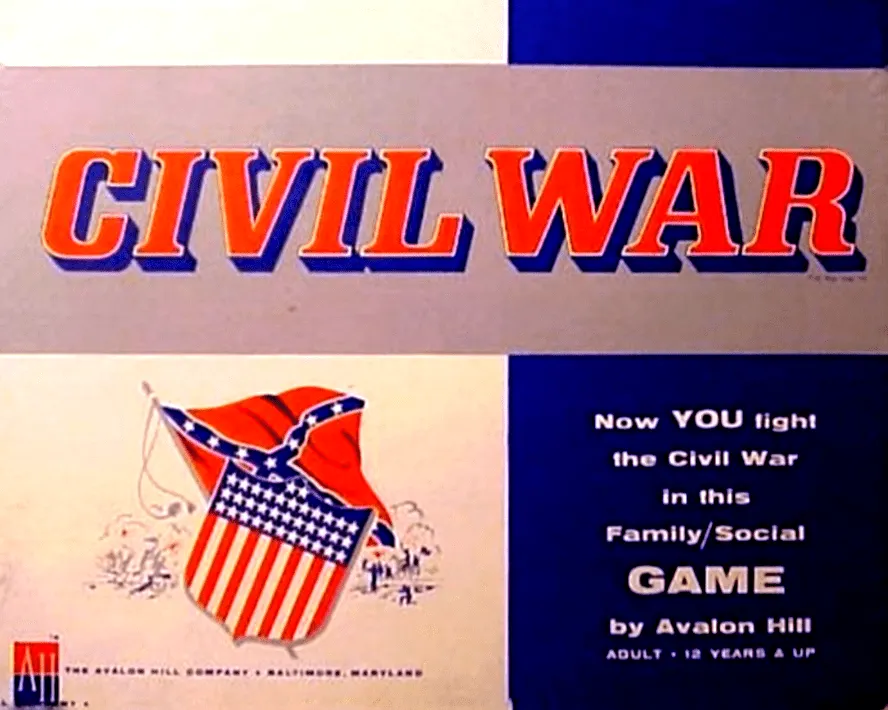
Civil War
- 2 players
- 90–180 min
- Complexity 1.6/5
- 1961
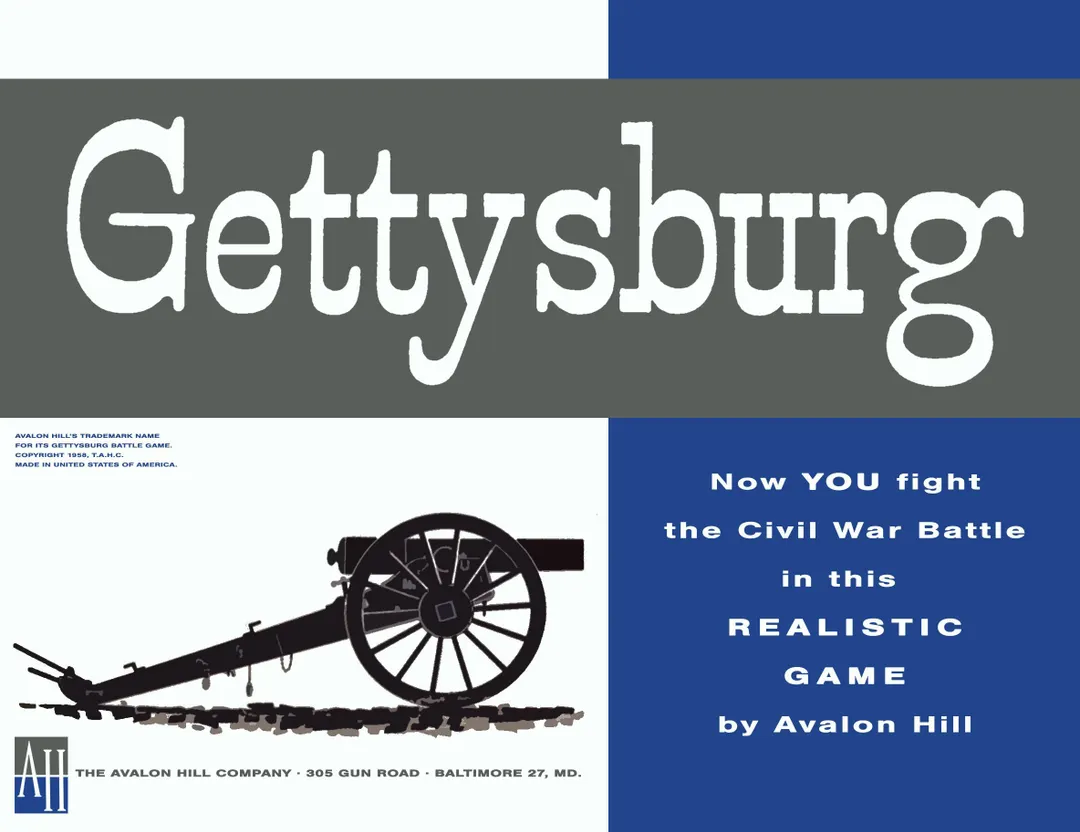
1958
Rules assistance for Gettysburg
Plain-language explanations of turns, card effects and disputed situations, with official source references and saved question history.
For 2 players
What would you like to know?
Answers come from the official rulebook, with the page to check.
Gettysburg is a board game released in 1958 for 2 players, 120–240 minutes per game, and ages 12 and up. It was designed by Charles S. Roberts and its main mechanics are Dice Rolling, Square Grid, and Grid Movement.
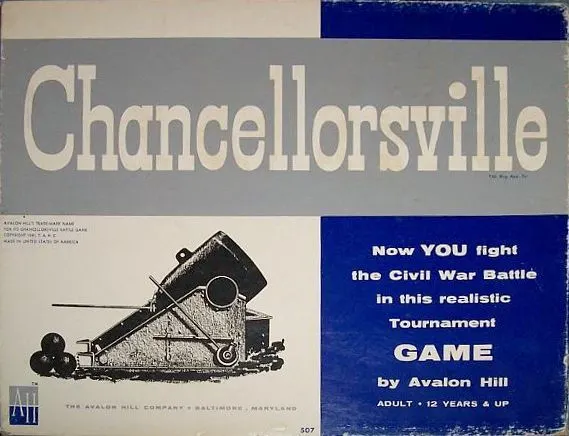
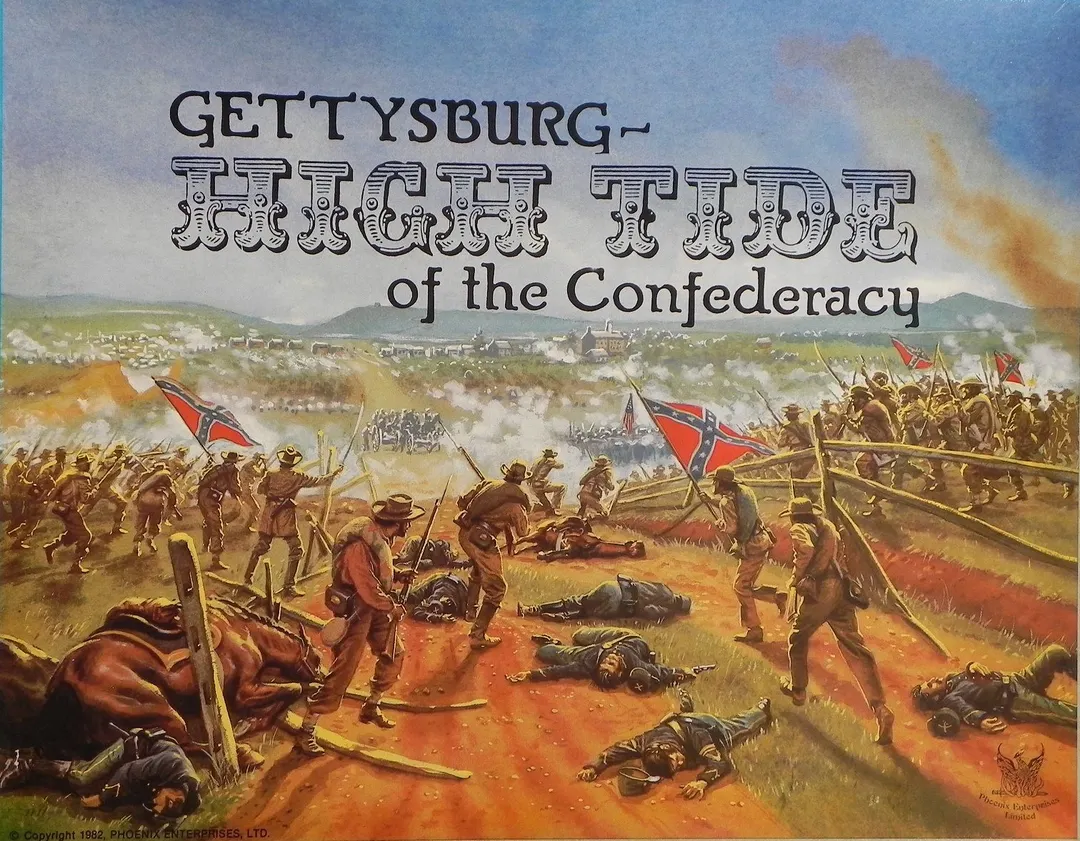
One of the original set of Avalon Hill "Adult Games" that includes U-Boat, Tactics II, Verdict, and Dispatcher. This is one of the earliest "typical" wargames, with movement/strength counters, order of appearance chart, CRT, etc. Board has square grid with squares 1" = 1/4 mile. One hour turns. 27 Confederate counters 41 Union counters Units include infantry, artillery, cavalry, HQs (but had no use), and outposts (pickets, not in '64 Ed.). Roberts redesigned this game in 1961 with hexagons. Although it sold out, Roberts wasn't happy with it. He then re-released it in 1964 with squares again, like the 1958 version. However, the rules were significantly changed. The 1958 version was basically a miniatures game on a map. You used range cards (shown in the illustration) both to move your units and then to check their firing range. Units could rotate on their centers before checking with a range card, which was placed along the front side of the rectangular pieces. You got better odds hitting from a flank. Artillery had double range the of infantry or cavalry (this was only optional as far as I know). There were at least 3 slightly different rule books for the '58, '59, & '60 Ed., all were basically the '58 one. The game also had optional rules for hidden movement. You left the room while your opponent put his pieces on the board and moved them, recorded their new positions and removed them again! If they came within sight of a unit (including an outpost unit), he had to tell you where they were seen, or leave them on the board if still in sight. Line of sight rules for all this. The 1964 version required you to keep your units aligned with the square grid rather than the free form miniatures style movement of the 1958 version. This really didn't work well. Units facing diagonally had to be adjacent to form a solid wall of ZOC sqs. to their front and could not therefore protect their flanks if they spread out any at all. This made doubled and tripled attacks easily possible. Every version would benefit from a road movement bonus rule, x3 at a minimum (but x4 would be better, units that move this fast should not be able to attack that turn, though).
Gettysburg supports 2 players according to the catalogue. This is the publisher’s listed player count, so the game is designed for exactly that number of participants. Variants for other group sizes, if any, are described in the rulebook of your edition, so check it before setting up a different configuration.
The listed playing time for Gettysburg is 120–240 minutes. This is the publisher’s estimate for a full game. The actual duration depends on the group, the player count and familiarity with the rules: first sessions usually run longer, while experienced groups often finish faster. Setup and teaching time are not included in this estimate.
The catalogue lists Gettysburg for ages 12 and up. This is the publisher’s recommendation and reflects reading demands, rule complexity and small components rather than theme alone. Younger players can often join with help from an adult, so check the age guidance on your edition and consider your group’s experience with board games.
Gettysburg has a complexity rating of 2.2 out of 5 from BoardGameGeek players, which makes it a medium-light game. The rating reflects how much rules knowledge, planning and decision-making a typical game demands. Expect a longer first teach for heavier games, and use a preparation guide before game night.
Gettysburg belongs to these categories: Wargame, Civil War, and Post-Napoleonic. Its main mechanics are Dice Rolling, Square Grid, and Grid Movement. Categories describe the theme and setting of a game, while mechanics describe what players actually do on their turns. Each mechanic links to a catalogue hub with similar games, which helps when you want something comparable.
The credited designers of Gettysburg are: Charles S. Roberts. These credits come from the published game data and name the people responsible for the game’s design, not its illustrators or publishers. Designer pages on MeepleRules collect other titles by the same designers, which helps when you enjoy a game and want to find similar ones.
The catalogue lists Gettysburg as a base game. It can be played on its own with the components in the box and does not require any other title. Expansions, if any exist, add new content or rules on top of it and are listed separately in the catalogue with a link back to this base game.