
- BGG rating
- 8.0
Clank!: Sunken Treasures
2–4 players60 min2017
Complexity 2.2/5
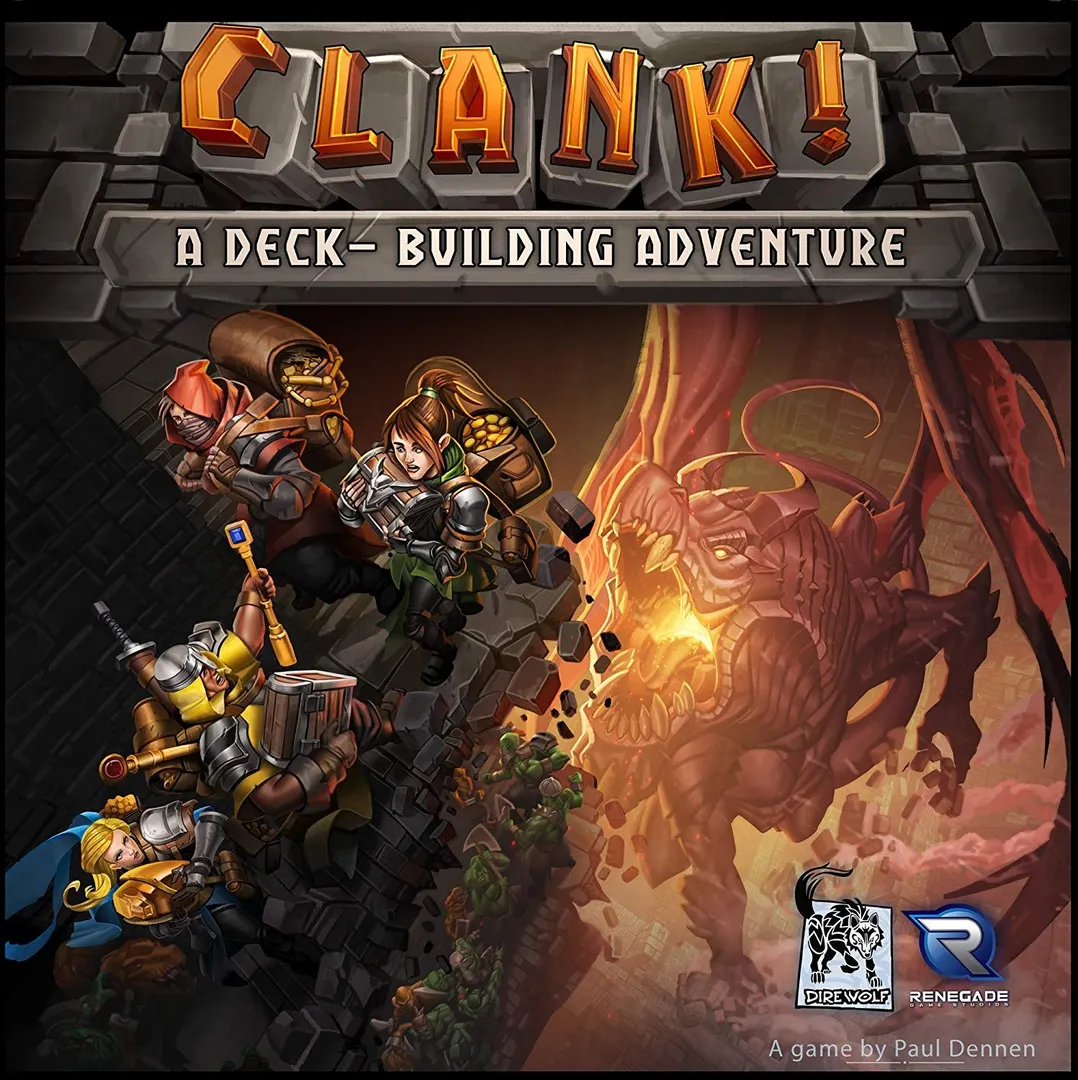
2016
Rules assistance for Clank!: A Deck-Building Adventure
Plain-language explanations of turns, card effects and disputed situations, with official source references and saved question history.
What would you like to know?
Answers come from the official rulebook, with the page to check.
Score the most points among eligible players; ties go to the player with the most valuable Artifact.
About 10 min · 8 steps
Step 1 of 8
No. Taking it is a separate action during your turn; you may take it later if it remains there.
Only one per entry. Leave and re-enter to take another; taking a token is optional.
You cannot use Boots for the rest of that turn. Teleportation may still let you move.
You may spend Swords to reduce its damage by one per Sword. Taking the remaining damage is optional.
Put all Clank! in the Clank! Area into the bag, then draw the Rage Track amount plus one per Danger card; each colored cube damages its matching player, and black cubes are set aside.
You are knocked out. You score only if you have an Artifact and escaped the Depths; otherwise, you cannot be rescued or score.
Yes. Each costs 7 Gold, and you may buy multiple items, including multiple of the same type.
Clank!: A Deck-Building Adventure is a board game released in 2016 for 2–4 players, 30–60 minutes per game, and ages 12 and up. It was designed by Paul Dennen and its main mechanics are Take That, Push Your Luck, and Player Elimination. MeepleRules offers a rules assistant for Clank!: A Deck-Building Adventure that explains turns, card effects and disputed situations in plain language.
2–4 players60 min2017
2–4 players30–60 min2018

2–4 players30–60 min2018
2–4 players30–60 min2019
1–4 players2027

2–4 players90–120 min2019
2–4 players45–90 min2022
2–4 players45–90 min2017
2–4 players60–120 min2024

1–4 players45 min2024
2–4 players120 min2021
1–4 players60–120 min2020

1–5 players60–240 min2026

1–4 players90–120 min2024

1–6 players60–120 min2023
3–6 players45–120 min2022
2–4 players90–240 min2027

2 players20 min2014
Burgle your way to adventure in the deck-building board game Clank! Sneak into an angry dragon's mountain lair to steal precious artifacts. Delve deeper to find more valuable loot. Acquire cards for your deck and watch your thievish abilities grow. Be quick and be quiet. One false step and CLANK! Each careless sound draws the attention of the dragon, and each artifact stolen increases its rage. You can enjoy your plunder only if you make it out of the depths alive! Clank! is a deck-building game. Each player has their own deck, and building yours up is part of playing the game. You start each of your turns with five cards in your hand, and you'll play them all in any order you choose. Most cards will generate resources, of which there are three different kinds: Skill, which is used to acquire new cards for your deck. Swords, which are used to fight the monsters that infest the dungeon. Boots, which are used to move around the board. Every time you acquire a new card, you put it face up in your discard pile. Whenever you need to draw a card and find your deck empty, you shuffle your discard pile and turn it face down to form a new deck. With each shuffle, your newest cards become part of a bigger and better deck! Each player starts with the same cards in their deck, but they’ll acquire different cards during their turns. Because cards can do many different things, each player’s deck (and strategy) will become more and more different as the game unfolds. During the game, you have two goals: Retrieve an Artifact token and escape the dragon by returning to the place you started, outside of the dungeon. Accumulate enough points with your Artifact and other loot to beat out your opponents and earn the title of Greatest Thief in the Realm!
Measured on: Dire Wolf/Renegade Game Studios English edition (2016)
Use the rules assistant for Clank!: A Deck-Building Adventure to describe a turn, card effect or disputed situation. Get a plain-language explanation with official source references, then return to the question in your saved history. Select your edition when available so the sources match your game.
Ask about the rulesClank!: A Deck-Building Adventure supports 2–4 players according to the catalogue. This range comes from the publisher’s listed player count, so the game can be set up for any group size within it. Some setups, rules and scoring details may still vary by player count, so check your edition’s rulebook for the exact configuration.
The listed playing time for Clank!: A Deck-Building Adventure is 30–60 minutes. This is the publisher’s estimate for a full game. The actual duration depends on the group, the player count and familiarity with the rules: first sessions usually run longer, while experienced groups often finish faster. Setup and teaching time are not included in this estimate.
The catalogue lists Clank!: A Deck-Building Adventure for ages 12 and up. This is the publisher’s recommendation and reflects reading demands, rule complexity and small components rather than theme alone. Younger players can often join with help from an adult, so check the age guidance on your edition and consider your group’s experience with board games.
Clank!: A Deck-Building Adventure has a complexity rating of 2.2 out of 5 from BoardGameGeek players, which makes it a medium-light game. The rating reflects how much rules knowledge, planning and decision-making a typical game demands. Expect a longer first teach for heavier games, and use a preparation guide before game night.
Clank!: A Deck-Building Adventure belongs to these categories: Fantasy and Adventure. Its main mechanics are Take That, Push Your Luck, and Player Elimination. Categories describe the theme and setting of a game, while mechanics describe what players actually do on their turns. Each mechanic links to a catalogue hub with similar games, which helps when you want something comparable.
The credited designers of Clank!: A Deck-Building Adventure are: Paul Dennen. These credits come from the published game data and name the people responsible for the game’s design, not its illustrators or publishers. Designer pages on MeepleRules collect other titles by the same designers, which helps when you enjoy a game and want to find similar ones.
The catalogue lists Clank!: A Deck-Building Adventure as a base game. It can be played on its own with the components in the box and does not require any other title. Expansions, if any exist, add new content or rules on top of it and are listed separately in the catalogue with a link back to this base game.


