
- BGG rank
- BGG #25
- BGG rating
- 8.2
Nemesis
1–5 players90–180 min2018
Complexity 3.5/5
2026
Rules assistance for Dark Omen
Plain-language explanations of turns, card effects and disputed situations, with saved question history.
What would you like to know?
Answers come from the official rulebook, with the page to check.
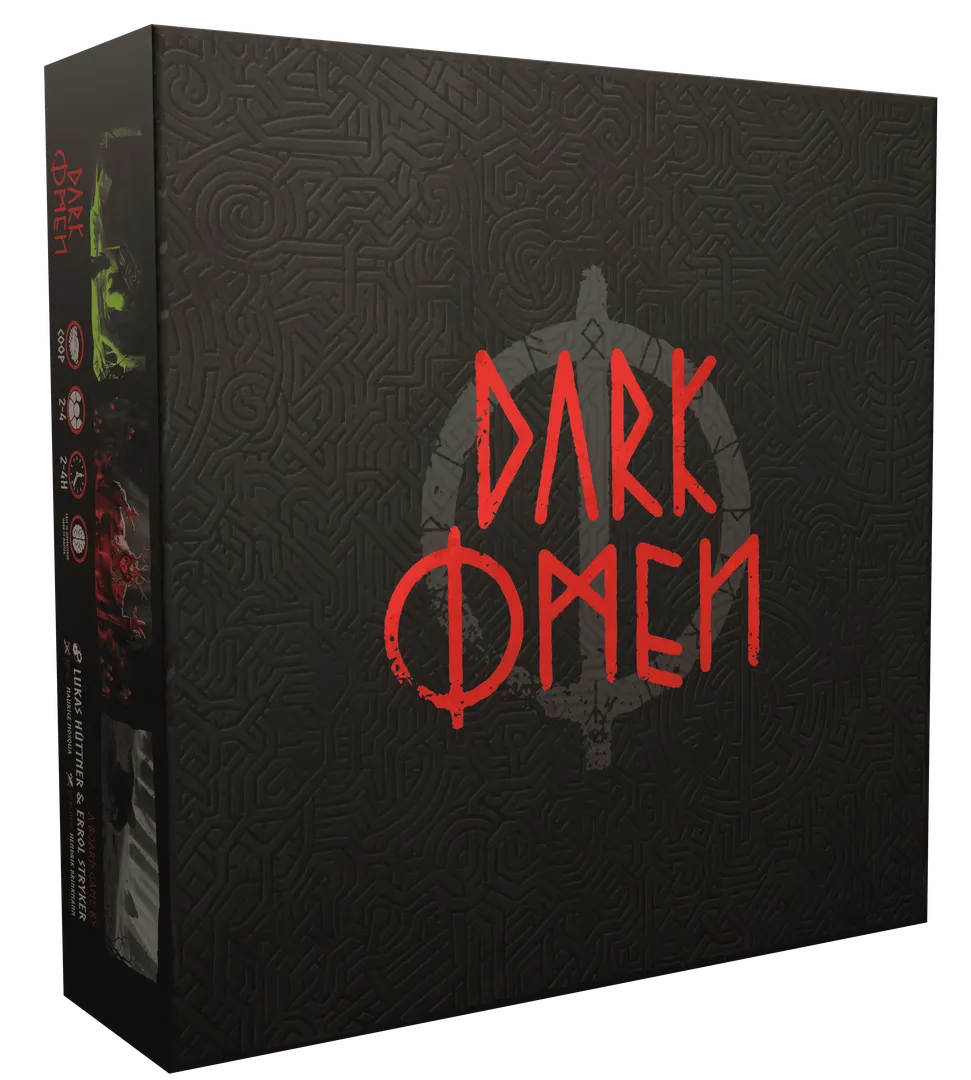
Dark Omen is a board game released in 2026 for 1–4 players, 120–720 minutes per game, and ages 12 and up. It was designed by Lukas Hüttner and Errol Stryker and its main mechanics are Dice Rolling, Cooperative Game, and Scenario / Mission / Campaign Game.
1–5 players90–180 min2018
1–4 players30–90 min2022

1–5 players120–180 min2016
1–6 players45–120 min2017

1–6 players60 min2022

1–5 players60–150 min2017
1–4 players60 min2019
1–4 players60–90 min2012
2–4 players45–120 min2022

1–4 players45–180 min2018
1–4 players60–180 min2023
1–5 players90–120 min2017
Dark Omen is a unique role playing board game. It brings together elements of your favourite games growing up, with game mechanics which the industry has never seen. Dark Omen immerses players in a tangible world with an enthralling story, epic characters, and stunning artwork. We call it an Adventure/Roll Playing game, but it is much more. Players set forth in a lost Nordic time, and are faced with strategic decision making, resources management, epic battles, and puzzle solving. It is a 1-4 player cooperative game, explored campaign style through a variety of quests. What makes Dark Omen special? Well, there are several mechanics, which are not found in any other game. The Unique Obstacle System: The Dark Omen board has several transparent, moveable layers underneath the main (top) board. These layers move independently. Each layers has markings on it which represent the obstacles, or maze-like walls, which dictate how players can move around the board. From the view of the top board, the Obstacles (or walls), move underneath. In essence, this means that the board state changes throughout the game, and no two play throughs are similar. The Rune Throw system: At intervals during the game, players reach into a bag of Runes (4 sided tokens), take 5 pieces (of 16 total), and drop them on the board. Since there are 64 total possible sides of Runes, no two Rune Throws are the same. Players then select a card from the Rune Cards, which correspond to the Runes which they have thrown. The Rune Cards are a powerful handicap system which effect players in significant ways. These effect movement, battle, resources management, and much more. The Rune effects stay in play for several Omens, so players need to adjust their strategies accordingly. Sometimes this can be a real pain, sometimes it makes things much easier. This is a very dynamic system, and is individual for each Rune Throw, Omen, and play-through. Action Points: Players have 6 Action points each per turn, which they can use to move on the board, for battle, and most other game activities. Players don't need to use all of their AP at once and can choose to alternate spending AP during the same turn. Morale Points: In addition, each player has a number of Morale Points, which are tracked on their character board. Morale Points are heavily integrated into battle, overcoming board obstacles, and solving puzzles. Battle: Battle in Dark Omen is done by dice rolling, and incorporating weapon and armor buffs. Battle has two stages: 1) Attack Roll, where players roll their dice against the dice of the enemy. The outcome of the Attack Roll leads to the Damage Roll, where the winning player (or enemy) rolls for damage against the other. Ties normally lead to no Damage Roll, however many game elements lead to advantages for ties, and other battle situations. Win and Lose conditions: Dark Omen has 4 chapters, each with 5-6 Omens (Quests). The goal of the game is play through all of these adventures, without losing to the Darkness. Each failed or succeeded Omen affects the Darkness meter. If the players lose too many Omens, then the Darkness vanquished, and the game is lost. By completing Omens, players hold the Darkness at bay, and can even move the meter to the light. -description from publisher
Dark Omen supports 1–4 players according to the catalogue. This range comes from the publisher’s listed player count, so the game can be set up for any group size within it. Some setups, rules and scoring details may still vary by player count, so check your edition’s rulebook for the exact configuration.
The listed playing time for Dark Omen is 120–720 minutes. This is the publisher’s estimate for a full game. The actual duration depends on the group, the player count and familiarity with the rules: first sessions usually run longer, while experienced groups often finish faster. Setup and teaching time are not included in this estimate.
The catalogue lists Dark Omen for ages 12 and up. This is the publisher’s recommendation and reflects reading demands, rule complexity and small components rather than theme alone. Younger players can often join with help from an adult, so check the age guidance on your edition and consider your group’s experience with board games.
Dark Omen has a complexity rating of 3.3 out of 5 from BoardGameGeek players, which makes it a medium-weight game. The rating reflects how much rules knowledge, planning and decision-making a typical game demands. Expect a longer first teach for heavier games, and use a preparation guide before game night.
Dark Omen belongs to these categories: Adventure. Its main mechanics are Dice Rolling, Cooperative Game, and Scenario / Mission / Campaign Game. Categories describe the theme and setting of a game, while mechanics describe what players actually do on their turns. Each mechanic links to a catalogue hub with similar games, which helps when you want something comparable.
The credited designers of Dark Omen are: Lukas Hüttner and Errol Stryker. These credits come from the published game data and name the people responsible for the game’s design, not its illustrators or publishers. Designer pages on MeepleRules collect other titles by the same designers, which helps when you enjoy a game and want to find similar ones.
The catalogue lists Dark Omen as a base game. It can be played on its own with the components in the box and does not require any other title. Expansions, if any exist, add new content or rules on top of it and are listed separately in the catalogue with a link back to this base game.
