- BGG rating
- 7.5
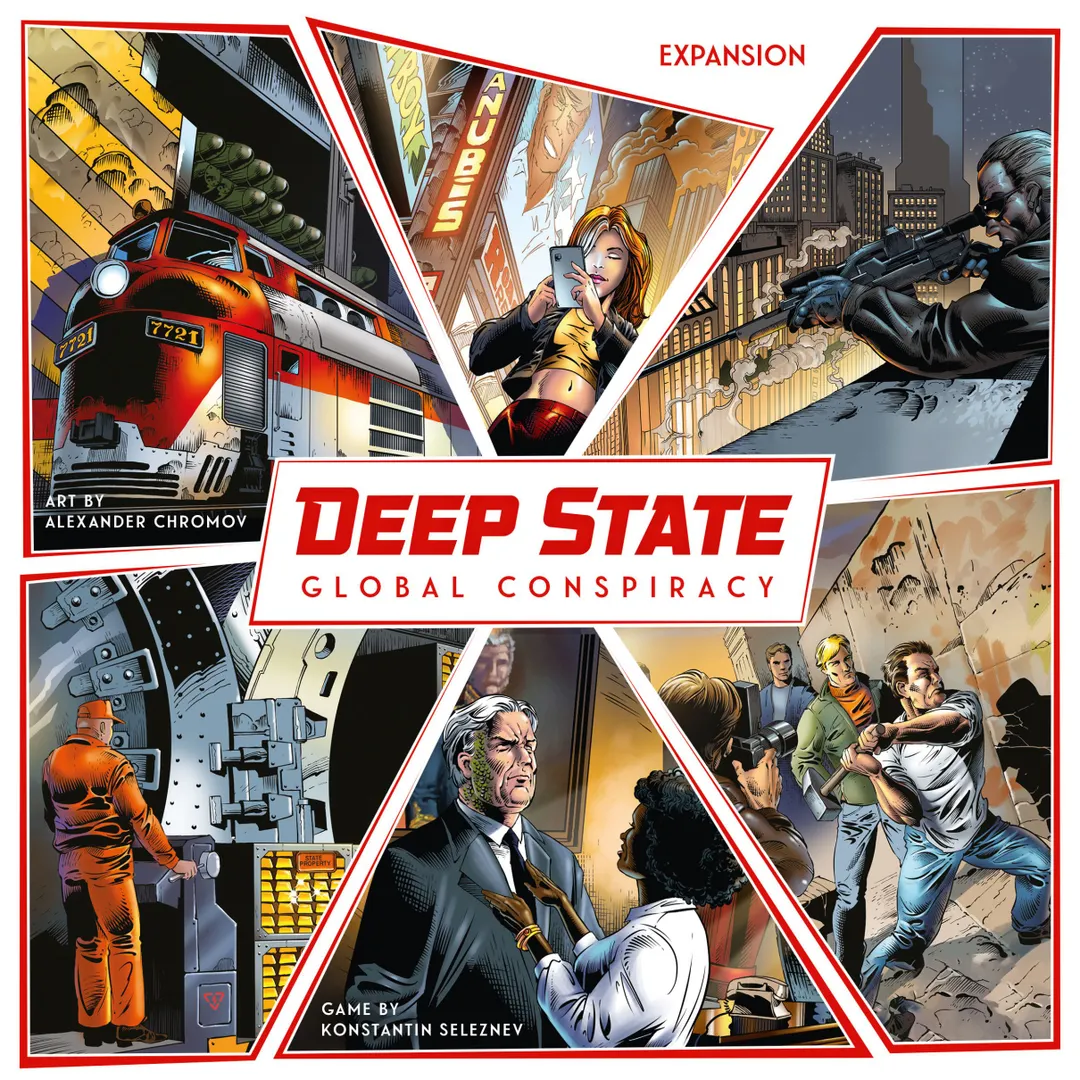
Deep State: Global Conspiracy
- 1–5 players
- 40–75 min
- Complexity 2.3/5
- 2020
2019
Rules assistance for Deep State: New World Order
Plain-language explanations of turns, card effects and disputed situations, with official source references and saved question history.
For 1 player
What would you like to know?
Answers come from the official rulebook, with the page to check.
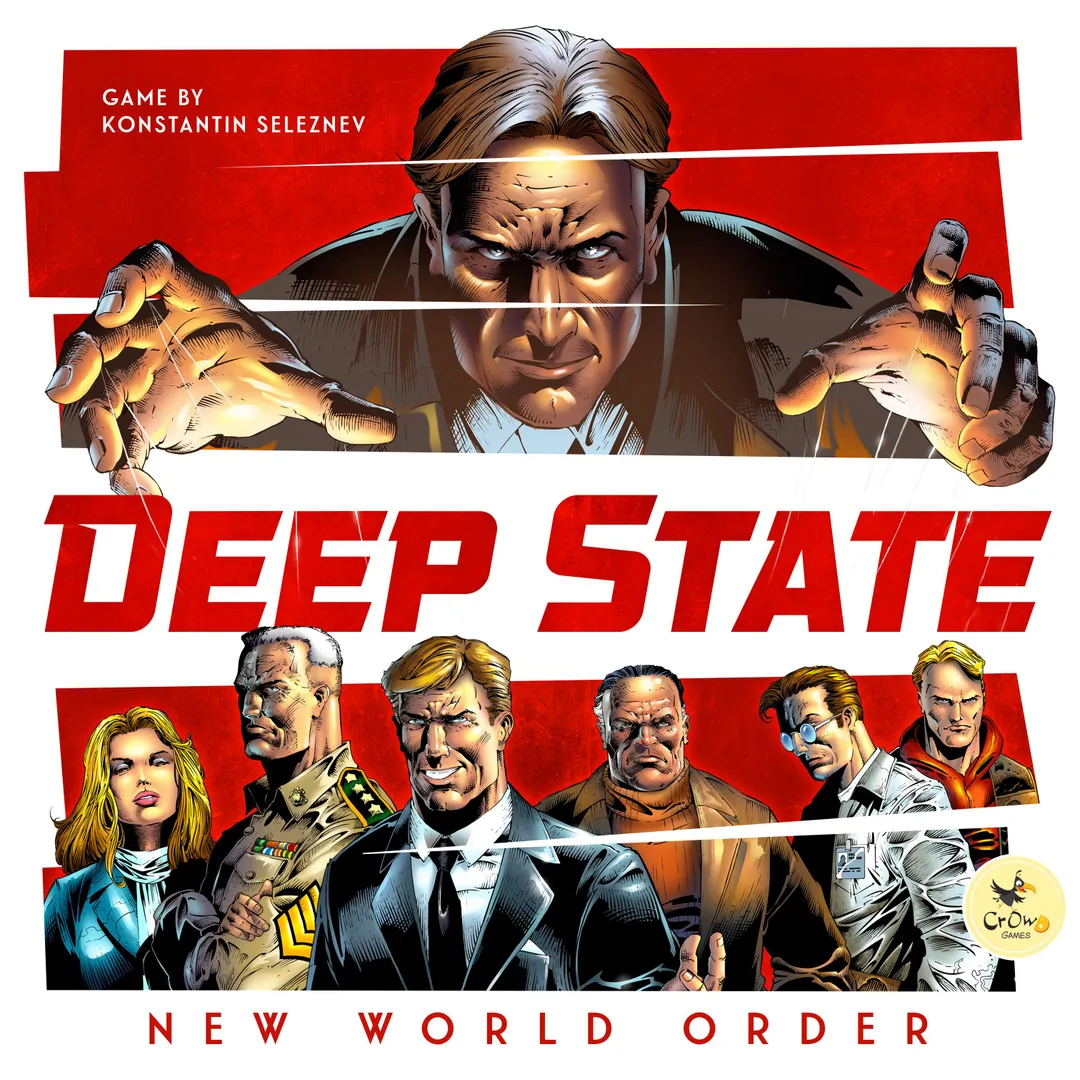
Deep State: New World Order is a board game released in 2019 for 1–5 players, 40–75 minutes per game, and ages 14 and up. It was designed by Konstantin Seleznev and its main mechanics are Hand Management, Set Collection, and Auction / Bidding.







It is the time of the 20th century, a century of skyrocketing technological development, a century of new economic and political relations, a century of two World Wars, a century of revolutions. For the first time in history, the creation of a single world government became possible. You command a subdivision at "The Committee" — a secret organization working towards becoming that government. During the game, you dispatch your network of agents to infiltrate political, financial, and research institutions. You make treaties with prominent organizations, both well-known and secret, and carry out covert operations. You head up history-shaping projects, including Comintern and Unified Nations. Most importantly, you compete with other subdivision heads to become the only puppet master of the world! All you do is shrouded in secrecy. The world knows nothing of you, and it will stay that way. Even as you stand at the head of The Committee and become the ruler of the world! Deep State: New World Order is a dystopian game of world domination and global conspiracies. The game takes place over several rounds, and in the course of a round, players begin with the action phase, which is followed by the takeover phase. Those two phases repeat, then at the end of the round comes the treaty phase. During the action phase, each player performs one action, the most important of which is to send your agents to infiltrate political, financial, and research institutions represented by objective cards in the Infiltration Zone. You must race for objective cards as other players can send more agents to intercept the card they need. Players can also advance toward World Domination projects, including Comintern, Unified Nations, Spyware, and Deep State itself, which gives players tangible advantages in the game. They may also choose to carry out covert operations that provide a lot of influence while requiring the sacrifice of agents. During the takeover phase, players take their captured cards and return some of their agents from them. The treaty phase begins when all objective cards in the Infiltration Zone have been captured. Each player can then make one treaty that gets them working with mighty organizations, some known the world over, while others hide in secret. At the end of the game, players calculate their influence (victory points) that are generated by their objective cards, by participation in global projects, and by their treaty cards. Many cards interact with each other, generating even more influence. The player with the most influence wins the game, becoming master of the world we know.
Deep State: New World Order supports 1–5 players according to the catalogue. This range comes from the publisher’s listed player count, so the game can be set up for any group size within it. Some setups, rules and scoring details may still vary by player count, so check your edition’s rulebook for the exact configuration.
The listed playing time for Deep State: New World Order is 40–75 minutes. This is the publisher’s estimate for a full game. The actual duration depends on the group, the player count and familiarity with the rules: first sessions usually run longer, while experienced groups often finish faster. Setup and teaching time are not included in this estimate.
The catalogue lists Deep State: New World Order for ages 14 and up. This is the publisher’s recommendation and reflects reading demands, rule complexity and small components rather than theme alone. Younger players can often join with help from an adult, so check the age guidance on your edition and consider your group’s experience with board games.
Deep State: New World Order has a complexity rating of 2.5 out of 5 from BoardGameGeek players, which makes it a medium-light game. The rating reflects how much rules knowledge, planning and decision-making a typical game demands. Expect a longer first teach for heavier games, and use a preparation guide before game night.
Deep State: New World Order belongs to these categories: Political and Spies / Secret Agents. Its main mechanics are Hand Management, Set Collection, and Auction / Bidding. Categories describe the theme and setting of a game, while mechanics describe what players actually do on their turns. Each mechanic links to a catalogue hub with similar games, which helps when you want something comparable.
The credited designers of Deep State: New World Order are: Konstantin Seleznev. These credits come from the published game data and name the people responsible for the game’s design, not its illustrators or publishers. Designer pages on MeepleRules collect other titles by the same designers, which helps when you enjoy a game and want to find similar ones.
The catalogue lists Deep State: New World Order as a base game. It can be played on its own with the components in the box and does not require any other title. Expansions, if any exist, add new content or rules on top of it and are listed separately in the catalogue with a link back to this base game.