
- BGG rank
- BGG #6,463
- BGG rating
- 6.8
House of Cats
- 1–6 players
- 15–20 min
- Complexity 1.3/5
- 2023
2011
Rules assistance for Djam
Plain-language explanations of turns, card effects and disputed situations, with official source references and saved question history.
For 2 players
What would you like to know?
Answers come from the official rulebook, with the page to check.
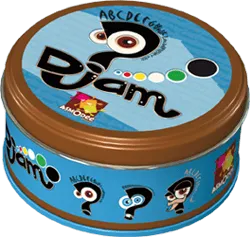
Djam is a board game released in 2011 for 2–6 players, 15 minutes per game, and ages 10 and up. It was designed by William Attia and its main mechanics are Dice Rolling.

Classic themes or offset, a handful of dice and letters. Shake well, discover the theme and the letters of words to find and respond as quickly as possible! At the beginning of the game, choose a card with 6 themes. At each turn, a player rolls a die defining the topic and then a color dice and dice marked with letters. The color dice determines the first letter of the word to find (in agreement with the assigned topic). The players play together and are entitled to one proposal per round. They earn as many chips as found in letters from the word found. Depending on the number of players, the last or the last 2 participants were not allowed to speak. If the color dice falls on the black face, one player can make a proposal. He must find a word does not include any letters learned. He won 4 chips if the word is correct and if it loses 4 proposal includes a letter from. The game ends when there are no more chips in reserve. The player who has the most wins. Much of this taken from the French here : http://fr.asmodee.com/ressources/jeux_versions/djam.php Des thèmes classiques ou décalés, une poignée de dés et des lettres. Agitez bien, découvrez le thème et les lettres des mots à trouver et répondez aussi vite que possible !Au début de la partie, on choisit une carte comprenant 6 thèmes. À chaque tour, un joueur lance un dé définissant le thème, puis un dé de couleurs et des dés marqués de lettres. Le dé de couleurs détermine la première lettre du mot à trouver (en accord avec le thème imposé). Les joueurs jouent en même temps et ont droit à une seule proposition par tour. Ils gagnent autant de jetons que de lettres tirées présentes dans le mot trouvé. Selon le nombre de joueurs, le dernier ou les 2 derniers participants n’ont pas le droit de parler. Si le dé de couleur tombe sur la face noire, un seul joueur peut faire une proposition. Il doit trouver un mot ne comprenant aucune des lettres tirées. Il remporte 4 jetons si son mot est correct et en perd 4 si sa proposition comporte une des lettres tirées. La partie se termine quand il n’y a plus de jetons en réserve. Le joueur qui en possède le plus l’emporte.
Djam supports 2–6 players according to the catalogue. This range comes from the publisher’s listed player count, so the game can be set up for any group size within it. Some setups, rules and scoring details may still vary by player count, so check your edition’s rulebook for the exact configuration.
The listed playing time for Djam is 15 minutes. This is the publisher’s estimate for a full game. The actual duration depends on the group, the player count and familiarity with the rules: first sessions usually run longer, while experienced groups often finish faster. Setup and teaching time are not included in this estimate.
The catalogue lists Djam for ages 10 and up. This is the publisher’s recommendation and reflects reading demands, rule complexity and small components rather than theme alone. Younger players can often join with help from an adult, so check the age guidance on your edition and consider your group’s experience with board games.
Djam has a complexity rating of 1.0 out of 5 from BoardGameGeek players, which makes it a light game. The rating reflects how much rules knowledge, planning and decision-making a typical game demands. Expect a longer first teach for heavier games, and use a preparation guide before game night.
Djam belongs to these categories: Word Game and Dice. Its main mechanics are Dice Rolling. Categories describe the theme and setting of a game, while mechanics describe what players actually do on their turns. Each mechanic links to a catalogue hub with similar games, which helps when you want something comparable.
The credited designers of Djam are: William Attia. These credits come from the published game data and name the people responsible for the game’s design, not its illustrators or publishers. Designer pages on MeepleRules collect other titles by the same designers, which helps when you enjoy a game and want to find similar ones.
The catalogue lists Djam as a base game. It can be played on its own with the components in the box and does not require any other title. Expansions, if any exist, add new content or rules on top of it and are listed separately in the catalogue with a link back to this base game.