
- BGG rank
- BGG #1,647
- BGG rating
- 8.0
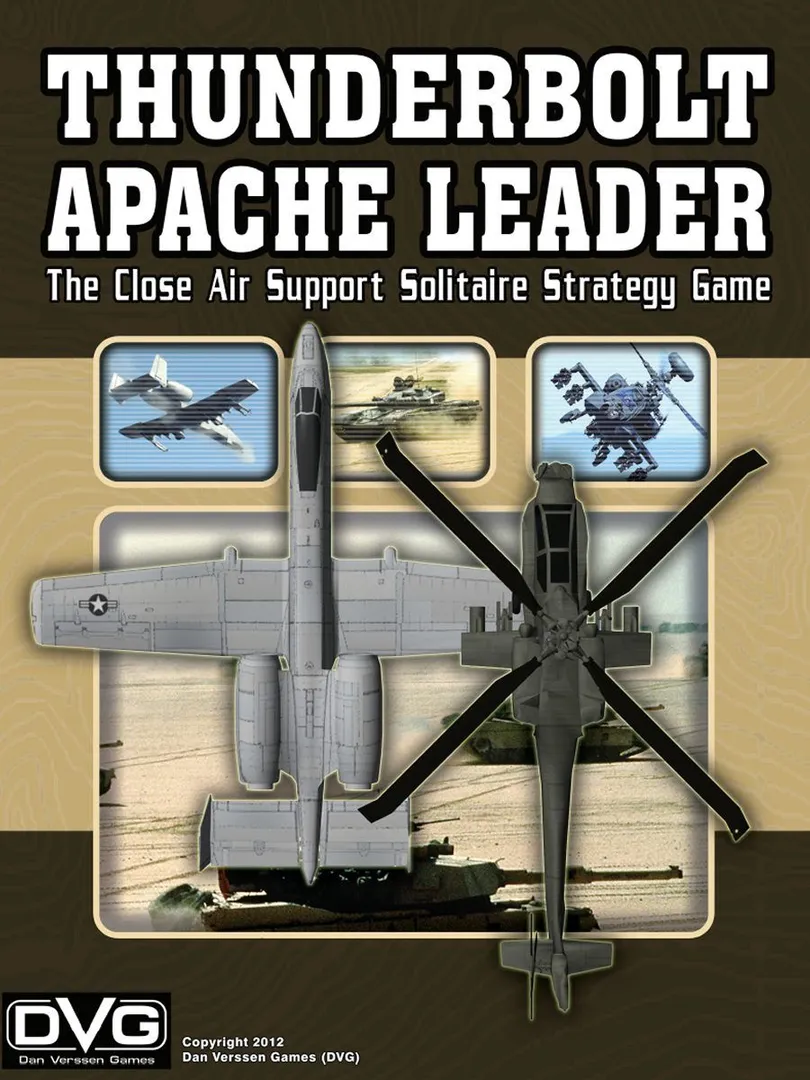
Thunderbolt Apache Leader
- 1 player
- 90 min
- Complexity 3.3/5
- 2012

2017
Rules assistance for Donetsk: Battle for The Airport
Plain-language explanations of turns, card effects and disputed situations, with official source references and saved question history.
What would you like to know?
Answers come from the official rulebook, with the page to check.
Donetsk: Battle for The Airport is a board game released in 2017 for 1–2 players, 60–180 minutes per game, and ages 11 and up. It was designed by Ryan Kirk and its main mechanics are Hexagon Grid and Simulation.






Description from the publisher: Donetsk: The Battle for the Airport is the feature magazine game included in Yaah! #9 by Flying Pig Games. Donetsk is not like most tactical level games on the market. First, it differs in scale - while units are relatively small (squads,individual teams and vehicles) the hexes are relatively large(approx. 150m). This was done to simulate the relative emptiness of the modern battlefield as compared to earlier conflicts. Modern combat units move slower and more cautiously due to the increased range and lethality of modern weapons. These factors explain why leg unit movement factors are low and there are no ‘close assault’ rules like earlier conflict period tactical simulations. Second, even though the battle was called Little Stalingrad, unlike the forces involved in that pivotal WW2 battle, the forces in these battles were very brittle. It did not take many setbacks and casualties before a side lost their aggressive spirit and will to fight. The central game mechanic that depicts this, which the player needs to manage, is initiative /Hesitation. Protecting your Initiative Level is critical to keeping your tactical options and chances for victory open. Initially the player with the highest initiative normally gets to activate first - especially if in a close quarters battle in the Terminals the ability to fire first or withdraw from a bad situation before the other side can fire can be critical. Later, if your initiative level drops to your Hesitation Level then your options become very limited. If on the Offensive, the player is left with ranged fire hoping to attrition the defender to victory. If on the Defensive, then the other player can be more aggressive and it becomes very hard to hold important objectives in the face of a determined assault. Therefore,being sensitive to casualties is critical to winning.
Donetsk: Battle for The Airport supports 1–2 players according to the catalogue. This range comes from the publisher’s listed player count, so the game can be set up for any group size within it. Some setups, rules and scoring details may still vary by player count, so check your edition’s rulebook for the exact configuration.
The listed playing time for Donetsk: Battle for The Airport is 60–180 minutes. This is the publisher’s estimate for a full game. The actual duration depends on the group, the player count and familiarity with the rules: first sessions usually run longer, while experienced groups often finish faster. Setup and teaching time are not included in this estimate.
The catalogue lists Donetsk: Battle for The Airport for ages 11 and up. This is the publisher’s recommendation and reflects reading demands, rule complexity and small components rather than theme alone. Younger players can often join with help from an adult, so check the age guidance on your edition and consider your group’s experience with board games.
Donetsk: Battle for The Airport has a complexity rating of 2.7 out of 5 from BoardGameGeek players, which makes it a medium-light game. The rating reflects how much rules knowledge, planning and decision-making a typical game demands. Expect a longer first teach for heavier games, and use a preparation guide before game night.
Donetsk: Battle for The Airport belongs to these categories: Wargame and Modern Warfare. Its main mechanics are Hexagon Grid and Simulation. Categories describe the theme and setting of a game, while mechanics describe what players actually do on their turns. Each mechanic links to a catalogue hub with similar games, which helps when you want something comparable.
The credited designers of Donetsk: Battle for The Airport are: Ryan Kirk. These credits come from the published game data and name the people responsible for the game’s design, not its illustrators or publishers. Designer pages on MeepleRules collect other titles by the same designers, which helps when you enjoy a game and want to find similar ones.
The catalogue lists Donetsk: Battle for The Airport as a base game. It can be played on its own with the components in the box and does not require any other title. Expansions, if any exist, add new content or rules on top of it and are listed separately in the catalogue with a link back to this base game.