
- BGG rank
- BGG #5,404
- BGG rating
- 6.9
Imperium: Empires in Conflict – Worlds in the Balance
- 2 players
- 180–300 min
- Complexity 2.6/5
- 1977
1979
Rules assistance for Double Star
Plain-language explanations of turns, card effects and disputed situations, with official source references and saved question history.
For 2 players
What would you like to know?
Answers come from the official rulebook, with the page to check.
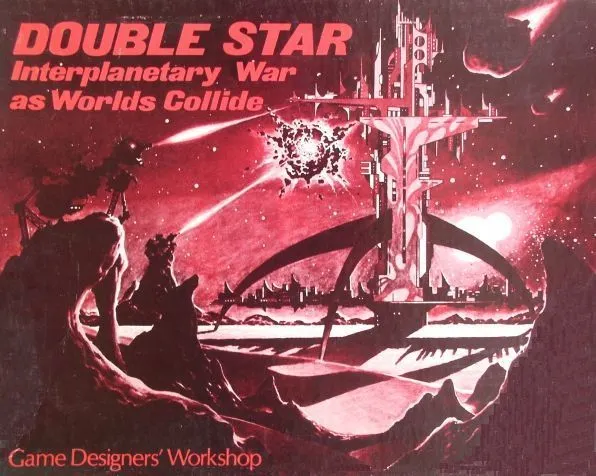
Double Star is a board game released in 1979 for 2 players, 120–600 minutes per game, and ages 12 and up. It was designed by Marc W. Miller and its main mechanics are Dice Rolling, Variable Set-up, and Grid Movement.


The Epsilon Cetus system, containing an M8 red dwarf and a G0 yellow star, was originally colonized by two independent relocations missions . . . The first to arrive, and thus to claim the better G0 system, were those of Islamic origin . . . The second mission, of Chinese origin, arrived some 50 years later, in a crippled colony ship . . . they found [the G0 system] jealously guarded by a handful of Islamic ships, and had to crash-land instead in the far poorer quality red dwarf system. This early incident left a lasting animosity between the two cultures . . . Over two centuries, the Islamic culture established itself in its system, exploiting its mineral and ecological wealth to the fullest, and developing a thriving interplanetary society. The Chinese colony, on the other hand, was forced to spend the past 150 years in a spartan struggle for survival against marginal environments and the unpredictable flares of [the red dwarf] . . . Now, however, the pressure of population on the Chinese and the pressure for additional resource supplies on the Islamic has brought these two cultures into direct conflict.
Double Star supports 2 players according to the catalogue. This is the publisher’s listed player count, so the game is designed for exactly that number of participants. Variants for other group sizes, if any, are described in the rulebook of your edition, so check it before setting up a different configuration.
The listed playing time for Double Star is 120–600 minutes. This is the publisher’s estimate for a full game. The actual duration depends on the group, the player count and familiarity with the rules: first sessions usually run longer, while experienced groups often finish faster. Setup and teaching time are not included in this estimate.
The catalogue lists Double Star for ages 12 and up. This is the publisher’s recommendation and reflects reading demands, rule complexity and small components rather than theme alone. Younger players can often join with help from an adult, so check the age guidance on your edition and consider your group’s experience with board games.
Double Star has a complexity rating of 3.3 out of 5 from BoardGameGeek players, which makes it a medium-weight game. The rating reflects how much rules knowledge, planning and decision-making a typical game demands. Expect a longer first teach for heavier games, and use a preparation guide before game night.
Double Star belongs to these categories: Wargame and Science Fiction. Its main mechanics are Dice Rolling, Variable Set-up, and Grid Movement. Categories describe the theme and setting of a game, while mechanics describe what players actually do on their turns. Each mechanic links to a catalogue hub with similar games, which helps when you want something comparable.
The credited designers of Double Star are: Marc W. Miller. These credits come from the published game data and name the people responsible for the game’s design, not its illustrators or publishers. Designer pages on MeepleRules collect other titles by the same designers, which helps when you enjoy a game and want to find similar ones.
The catalogue lists Double Star as a base game. It can be played on its own with the components in the box and does not require any other title. Expansions, if any exist, add new content or rules on top of it and are listed separately in the catalogue with a link back to this base game.