
- BGG rating
- 6.6
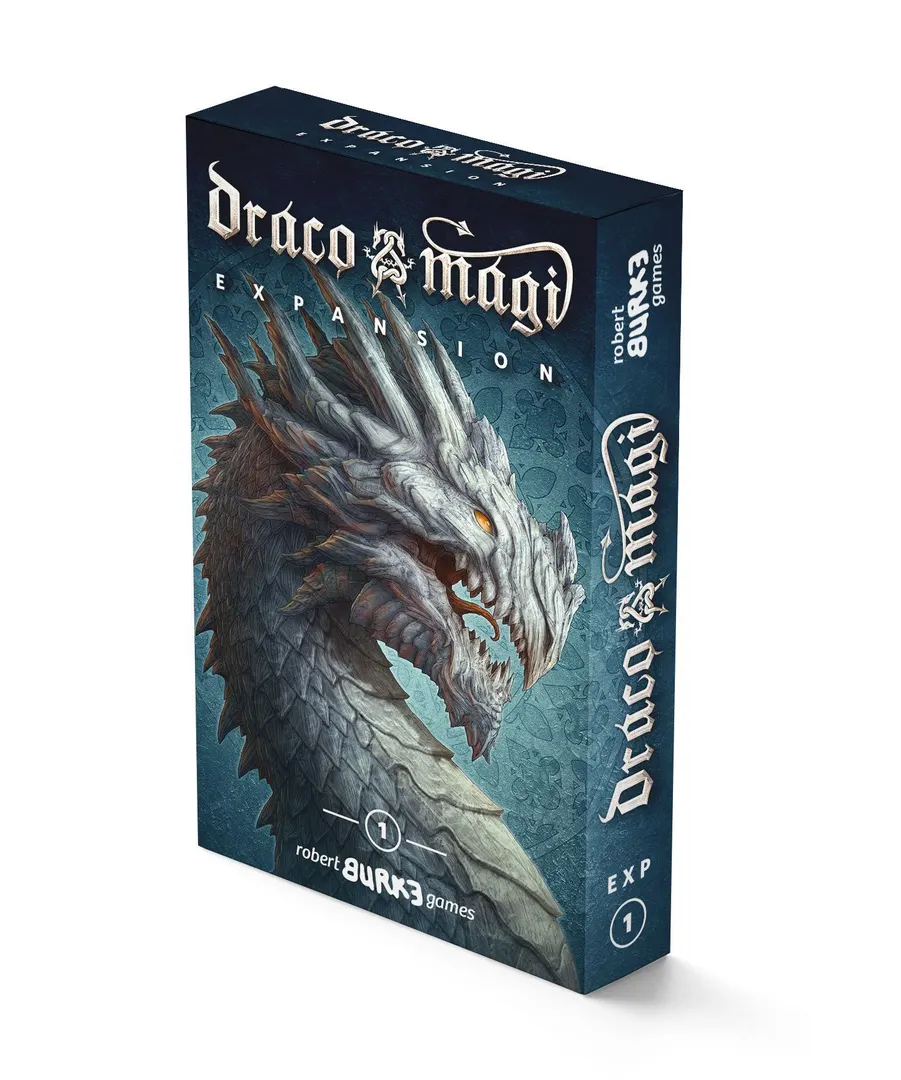
Draco Magi: Expansion 1
- 2 players
- 20–30 min
- Complexity 2.0/5
- 2016
2014
Rules assistance for Draco Magi
Plain-language explanations of turns, card effects and disputed situations, with official source references and saved question history.
For 2 players
What would you like to know?
Answers come from the official rulebook, with the page to check.
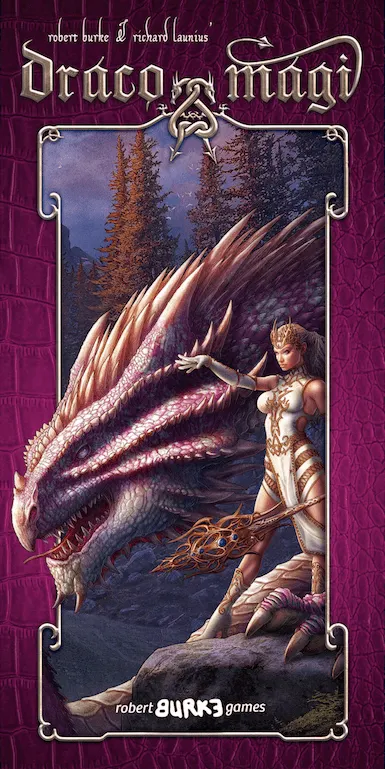
Draco Magi is a board game released in 2014 for 2 players, 30 minutes per game, and ages 12 and up. It was designed by Richard Launius and Robert Burke and its main mechanics are Hand Management, Area Majority / Influence, and Open Drafting.

Myrgos, the powerful and benevolent Dragon King has passed into the next world after an extended illness, and the land is now gripped with uncertainty. As the laws of succession dictate, only one of his remaining apprentices can rise to the position of "Draco Magi". With the death of the Draco Magi, the wizard-lock on the succession strongbox of each apprentice has completely dissipated. Inside each box, an apprentice will find a succession scroll. Contained on the scroll is the last piece of knowledge required to become the Drago Magi — but only one can claim the title. Each scroll holds a different "Spell of Succession" that may be executed only with the correct combination of rare gems. These magically imbued gems appear in sets of three only during times of succession and must be collected by dragons at the command of each apprentice. The competitor who is first to collect the gems needed to complete his Spell of Succession becomes the new Drago Magi. For the loser, the unofficial title whispered under the breath of the people is "Novitius Eterna" or "Forever a Novice". Be swift and remember, there is little room for error. Draco Magi is a card game designed by Richard Launius and Robert Burke. To start, each player selects an apprentice dragon mage he wishes to play. Each mage receives a deck of dragon cards that includes multiple copies of four different chromatic dragons (Green, Red, Black & Purple), four different metallic dragons (Gold, Silver, Brass & Bronze), and two special dragon cards (the Battle dragon and the Polar dragon). Each dragon has a different strength, weakness and special ability. Players will send their dragons, one at a time, to capture gems on different battlefields; each battlefield offers a different effect that may give an advantage or disadvantage to certain types of dragons. Players alternate playing dragon cards on battlefields until they have played all eight of their Dragon cards. Each player can play a maximum of three dragons on a single battlefield. When a dragon is placed, it may make a ranged attack. Not all dragons have a ranged attack breath weapon, but those that do have a breath weapon icon with a number. The number indicates the number of battle cards the player may reveal when attempting to hit with a ranged attack. A defender may defend with the number of cards equal to the dragon's shield value. A ranged attack can take place immediately only when the card is played against an opposing dragon. If a ranged attack is not used at this moment, the ranged attack is forfeited for the current round. After all dragon cards have been played, the melee phase of the battle begins. Each dragon has a "melee attack" value printed on its card which represents the number of battle cards the player can draw for the battle. The melee battle mechanism is a unique attack and counter system that provides opportunity for deduction, subtlety, and deadly combos. Players will also earn advance battle cards that build up their decks over the course of the game. The player with the most dragons present on a battlefield wins that gem. In the case of a tie, the dragons and gem remain for the next round. Draco Magi is a fast game heavily connected to its theme that incorporates area control, bluffing, hand management, deck building and deduction.
Draco Magi supports 2 players according to the catalogue. This is the publisher’s listed player count, so the game is designed for exactly that number of participants. Variants for other group sizes, if any, are described in the rulebook of your edition, so check it before setting up a different configuration.
The listed playing time for Draco Magi is 30 minutes. This is the publisher’s estimate for a full game. The actual duration depends on the group, the player count and familiarity with the rules: first sessions usually run longer, while experienced groups often finish faster. Setup and teaching time are not included in this estimate.
The catalogue lists Draco Magi for ages 12 and up. This is the publisher’s recommendation and reflects reading demands, rule complexity and small components rather than theme alone. Younger players can often join with help from an adult, so check the age guidance on your edition and consider your group’s experience with board games.
Draco Magi has a complexity rating of 2.1 out of 5 from BoardGameGeek players, which makes it a medium-light game. The rating reflects how much rules knowledge, planning and decision-making a typical game demands. Expect a longer first teach for heavier games, and use a preparation guide before game night.
Draco Magi belongs to these categories: Card Game and Fantasy. Its main mechanics are Hand Management, Area Majority / Influence, and Open Drafting. Categories describe the theme and setting of a game, while mechanics describe what players actually do on their turns. Each mechanic links to a catalogue hub with similar games, which helps when you want something comparable.
The credited designers of Draco Magi are: Richard Launius and Robert Burke. These credits come from the published game data and name the people responsible for the game’s design, not its illustrators or publishers. Designer pages on MeepleRules collect other titles by the same designers, which helps when you enjoy a game and want to find similar ones.
The catalogue lists Draco Magi as a base game. It can be played on its own with the components in the box and does not require any other title. Expansions, if any exist, add new content or rules on top of it and are listed separately in the catalogue with a link back to this base game.